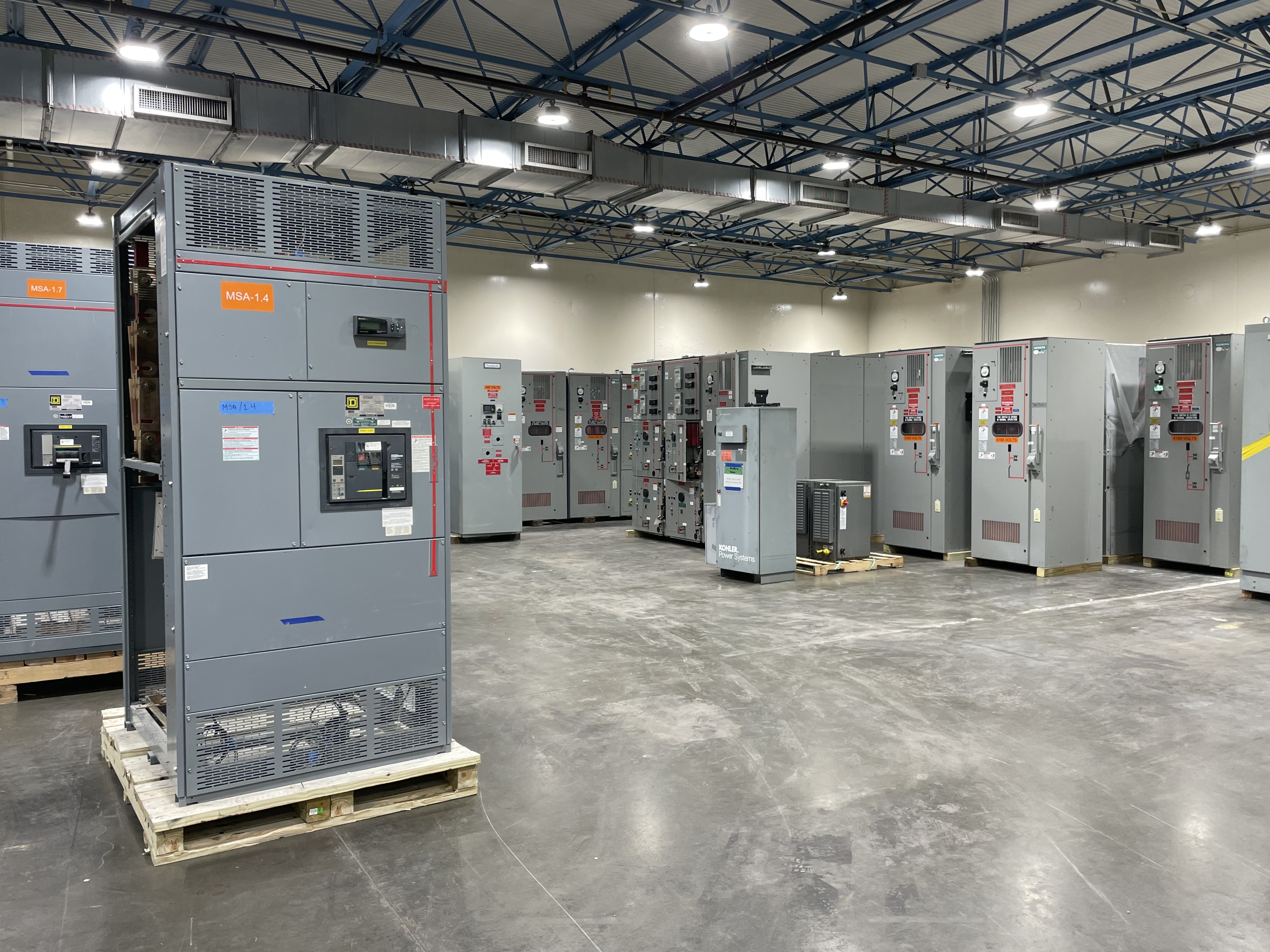
Define the auxiliary lineup before valuing it
Auxiliary switchgear distributes power to plant services such as pumps, fans, lighting, or other loads, while generator equipment belongs to the generation and output system. The boundary can be unclear in older drawings or mixed equipment rooms. Identify the lineup by its tagged function, connected circuits, and equipment schedule rather than by room name alone. If a breaker is stored separately, record the lineup it was intended for only when documentation supports that link. This distinction helps prevent a spare generator breaker or unrelated assembly from being represented as auxiliary inventory.
Plant closure is not proof of electrical isolation
A shutdown announcement, empty control room, or retirement schedule does not establish that every lineup is isolated or safe to access. Isolation status must be determined and controlled by qualified, authorized electrical personnel under the plant’s procedures. A buyer’s commercial review is not an electrical clearance. Do not approach, open, test, disconnect, or move equipment to identify it or take photographs. Use records and photographs of exterior nameplates only when those surfaces are safely accessible from an authorized position. Record who controls the area and what release conditions remain outstanding.
Document voltage without confusing equipment ratings
For an initial inventory, capture the stated nominal voltage and available nameplate information from safely accessible exterior surfaces or existing records. Keep assembly, breaker, bus, frame, trip, and rating details distinct: a breaker’s frame or trip information does not by itself describe the complete lineup, and a lineup voltage does not establish that every spare breaker fits it. Note missing, obscured, or conflicting information rather than estimating. The buyer considers equipment across all voltage classes, but acceptance and any offer depend on an individual assessment, not a voltage label alone.
Build a credible spare-breaker record
Spare breakers can have value as separately identified assets, but “spare” is a status to verify, not a compatibility guarantee. List each unit separately with its readable identification, count, storage location, and any documented association with a lineup. Keep records of accessories or loose parts distinct from the breaker itself. If a plant record says a unit is reserved for a particular assembly, preserve that wording and source; do not infer interchangeability from appearance. Seller testing is not required. Do not energize, operate, open, or test breakers to improve an inventory description.
Resolve title and authority before an offer
Confirm that the seller owns the equipment or has authority to sell it, especially where assets are leased, financed, jointly owned, or controlled by a closure contractor. Match asset tags and serial references, when available, to a disposal schedule or other ownership record. Identify exclusions such as equipment retained for site operations or reserved under a separate agreement. A cash offer is assessed individually, and payment is made upfront for an accepted transaction; neither price nor acceptance is guaranteed before review. Clear title and a defined asset list reduce disputes over what the transaction includes.
Plan staged release around site controls
A plant may release areas in phases, with some lineups still inside restricted or operational zones while other assets are available for later disposition. Document which equipment is included, its authorized access conditions, and the release sequence approved by the site. Electrical disconnects and other technical electrical work must be performed by qualified, authorized personnel under site rules—not by the seller or buyer as an informal convenience. If access dates or area controls change, revise the inventory and release record before arranging collection. Do not treat a commercial offer as permission to enter or remove equipment.
Coordinate removal scope and transport responsibilities
Once equipment is released for collection, clarify access, loading space, lifting constraints, and any site-specific contractor or safety requirements. For an accepted purchase, the buyer covers freight, crane, rigging, disconnects, loading, and hauling as applicable to the agreed scope. That does not transfer responsibility for site authorization or replace qualified electrical work. Ask which assets and handling activities are included in the transaction, and identify exclusions in writing. A sale of auxiliary switchgear does not imply unrelated demolition or hazardous-material remediation; those matters remain outside the equipment transaction unless separately agreed.
DECOMMISSIONING / THE COMPLETE SERVICE
From shut-down site to paid seller.
We buy electrical switchgear from decommissioned data centers and shut-down power plants. We handle all rigging and logistics: crane, rigging, disconnects, loading, freight and hauling are on us. Qualified personnel handle electrical disconnects and isolation according to site safety procedures. The seller does nothing but get paid.
We make cash offers, pay upfront, require no testing from the seller, and buy all voltage classes. Share the site and equipment details you know; photos are helpful only when they can be taken safely. Never open or touch energized equipment or disturb a live installation.