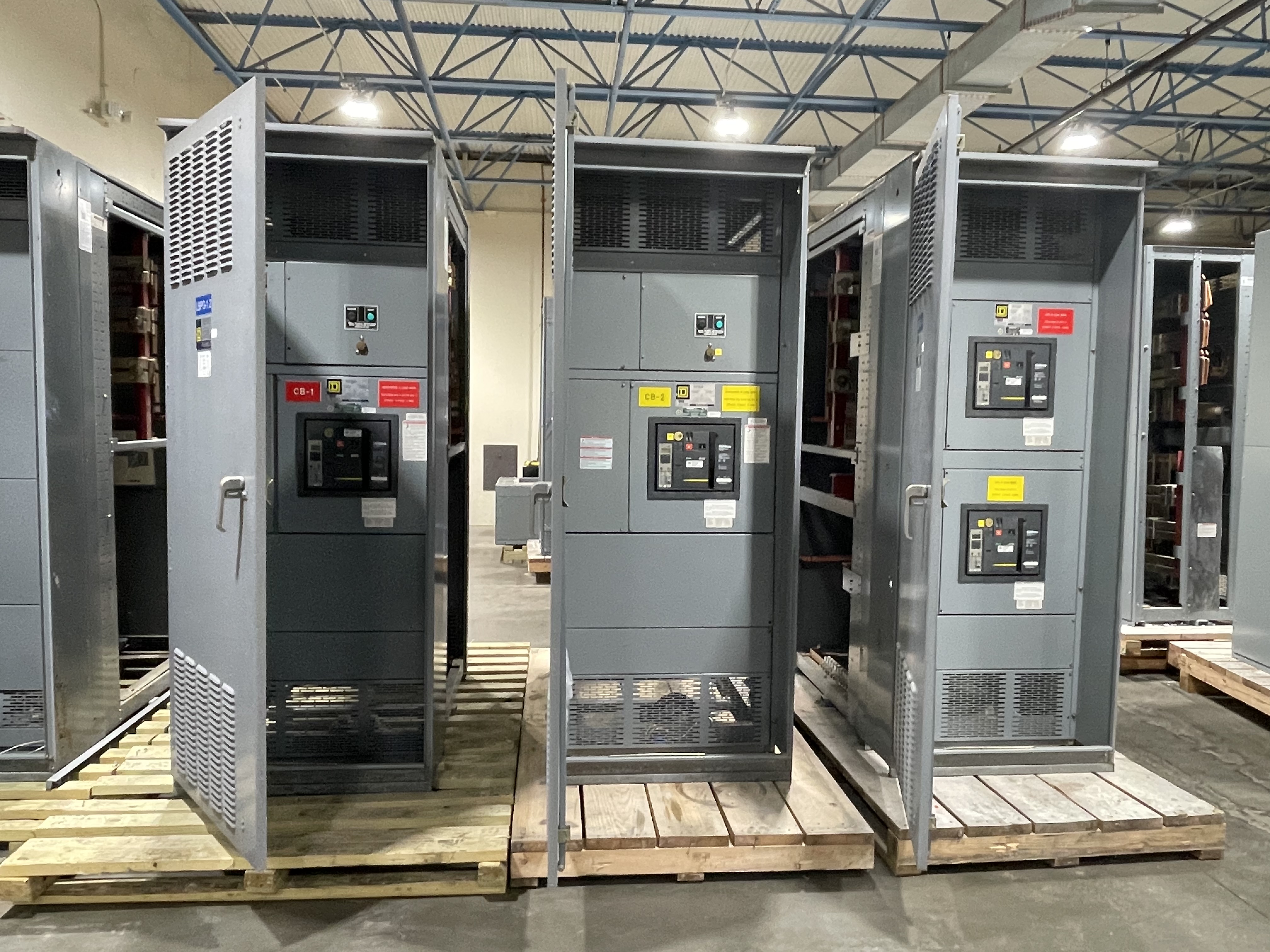
Define the lineup before describing the asset
Use “main distribution switchboard” only as the starting description, then record the visible arrangement: main section, feeder sections, and any adjacent sections believed to belong to the same assembly. Note which sections are included in the proposed sale and which remain in service or are excluded. A lineup photographed in place may look like one asset even when ownership or sale boundaries differ. If documentation identifies separate assemblies, retain those names rather than combining them. This distinction helps an offer review assess the actual scope instead of assuming every neighboring cabinet is included.
Separate assembly identity from breaker details
Record the manufacturer and identifying information shown on accessible exterior nameplates, along with any lineup or section designation available in existing records. Keep assembly-level details distinct from individual breaker information: a breaker’s frame or trip details do not, by themselves, identify the whole switchboard or establish its ratings. If feeder sections contain breakers with differing labels, describe them as observed rather than applying one rating across the lineup. Do not infer missing values from appearance. Safe exterior photographs and copied records can help clarify identity without requiring seller testing or access to internal components.
Describe voltage and ratings as documented
Capture voltage class and other ratings only where they are stated in accessible records or visible exterior markings, and preserve the wording and units shown. Distinguish a nominal voltage from a breaker rating or assembly rating; do not treat them as interchangeable. If sections appear to carry different labels, identify which section each label refers to, or flag the association as uncertain. This level of detail supports review across all voltage classes without implying universal compatibility or acceptance. When a value is absent, say so rather than estimating it from a similar-looking cabinet or neighboring equipment.
Make the inclusion decision section by section
Decide whether the sale covers the main section alone, the main and feeder sections together, or a broader group of associated equipment. Document separate control or metering cabinets, loose breakers, and spare parts as included, excluded, or not yet identified; do not silently fold them into the switchboard description. If one feeder section is retained while the rest is offered, note its position in the lineup and the intended boundary. Such distinctions matter to both valuation and removal planning. Offers are assessed individually, and clear scope lets the review reflect what the seller is authorized to sell.
Report known condition without creating a test requirement
Summarize condition from existing records and authorized observations: for example, whether the lineup is described as operating before shutdown, decommissioned, incomplete, or of unknown status. Separate documented facts from impressions, and identify missing sections or known damage if already recorded. There is no need for the seller to test the equipment or open cabinets to answer condition questions. Electrical work and any access requiring it belong to qualified, authorized personnel following site rules. Be candid about uncertainty; a condition note is not a guarantee, and review does not promise acceptance or a particular price.
Assess access for a multi-section assembly
Access planning should address the actual lineup, not merely the doorway. If the switchboard is indoors or in a restricted area, share known route constraints such as door dimensions, turns, floor transitions, overhead limits, staging space, and access hours, using records or observations made from authorized safe positions. Note whether sections are believed to be separable, but do not assume they can be divided or moved independently. The buyer can review crane, rigging, disconnects, loading, freight, and hauling needs, including buyer-paid freight. No seller preparation or hired crew is required for the review.
Send a review-ready, safely gathered record
Provide the asset boundary, section count or arrangement, available nameplate information, known condition, and access notes together. Include clear photographs only of safely accessible exterior nameplates and equipment, taken from authorized safe positions; never approach, open, touch, test, disconnect, or move energized equipment for documentation. Existing drawings or inventory records may resolve which feeders belong to the offered assembly. The company buys used, surplus, and decommissioned equipment, including assets from decommissioned data centers and shut-down power plants. It offers cash and pays upfront when an offer is accepted; each asset remains subject to individual review.