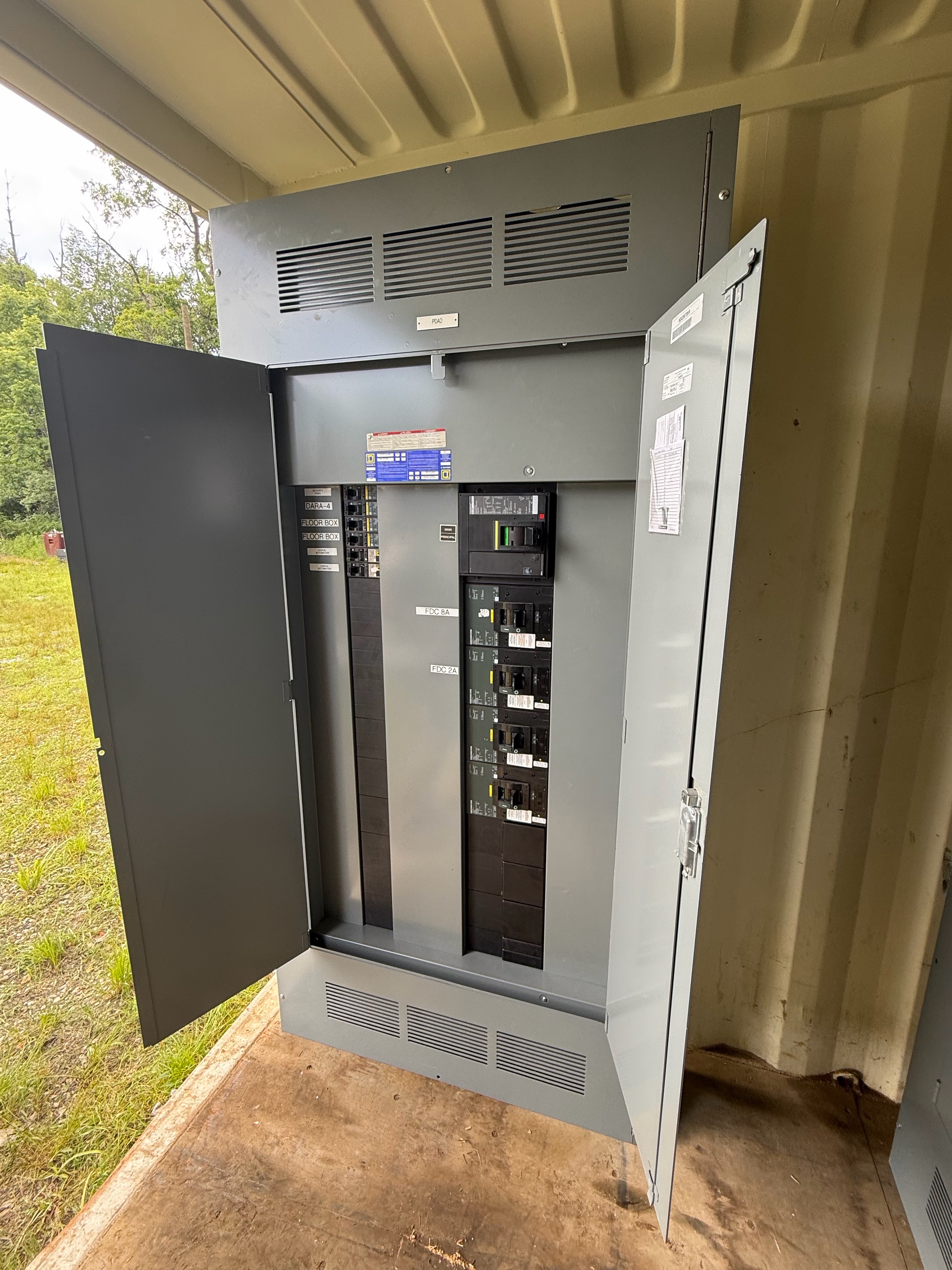
Define the switchboard as an assembly
Start the inventory with the complete lineup as it stands, then identify each section and any separately stored components. A switchboard assembly is not the same thing as a single breaker: note section count, visible section labels, and whether breakers appear installed, stored nearby, or absent. If a lineup has been split or partly dismantled, describe the pieces separately rather than presenting them as one complete board. Record the location of loose components without moving them to improve a photograph. This distinction helps a buyer assess completeness and avoids confusing the assembly’s apparent scope with the quantity of individual devices included in the sale.
Match records to visible identification
Document manufacturer and model information only as shown on safely accessible exterior nameplates or existing records. A photograph should be taken only from an authorized, safe position without approaching or handling equipment to obtain it. Transcribe legible identifiers and distinguish them from handwritten tags or facility labels. If the nameplate is unreadable or unavailable, say so; do not infer a model from a breaker label or an old drawing. Include available drawings, schedules, and prior inventory sheets as separate references, noting their dates when known. Differences between records and visible labels are useful information for review, not a reason to quietly reconcile them by guesswork.
Separate ratings by what they describe
When records provide electrical ratings, preserve the wording and identify the source rather than combining figures into a single shorthand description. Assembly ratings, breaker ratings, frame ratings, trip settings, and nominal voltage refer to different attributes; one value does not establish the others. For example, a schedule may list a breaker frame while a separate record gives a trip value. Keep those entries distinct and flag any uncertainty or mismatch. The buyer considers switchboards across all voltage classes, but that does not establish acceptance or compatibility for a particular asset. Assessment depends on the specific equipment and the information available, not a seller’s assumed application.
Describe known condition without testing
Give a factual account of what is already known: whether the board is described in records as complete, whether sections or breakers are missing, and whether any visible exterior damage has been noted from an authorized safe position. Identify information as observed, documented, or reported so a buyer can distinguish direct description from inherited records. Do not operate, open, touch, approach, test, disconnect, or move electrical equipment to verify a condition or capture an image. No seller testing or preparation is required. If condition history is unavailable, state that plainly instead of labeling the switchboard tested, functional, or defective without supporting information.
Set clear inclusion boundaries
Write down what is included in the proposed sale and what is excluded: the switchboard sections, associated breakers, loose parts, and any separate equipment should each be identified where known. A nearby cabinet or spare breaker is not automatically part of the switchboard inventory. If ownership is divided, or a seller’s authority to transfer a component is uncertain, resolve that distinction before representing it as included; the seller must own the equipment or have authority to sell it. For decommissioned data centers or shut-down power plants, records may cover assets removed at different times. Marking those distinctions prevents a historical list from being mistaken for a verified present-day inventory.
Plan removal around the actual lineup
Share the lineup’s known dimensions, section arrangement, access constraints, and loading-area details only when records or safe observation support them. Explain whether the board remains assembled or has already been separated, but do not move it to establish dimensions or improve access. If an offer is made, cash is paid upfront, and buyer-paid freight may include crane, rigging, disconnects, loading, and hauling, depending on the individual assessment and agreed scope. Electrical work must be performed by qualified, authorized personnel under site rules. Clarify site access and who controls the work area before planning removal; no particular pickup date, acceptance, or outcome should be assumed before review.