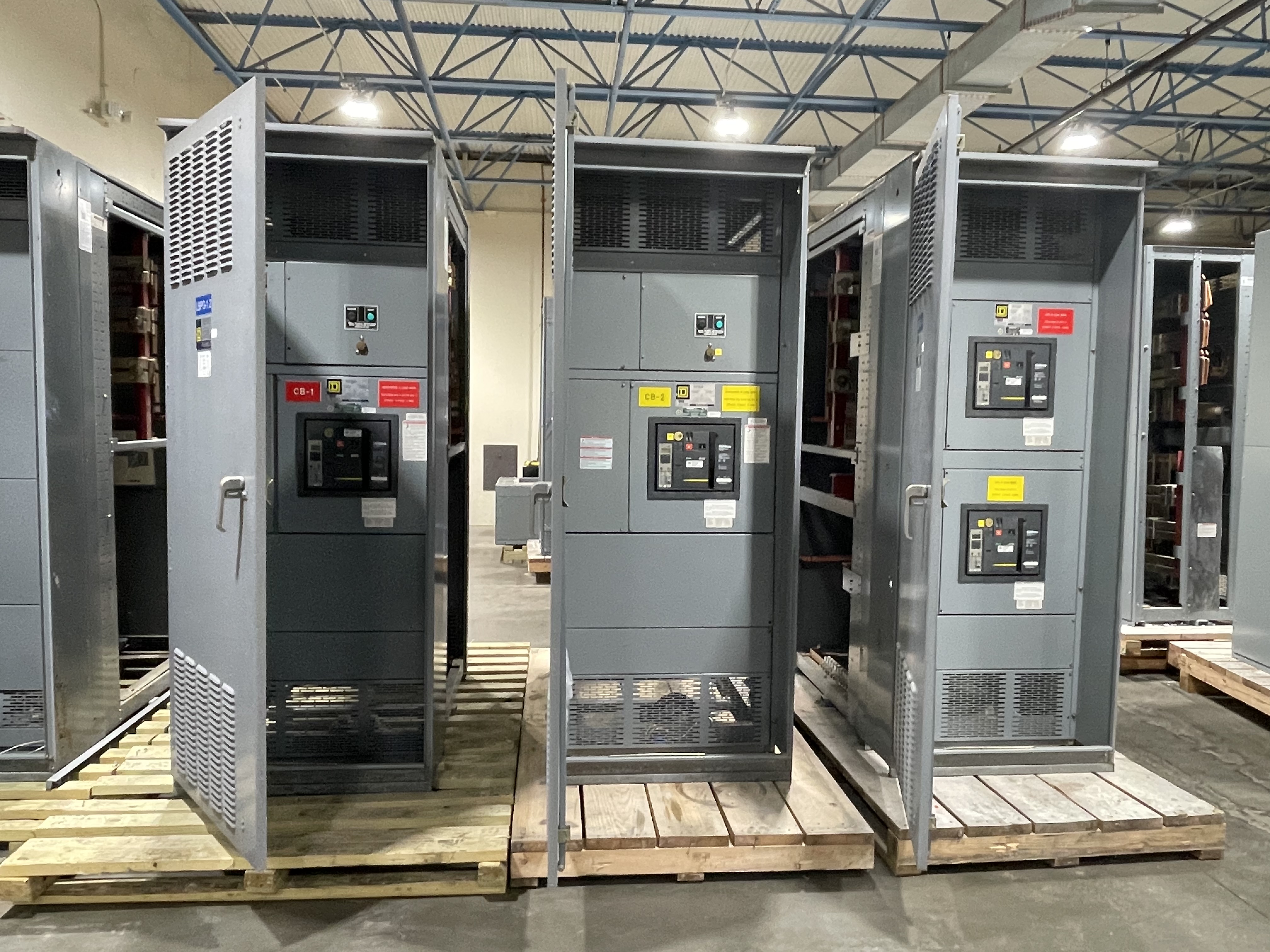
Establish who owns the switchgear
Start with title and authority, not the enclosure’s appearance. Customer-owned gear may be listed on a facility asset register or acquired with a site, while utility-owned equipment may remain under a utility’s control despite serving a customer’s property. Ask who owns the assembly, who can authorize its sale, and whether a lease, service agreement, easement or other restriction applies. If ownership is uncertain, pause the sale discussion until the responsible parties clarify it. A buyer can assess an asset individually, but cannot replace the seller’s obligation to have authority to sell.
Distinguish switchgear from a pad-mounted transformer
Outdoor cabinets can be mistaken for one another, but pad-mounted switchgear and a pad-mounted transformer are different equipment categories. Switchgear may contain switching and protective components in an enclosure; a transformer changes voltage. Do not infer equipment type from color, location or nearby labels. Record the asset description from authorized site records, then compare it with safely accessible exterior identification. If records and exterior markings conflict or remain unclear, report the uncertainty rather than opening a compartment to identify internal components. Accurate classification helps the buyer evaluate the actual asset without inventing configuration or specifications.
Document the exterior without approaching hazards
Useful initial information can include the enclosure’s overall exterior condition, visible corrosion, dents, missing exterior panels, paint condition and apparent weather exposure. Note whether vegetation, standing water, salt-laden air or other environmental conditions may have affected the cabinet, without diagnosing internal condition. A safely accessible exterior nameplate may help identify manufacturer, type or ratings; photograph it only from an authorized safe position and only if it is safely accessible. Never open doors, remove covers, cross barriers or approach equipment to obtain a better image. No seller testing or preparation is required.
Describe exposure and enclosure condition carefully
Outdoor exposure is a valuation consideration, not proof that equipment is unusable. A cabinet exposed to coastal conditions, heavy rain, sun or industrial residue may show exterior deterioration, while the extent and significance require individual assessment. Describe observable facts—such as a damaged door, rust staining or compromised-looking exterior seal—rather than claiming the interior is dry, intact or serviceable. Do not touch, probe or open the enclosure to investigate. If the site has records of prior flooding, impact or maintenance, share them when authorized; distinguish documented events from visual observations.
Resolve pad access and lifting constraints
Pad access can change the practical recovery plan. Provide a site-approved description of gate widths, overhead obstructions, turning space, pavement limits and restrictions on vehicle or crane placement, using existing plans or observations from safe, authorized areas. Do not move barriers, enter restricted zones or approach the equipment to measure clearances. Ask who controls access, what site rules govern lifting, and whether a utility or property representative must attend. If the pad is close to other electrical assets or occupied areas, flag that for the qualified crew’s planning rather than assuming a standard lift is possible.
Confirm site release and qualified disconnection
A sale requires more than a price agreement when equipment remains installed. Confirm which owner or authority can release it, what written approvals are needed, and who coordinates site access and any utility interface. All electrical work—including disconnection and verification of safe conditions—belongs to qualified, authorized personnel following site rules. Do not assume the equipment is isolated because it appears unused, a facility has shut down, or another asset has been removed. Qualified crews coordinate disconnection and lifting; the seller should not disconnect, rack out, move or handle the gear.
Request an offer with practical information
Share ownership authority, equipment identification, visible exterior condition, available records, access constraints and release requirements so the asset can be assessed individually. The buyer considers used, surplus and decommissioned electrical equipment across all voltage classes, including assets from decommissioned data centers and shut-down power plants; acceptance and offer terms depend on the specific equipment and circumstances. Offers are cash and paid upfront, with no seller testing required. For an accepted transaction, the buyer covers freight and coordinates crane, rigging, disconnects, loading and hauling. No particular outcome or timetable is guaranteed.