Establish title before describing the lineup
If a switchgear lineup supplies multiple buildings, its location alone does not establish who owns it. A property owner, tenant, utility, operator, or another entity may hold an interest, depending on the documents and arrangement. Identify the legal owner of each section being considered and confirm that the seller has authority to transfer it. Gather relevant asset schedules, purchase records, lease terms, or facility agreements for review. If those records are incomplete or conflict, resolve the issue with the parties who hold authority before requesting an offer; do not treat possession as proof of title.
Define the permission to sell separately
Ownership and permission are related but distinct. A person authorized to manage a property may not have authority to sell equipment owned by a tenant or shared entity. Conversely, an owner may need an operator’s written approval before a sale affects an active service arrangement. Ask who can approve the transaction, whether another party must consent, and whether approval applies to the entire assembly or only identified components. Document the approving party, scope, and any conditions. If authority is disputed, pause rather than presenting common-use equipment as unencumbered surplus.
Map what is included—and what remains
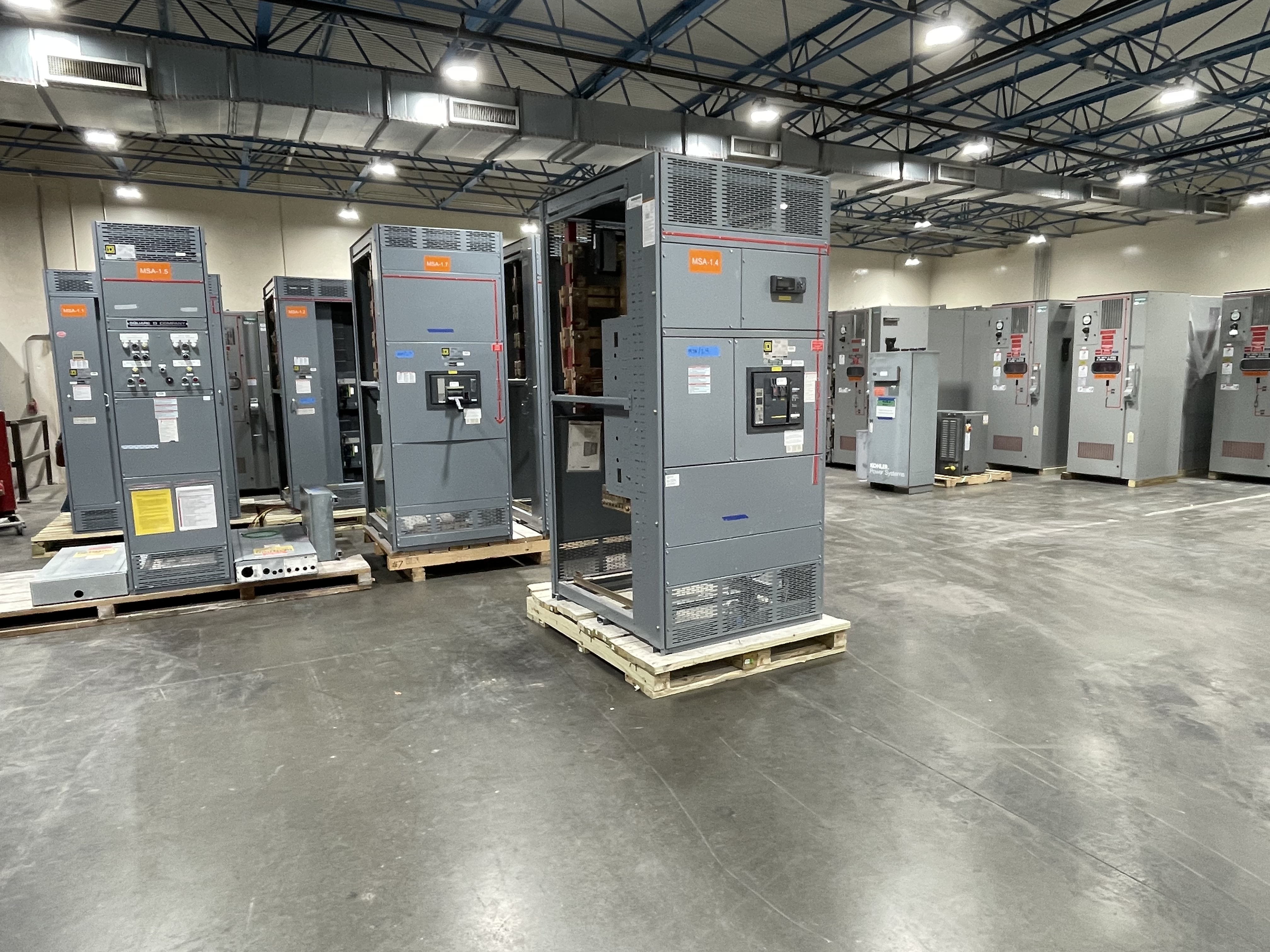
Describe the proposed sale at a useful boundary: lineup, section, breaker, or other identifiable component. A shared bus or common incoming section may serve equipment intended to remain, so drawing a boundary by building name can be misleading. If only one building is leaving, ask which sections are dedicated to it and which provide shared distribution. Record exterior labels and available drawings without assuming they settle ownership. A buyer can assess the identified assets individually, but the seller must make clear which equipment is offered and which is excluded.
Separate equipment ratings and identity
For an initial review, provide safely accessible exterior nameplate photographs and readable identification, taken only from an authorized safe position. Never approach or handle energized equipment for a picture; qualified authorized personnel must determine safe access under site rules. Describe assembly identity separately from individual breaker details. A breaker’s frame, trip unit, nominal voltage, and ratings are not interchangeable descriptions, and a lineup rating does not establish every component’s characteristics. Include available records and note unknowns rather than guessing. All voltage classes are considered, but suitability and value depend on the specific equipment and evidence available.
Plan the release around retained service
Before agreeing on a removal boundary, determine whether other buildings rely on the equipment, the bus, or associated conductors that would remain. Ask the site’s authorized electrical personnel to identify operational dependencies, isolation points, and the approved sequence for any work. Do not disconnect, open, rack out, or remove equipment yourself. Electrical work belongs to qualified authorized personnel operating under site procedures. If a sale would require changes to retained distribution, clarify who has authority to approve that work and how the retained system will be protected before scheduling any physical release.
Coordinate access, lifting, and transport
Once the sale boundary and release authority are clear, share access constraints that affect removal: door and aisle dimensions, overhead clearance, floor capacity information if available, and any controlled-site requirements. Do not measure by entering an unsafe electrical area. The buyer covers crane, rigging, disconnects, loading, freight, and hauling when an asset is accepted, with the removal plan assessed for the specific site and equipment. Confirm which party controls access and when authorized personnel can make equipment available. Do not assume a shared service area can be entered or cleared without the relevant parties’ permission.
Request an offer with a clear record
Send an asset description, ownership and approval information, included-versus-retained boundary, safely obtained exterior nameplate images, and known access limits. No seller testing or seller preparation is required; do not energize equipment or arrange testing for an offer. The buyer assesses assets individually and may make a cash offer with upfront payment if the equipment is accepted; no acceptance, price, or timing is guaranteed. Before release, document the authorized seller, exact assets, exclusions, payment terms, and access permissions. A concise written record helps prevent a later disagreement about shared distribution.