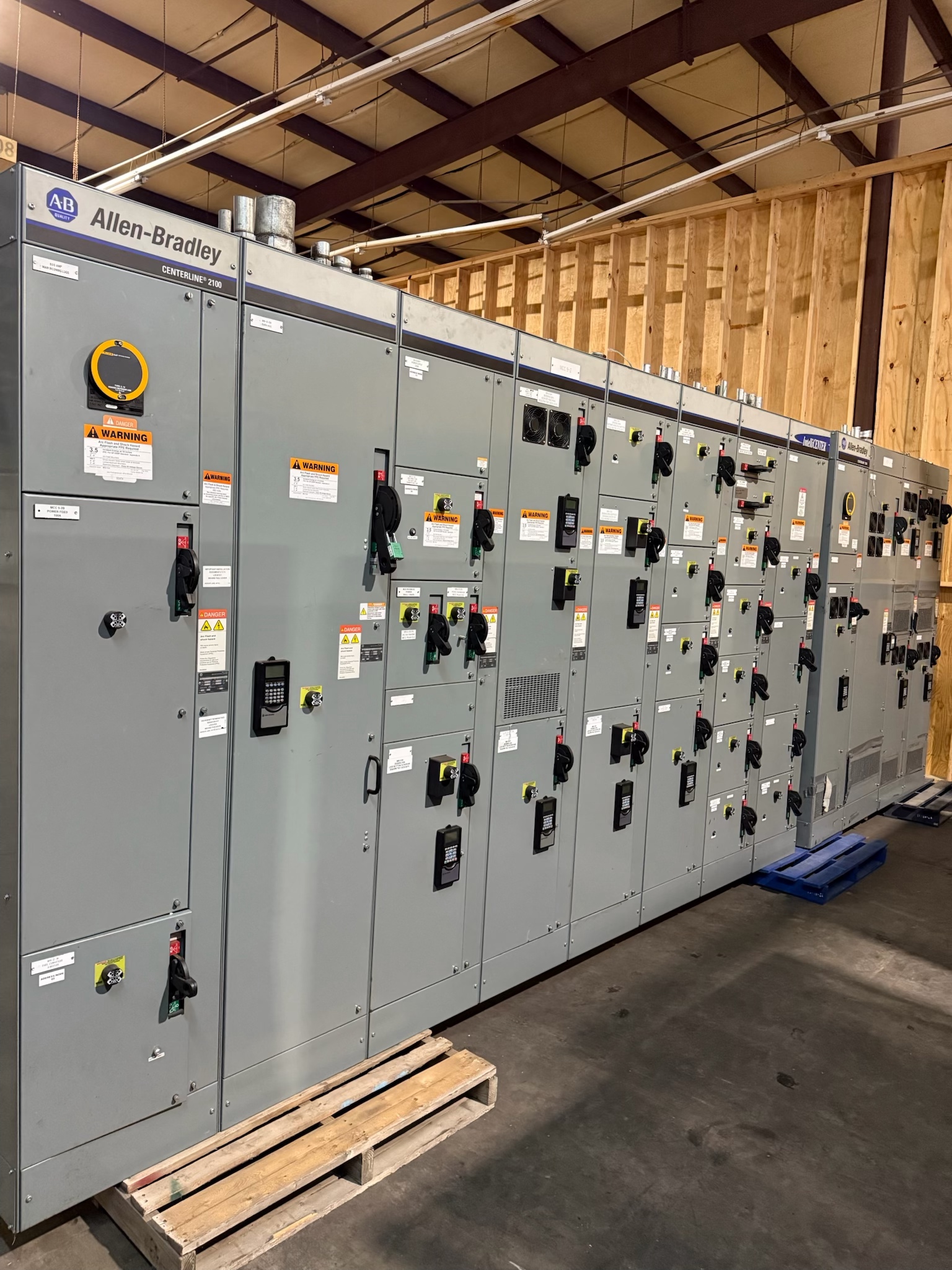
Identify the asset boundary before describing it
Begin with what the sale would include: the VFD unit, its dedicated cabinet, or a larger assembly containing the drive. A cabinet may house one drive, while a drive may be offered separately from its enclosure. Do not label equipment an MCC simply because it is cabinet-mounted. Record the visible manufacturer and model information when safely accessible, plus cabinet or assembly identification if present. If the drive is integrated into a broader lineup, clarify whether that lineup is included or only the drive section. This boundary prevents mismatched expectations during review and pickup planning.
Distinguish drive, enclosure, and neighboring gear
Describe the drive and cabinet as related but distinct parts of the asset. The drive is the conversion equipment; the enclosure is the housing, and nearby components may belong to a larger control arrangement rather than the drive package. For example, if a cabinet shares a lineup with other equipment, note which section is proposed for sale and whether adjoining sections remain in service. Do not infer that visible neighboring gear is included. A clear written scope, supported by safely accessible exterior nameplate photographs, helps the buyer evaluate the offered asset without asking the seller to open or inspect energized equipment.
Record ratings without guessing
Transcribe legible nameplate details rather than estimating from cabinet size or the equipment it served. Useful information may include manufacturer, model or type, serial information, and stated electrical ratings, where safely visible. Keep distinct any drive rating, cabinet or assembly identification, breaker details, and system nominal voltage; these describe different things and should not be substituted for one another. If a value is obscured or unavailable, say so. Voltage classes vary, and offers are assessed individually. We buy across all voltage classes, but no universal compatibility or acceptance conclusion follows from a voltage label alone.
Make inclusion decisions explicit
List components only when their inclusion is known, not because they appear to belong with the drive. If the offer includes a cabinet-mounted drive and a separate operator station, identify both and state whether the station is included. If external equipment, spare parts, or documentation is stored nearby, distinguish it from items installed in or assigned to the cabinet. For a larger assembly, specify whether the entire assembly or only a defined section is offered. These distinctions make the asset description more reliable and let an individual assessment address the actual package rather than an assumed configuration.
Share known condition, not a new test
Summarize condition from records and observations already available to authorized personnel: for example, whether the equipment was documented as operational before shutdown, removed from service, or of unknown status. Note visible damage only if it can be observed from an authorized safe position. Do not energize, open, touch, or test equipment to improve the description, and do not arrange seller testing. No seller testing or preparation is required. If condition history is incomplete, state that plainly; a buyer’s review remains specific to the information and equipment presented and does not guarantee acceptance or an offer.
Plan cabinet-specific pickup logistics
A drive cabinet’s size, weight, access route, and relationship to adjacent equipment can affect pickup planning. Share known dimensions or weight from existing records, the building access constraints, and whether the cabinet is part of a larger lineup. Do not disconnect or move it to gather measurements. Disconnects and other electrical work must be performed by qualified, authorized personnel under site rules. For agreed purchases, we cover disconnects, crane, rigging, loading, freight, and hauling; the logistics plan depends on the asset and site. A seller need not hire a crew or prepare the cabinet.
Request an offer with useful records
For an individual review, provide the asset boundary, safely visible identification, known condition history, included-item list, and pickup constraints. Exterior nameplate photographs are useful only when taken from an authorized safe position; never approach or handle equipment to obtain them. We buy surplus and decommissioned equipment, including assets from shut-down power plants and decommissioned data centers, and offer cash with upfront payment when a purchase is agreed. Any offer depends on review of the specific equipment and circumstances; no particular price, acceptance, or timing is promised. The seller must own the asset or have authority to sell it.