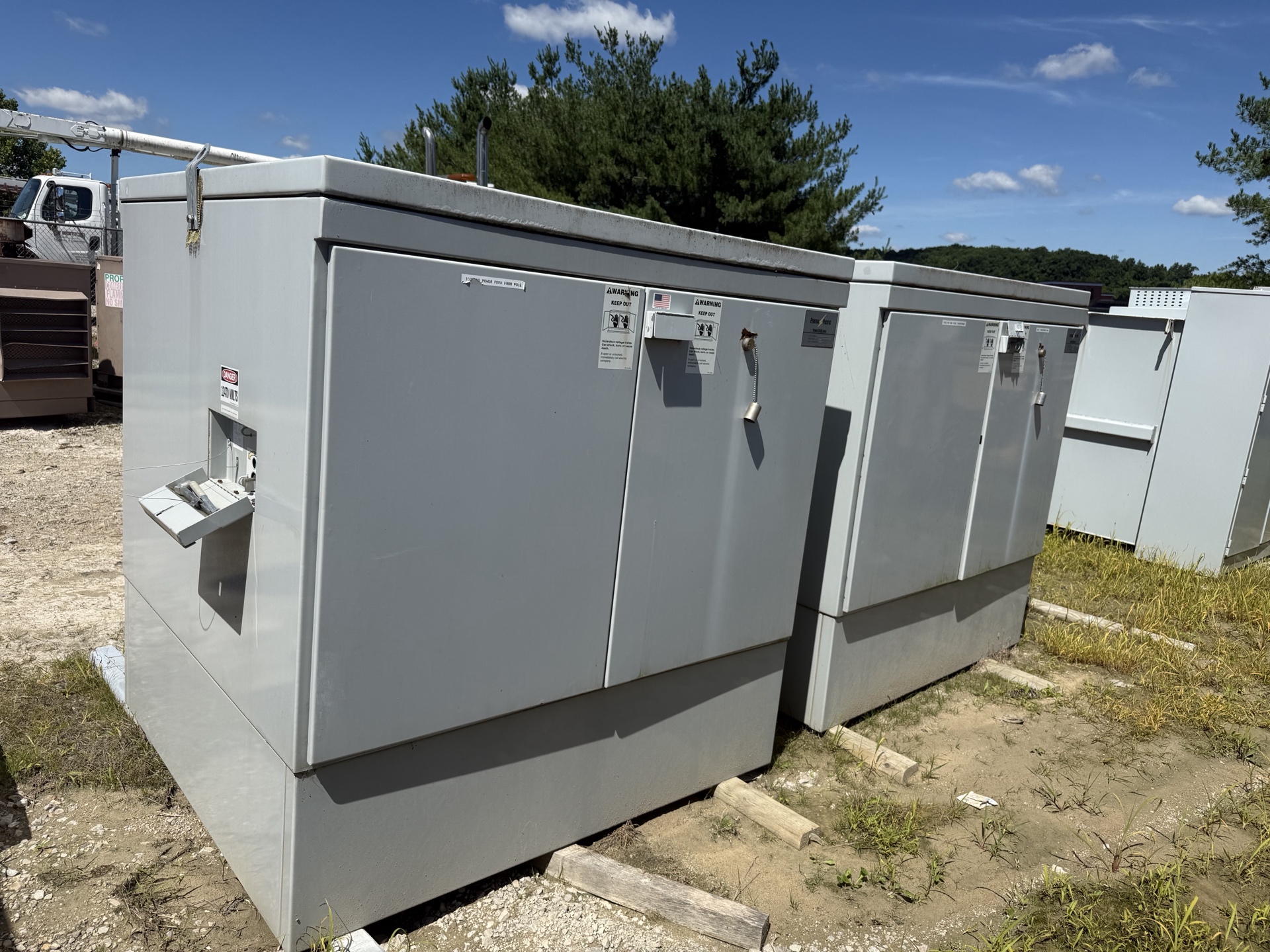
Define the cabinet and its included components
Start with the physical boundary of the sale. A cabinet may be offered with its installed starter units, internal control components, door-mounted devices and visible accessories, or as an enclosure after some parts were removed. State which situation applies and identify any separately stored components without assuming they belong with the cabinet. If a starter unit is missing, note its position or label if safely visible; do not infer that an empty compartment is complete or ready for reuse. Clarify whether the sale includes the cabinet alone, a group of cabinets, or related items such as documented loose parts. This prevents an offer review from treating a partial assembly as a complete one.
Record identification without opening or operating equipment
Capture the manufacturer, catalog or type markings, cabinet identification, and any readable starter or component labels from safely accessible exterior nameplates and equipment, from authorized safe positions. A cabinet label may identify the enclosure or assembly, while an individual starter label may identify only that component; keep those records distinct. If a rating or brand is not readable, mark it unknown rather than estimating from appearance or neighboring equipment. Do not open doors, remove covers, approach energized equipment, or handle anything to obtain better information or photographs. A written transcription, safely taken exterior photo, and note about which label each belongs to give a buyer more useful identification than an unverified model guess.
Separate assembly ratings from component markings
When available on safely accessible labels or existing records, report the cabinet or assembly information separately from markings on individual breakers, starter units, overload devices, or control components. A breaker rating does not establish the starter’s rating, and a component marking should not be presented as the cabinet’s overall rating. Distinguish a stated nominal voltage from other ratings shown, and identify whether each value came from an assembly label, a component label, or paperwork. Do not resolve conflicting labels by choosing the most favorable value. If voltage class is unknown, say so. We consider equipment across all voltage classes, but acceptance and any offer depend on an individual review of the actual asset and available information.
Describe known condition and missing information
Disclose known facts such as missing starter units, absent doors, visible impact damage, corrosion, water exposure, incomplete control components, or records of prior removal. Separate direct observations from secondhand reports: for example, “door absent on visual inventory” differs from “reported to have operated before shutdown.” If condition is unknown, say that rather than implying working status. No seller testing is required, and sellers should not energize, open, touch, or otherwise inspect equipment to establish condition. Existing records can help explain whether the cabinet was decommissioned, stored, or partly stripped, but avoid asserting functionality from age, appearance, or a previous service note alone.
Plan the sale boundary and equipment handling
Cabinet dimensions, approximate weight if already documented, access constraints, and whether multiple units are grouped can inform handling review. Do not estimate weight from appearance or move equipment to improve access. State whether the cabinet remains installed, is already isolated, or has been disconnected by authorized personnel, and identify any known site restrictions; qualified authorized personnel must perform electrical work under site rules. For accepted assets, we cover disconnects, crane and rigging, loading, freight, and hauling, with buyer-paid freight. The seller need not arrange a crew or prepare the cabinet. Handling needs and logistics are assessed for the particular equipment and site conditions.
Request an offer with a clear inventory
Send a concise inventory that pairs each cabinet’s exterior identification with included starter components, known omissions, condition disclosures, and any safely accessible label photos. If several cabinets differ, list them separately rather than giving one rating or condition statement for the group. Note ownership or authority to sell and identify who can coordinate site access. We make cash offers and pay upfront, with assets and offers reviewed individually; these terms do not guarantee acceptance, a particular price, or a timeline. If a label is unreadable or an inclusion is uncertain, flag the gap for review instead of testing, disassembling, or making a technical assumption.