Use the marking to identify, not to assume
A safely visible Westinghouse nameplate or exterior marking is a useful starting point for an inquiry, not proof of model, ratings, compatibility, or present condition. Record the wording and any legible identification from a position you are authorized to occupy safely. Do not open covers or approach equipment to improve a photograph. A marking on a loose breaker may identify that unit, while a marking on a switchgear assembly may identify the assembly rather than every installed component. Keep those identities separate when describing storeroom inventory.
Separate loose spares from installed gear
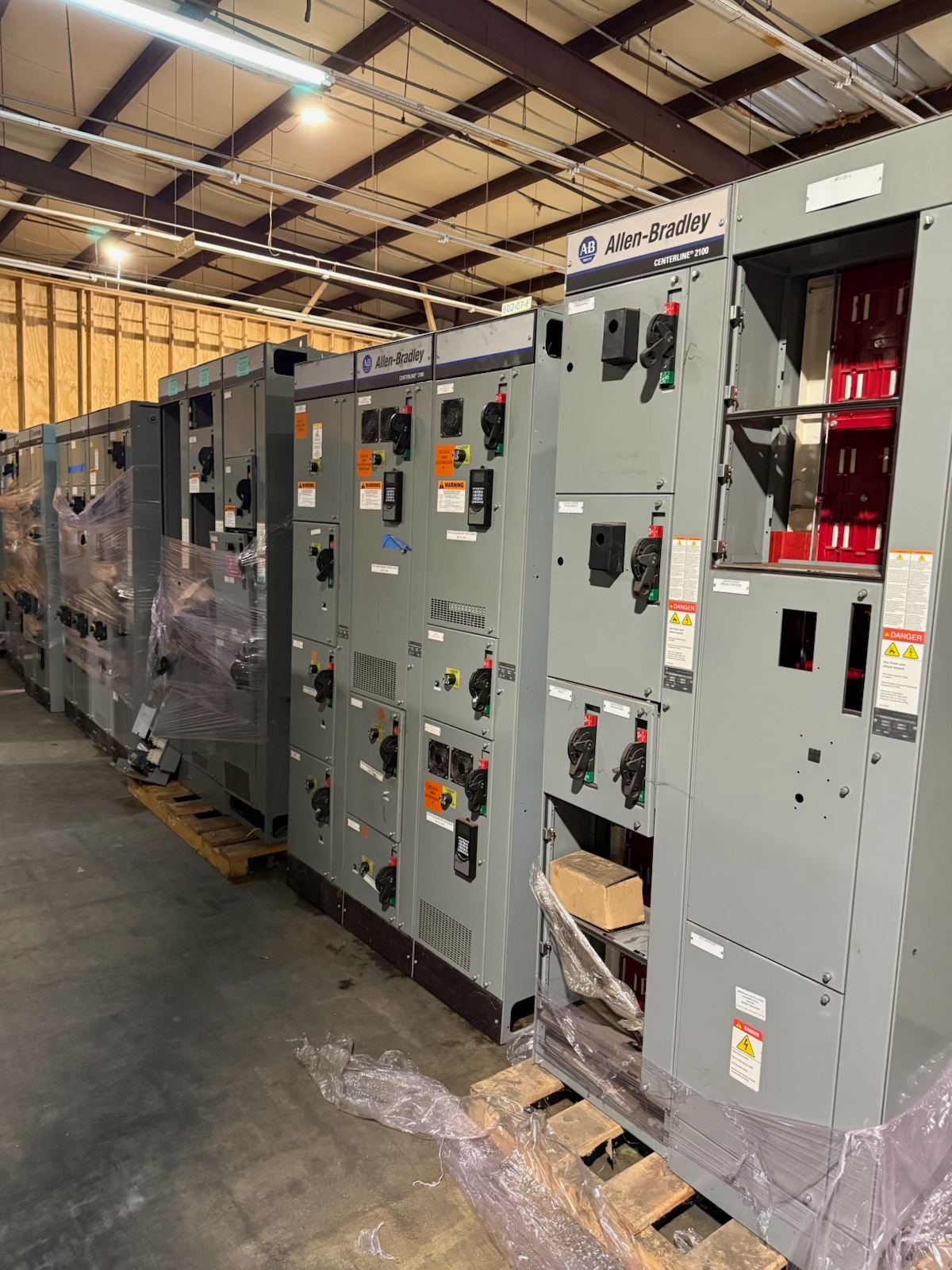
Already loose units can usually be described and counted without disturbing an electrical installation. For example, a storeroom may hold two boxed breakers alongside a breaker still installed in a lineup; report those as separate groups. Installed gear requires a different assessment because its condition and removal depend on the surrounding assembly and site conditions. Do not attempt to disconnect or remove it. Any electrical work, including isolation and disconnection, must be performed by qualified, authorized personnel under applicable site rules. Clarifying this distinction early helps avoid treating installed equipment as ready-to-load stock.
Describe packaging and storage honestly
Packaging affects what a buyer can evaluate, but a box is not a guarantee of completeness or preserved condition. Note whether units are in original-looking packaging, repacked, unboxed, or stored with protective covers, and say when that information is unknown. Mention visible water exposure, dust, corrosion, damaged cartons, or missing labels only when safely observable. Do not unpack, handle, or test a unit to answer questions. A loose unit with clear identification and a stored unit with uncertain contents are different assessment cases, even if both carry a Westinghouse marking.
Keep assembly and component identities distinct
When describing a breaker or switchgear, avoid collapsing several ratings into one label. An assembly, breaker, bus, frame, trip unit, and nominal voltage refer to different things; a visible value on one component does not establish the ratings of the whole assembly. Share only safely readable information and identify which item bears each marking. If a storeroom record supplies additional details, label them as records rather than observations. We buy across voltage classes, but the voltage class alone does not establish acceptance, fit, or suitability for any other equipment.
Document inventory without unsafe access
A concise inventory can state item count, whether each group is loose or installed, visible brand markings, packaging, storage condition, and any known ownership or record uncertainty. Photographs should show only safely accessible exterior nameplates and equipment from authorized safe positions; never operate, open, touch, approach, test, disconnect, rack out, move, or handle energized equipment to obtain images or information. If a marking cannot be read safely, say so rather than guessing. Useful records may include storeroom lists or prior documentation, provided they are clearly distinguished from current visual observations.
Plan installed-equipment removal through authorized personnel
If an inquiry includes installed gear, identify that it remains installed and describe any known site constraints without promising that removal is straightforward. Qualified, authorized personnel must perform electrical work under site rules; the seller does not need to test or prepare equipment. For equipment assessed for purchase, we can cover disconnects, crane and rigging, loading, buyer-paid freight, and hauling as applicable to the individual assessment. Those arrangements depend on the equipment and site conditions, so describe access limits or lifting constraints only from information you are authorized to provide.
Request an individual assessment and offer
We independently buy used, surplus, and decommissioned electrical equipment, including equipment from decommissioned data centers and shut-down power plants. A safely visible Westinghouse marking is identification, not an affiliation, endorsement, or assurance of a particular product lineage. We offer cash and pay upfront when a purchase is agreed, with no seller testing required. Share the inventory distinctions and available records so each item can be assessed individually. An inquiry does not guarantee acceptance, price, timing, or a specific outcome; the owner must have authority to sell.