A direct buyer for Georgia switchgear
We buy switchgear rather than sell it. That distinction matters when an electrical room is being cleared and the owner wants a straightforward disposition path. A potential sale may involve a complete lineup, individual sections, breakers, metal-enclosed gear, motor control equipment or related distribution components. Used condition, surplus status and decommissioned status are all relevant starting points; equipment does not have to be presented as new or operational to begin a review.
Our buying work includes switchgear removed from decommissioned data centers and shut-down power plants. We also review equipment from commercial, industrial, institutional and other electrical infrastructure changes. We consider all voltage classes. You do not need to decide in advance whether the gear is valuable, complete or reusable. Give us the information you have, and we can identify the questions that affect an offer.
What to send for an informed offer
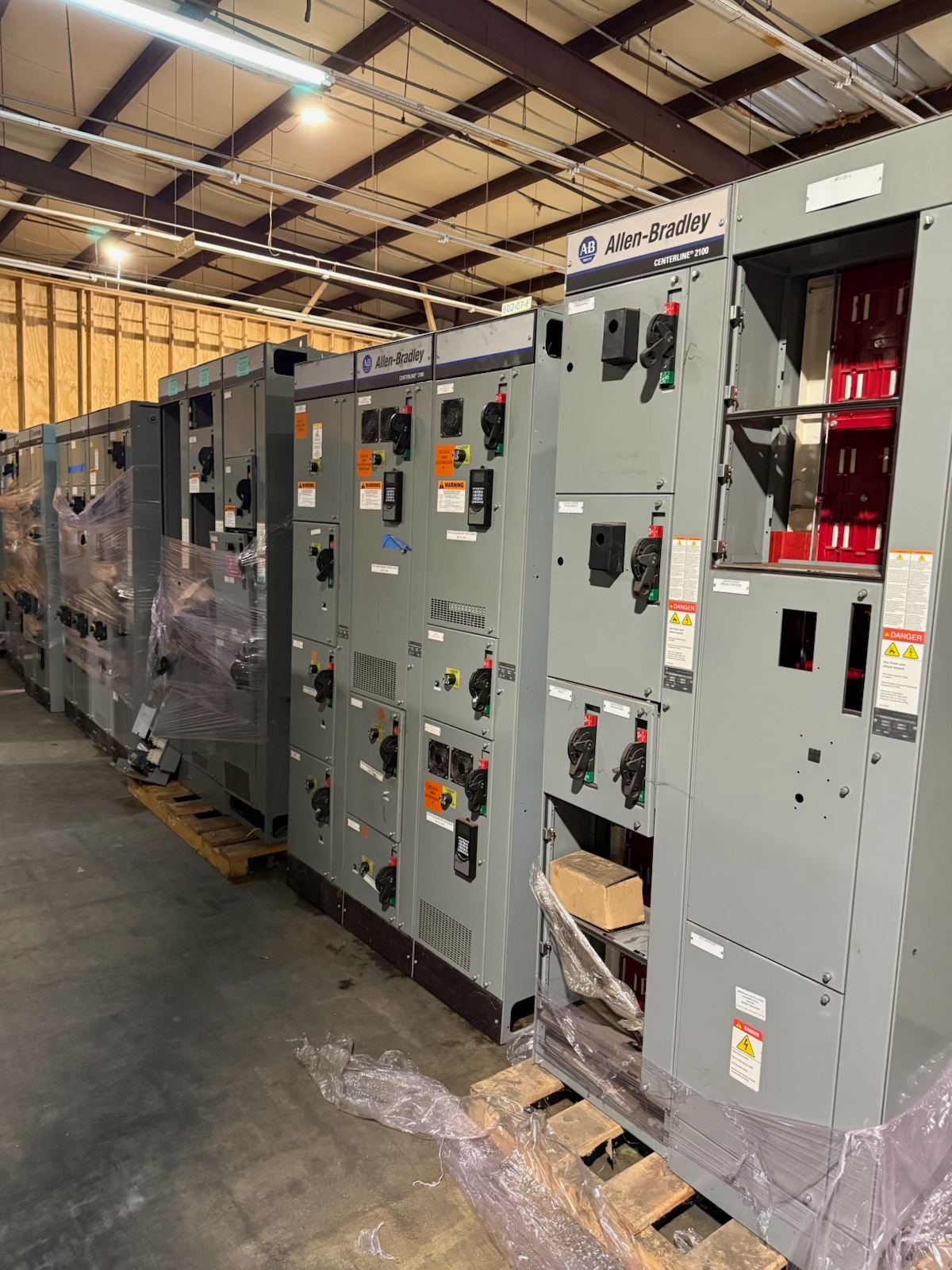
Clear exterior photographs are often more useful than a rushed attempt to inspect the inside of a cabinet. Send wide views showing the lineup, closer images of nameplates and labels, and pictures of each separate section when the gear has been divided. Include the manufacturer and model if visible, voltage class, ampere information, section count, breaker or feeder arrangement, approximate age and whether the equipment is installed, disconnected or already removed. If a label is faded or a detail is unknown, say so rather than guessing.
Completeness can affect how the equipment is evaluated. Mention missing doors, drawout units, bus connections, relays, keys, panels, hardware, documentation or loose breakers. Identify whether sections belong to one lineup or are mixed equipment from different projects. A simple inventory by room, building or lot can prevent confusion when several release dates are involved. If you have one photograph showing the entire arrangement and separate images tied to section numbers, include both.
- Manufacturer, model or catalog information visible from the exterior
- Voltage, current rating and section or lineup dimensions when known
- Quantity of sections, breakers and loose components
- Condition notes such as removed, stored, weather-exposed or incomplete
- Pickup location, access limitations and the date the equipment can be released
No seller testing required
Do not energize, open or test switchgear for the purpose of requesting an offer. We do not require seller testing. Electrical work, isolation, verification and disconnection must be handled by qualified personnel under the site’s safety procedures. Never open or handle energized equipment to obtain photographs or information. If the gear is still installed, tell us that it awaits qualified de-energization rather than trying to prepare it yourself.
This approach is useful during a facility closure because the seller can share safe, exterior information while the responsible electrical team controls the technical work. It also avoids treating age, appearance or a prior operating history as proof of present performance. We review what is documented and visible, then coordinate the next steps without asking an unqualified person to make the equipment safe.
Cash payment and a simpler disposition decision
After reviewing the available details, we can discuss a cash offer based on the equipment’s condition, identity, completeness, quantity and current market factors. There is no need to promise a fixed value before those details are known. If the offer works for you, payment is made upfront as agreed before the equipment leaves your control. This can help an owner compare a sale with continued storage, internal handling and the cost of keeping an electrical room or warehouse occupied.
Before accepting, confirm that you have authority to sell the equipment and that any landlord, lender, owner, project manager or closure process has released it for disposition. Separate equipment owned by another party, and identify any items that must remain for the replacement system. A written list of included sections and loose components makes the handoff clearer and reduces disputes about what is being purchased.
Full-service removal and freight coordination
Our team handles the practical logistics: crane planning, rigging, qualified disconnects, loading, freight and hauling. We coordinate the work around the site’s release window and access conditions so the seller is not left arranging several unrelated vendors. Tell us about dock height, door dimensions, stairs, restricted hours, overhead clearance, turning space, floor-loading concerns and whether a truck can reach the loading point. Those details help determine the appropriate removal and transport plan.
The seller’s role is to provide accurate information, authorize access and identify the site contact. Our team handles the physical logistics and the qualified electrical work; you do nothing but get paid. We are not claiming to perform unrelated demolition or hazardous-material remediation. If the site has separate requirements, restricted areas or materials requiring specialist treatment, disclose them early so the scope can be understood before scheduling.
Closures, data centers, power plants, hospitals and campuses
During a hospital closure, protect continuity and ownership decisions first: equipment may be tied to essential services, a phased shutdown or a replacement project. A campus closure can involve multiple buildings, separate custodians and staggered access dates. In either case, group the inventory by building, identify which gear is released and name one contact who can approve pickup. Do not assume that an entire electrical room is available simply because a building is closing.
For a decommissioned data center or shut-down power plant, the inventory may include large lineups, spare breakers and gear released in stages. Share the sequence, approximate dimensions and any known rigging restrictions. We can review a partial lot or a mixed inventory without requiring you to make the equipment operational. The same practical planning applies to a hospital or campus: distinguish saleable electrical equipment from assets that remain with the property or are reserved for another phase.
Start with the information you have
Contact us with photographs, labels, a basic count and the Georgia pickup location. If records are incomplete, explain what is known and what is uncertain. We can discuss the equipment, offer process, upfront payment and logistics before a pickup is scheduled. Because we buy used, surplus and decommissioned switchgear across all voltage classes, a seller does not need to wait for perfect documentation or arrange testing simply to ask whether the equipment can be purchased.