Keep system voltage separate from equipment ratings
A site record may state a nominal 4,160 V system voltage; that is not automatically the voltage rating of a particular switchgear assembly or breaker. Likewise, a 2,000 A figure might refer to an assembly’s continuous-current rating, or to a different item in an inventory. It does not identify a breaker frame, trip setting, interrupting rating, or electrical compatibility. These search-topic values need not occur together, and we do not treat them as confirmed specifications. For an assessment, report each value only where existing records or exterior nameplates support it, and preserve the wording and context attached to each figure.
Build the assessment from records already available
Useful documents may include an equipment schedule, one-line diagram, shutdown inventory, purchase record, or nameplate transcription already held by the site. Share only information authorized for release, and flag entries that are estimates, system-level descriptions, or unverified. A clear distinction between the nominal system voltage and the assembly’s stated voltage can prevent an inventory label from being mistaken for an equipment rating. Where records are incomplete, say what is unknown rather than resolving it by assumption. No seller testing, measurements, staging, fabrication, or other preparation is required to request a purchase assessment; the buyer decides whether available information supports an offer.
Identify the asset without filling gaps by inference
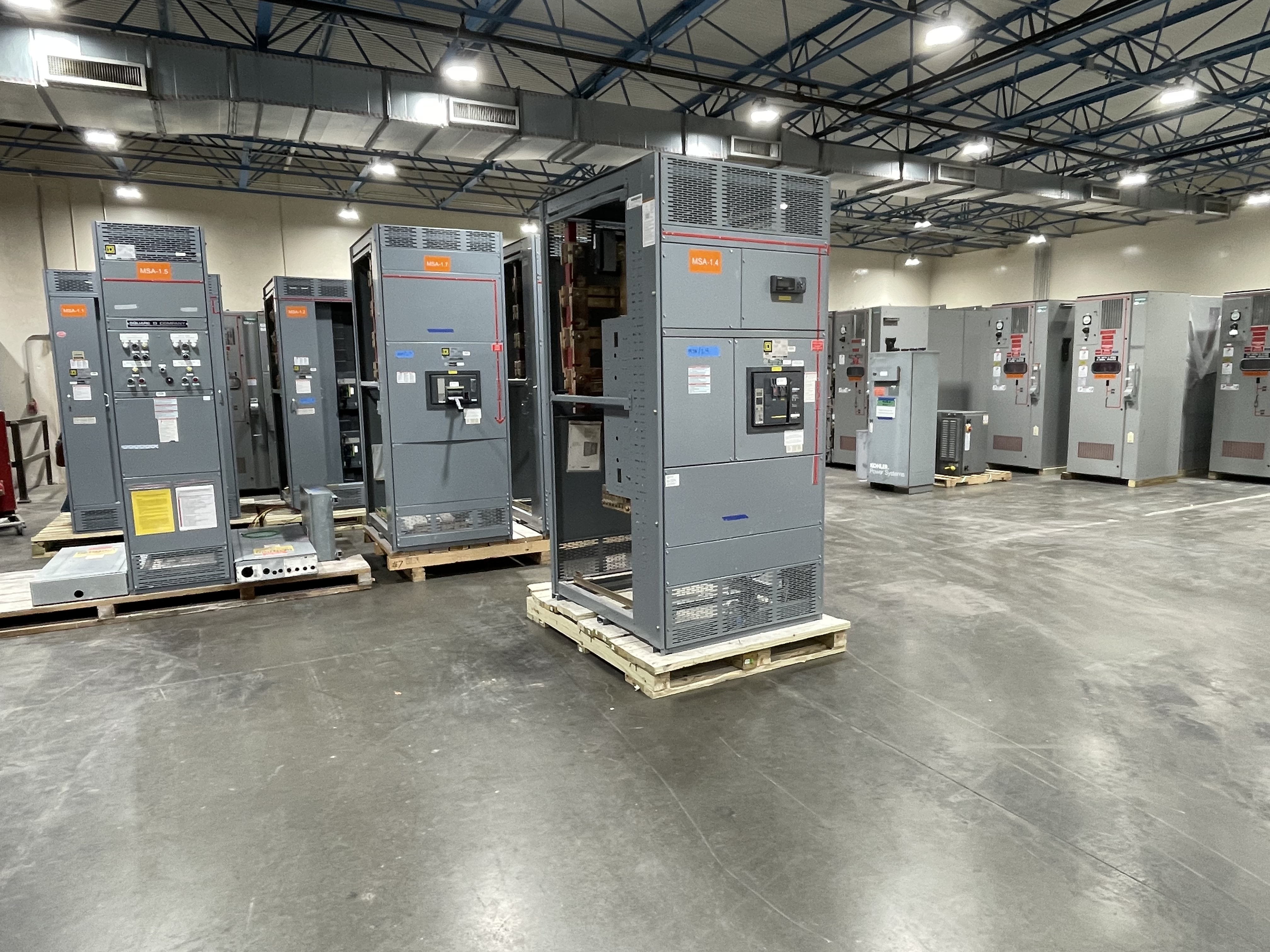
If an exterior label or nameplate is safely accessible, its recorded wording may help identify the item. Share photographs only of safely accessible equipment exteriors and exterior labels or nameplates, taken from site-authorized safe positions. Do not open a cabinet, remove a cover, or take interior photographs. Do not approach, touch, operate, test, disconnect, remove, or move equipment that is energized or could be energized. Missing, damaged, or unreadable markings remain unknown; they are not a reason for a seller to investigate the equipment. A 2,000 A notation alone does not establish frame or trip, and no voltage figure alone confirms class, condition, or compatibility.
Describe scope, condition, and exclusions plainly
For each item under consideration, distinguish the equipment being offered from related components that are excluded or whose ownership is unclear. Existing records may note storage status, visible exterior condition, or known gaps, but do not imply an inspection or verified operating condition where none occurred. A purchase assessment is not acceptance: the buyer reviews each proposed asset and the available facts individually, and may decline an item or seek clarification. Any agreed purchase should define the included equipment and applicable removal scope before work is scheduled. The assessment does not include unrelated demolition or hazardous-material remediation, and no such service should be assumed.
Agree on payment and removal responsibilities
For an agreed purchase, the buyer makes a cash offer and pays upfront according to the agreed transaction terms. The buyer covers necessary crane, rigging, disconnects, loading, freight, and hauling as part of that purchase arrangement; the seller does not hire or pay a removal crew. Scope, access, scheduling, and site conditions must be reviewed before acceptance, so neither price nor timing is guaranteed. Electrical work and any required isolation or disconnect must be performed only by qualified, authorized personnel under the site’s rules. Sellers should not carry out electrical work or prepare equipment for removal themselves.
Plan a controlled handover at the site
Before a handover, the parties can confirm the asset list, site contact, applicable access controls, and the process for coordinating authorized personnel and removal logistics. A shutdown context does not by itself prove that equipment is safe, de-energized, or ready to move. Follow site rules and keep all work within the authority of qualified personnel; do not approach, handle, operate, test, disconnect, lift, or move energized or potentially energized equipment. The buyer purchases equipment across all voltage classes and considers assets from decommissioned data centers and shut-down power plants, but every proposed purchase is individually assessed. An offer and acceptance depend on that review, with no guaranteed value or schedule.