Keep each rating tied to its source
A 120/208 V notation may describe a nominal system, while an equipment nameplate can state the assembly’s voltage rating; those are separate facts and should not be substituted for one another. Likewise, 200 A might be a documented assembly continuous-current rating or refer to a device, but the marking’s location and wording matter. Share existing records or readable exterior nameplate details where available, and identify whether a value came from a drawing, schedule, inventory, or label. If the source is unclear, call it unknown rather than assigning the number to the whole panelboard. The buyer assesses the documented combination individually and does not assume the values must coexist.
Describe the main and branches separately
For a panelboard with a marked main device and several branch devices of unknown ratings, preserve that distinction in the asset summary. An assembly continuous-current rating is not a breaker frame rating or trip rating. A device’s frame, trip, and interrupting ratings are also separate particulars; one cannot establish another from a 200 A notation. List only values supported by existing records, and mark undocumented branch ratings as unknown. Do not infer a breaker class, electrical suitability, compatibility, or whether components remain installed from a general voltage-and-current description. This careful account helps the buyer judge what information is usable without asking the seller to inspect, measure, test, or alter equipment.
Send records and safe exterior views
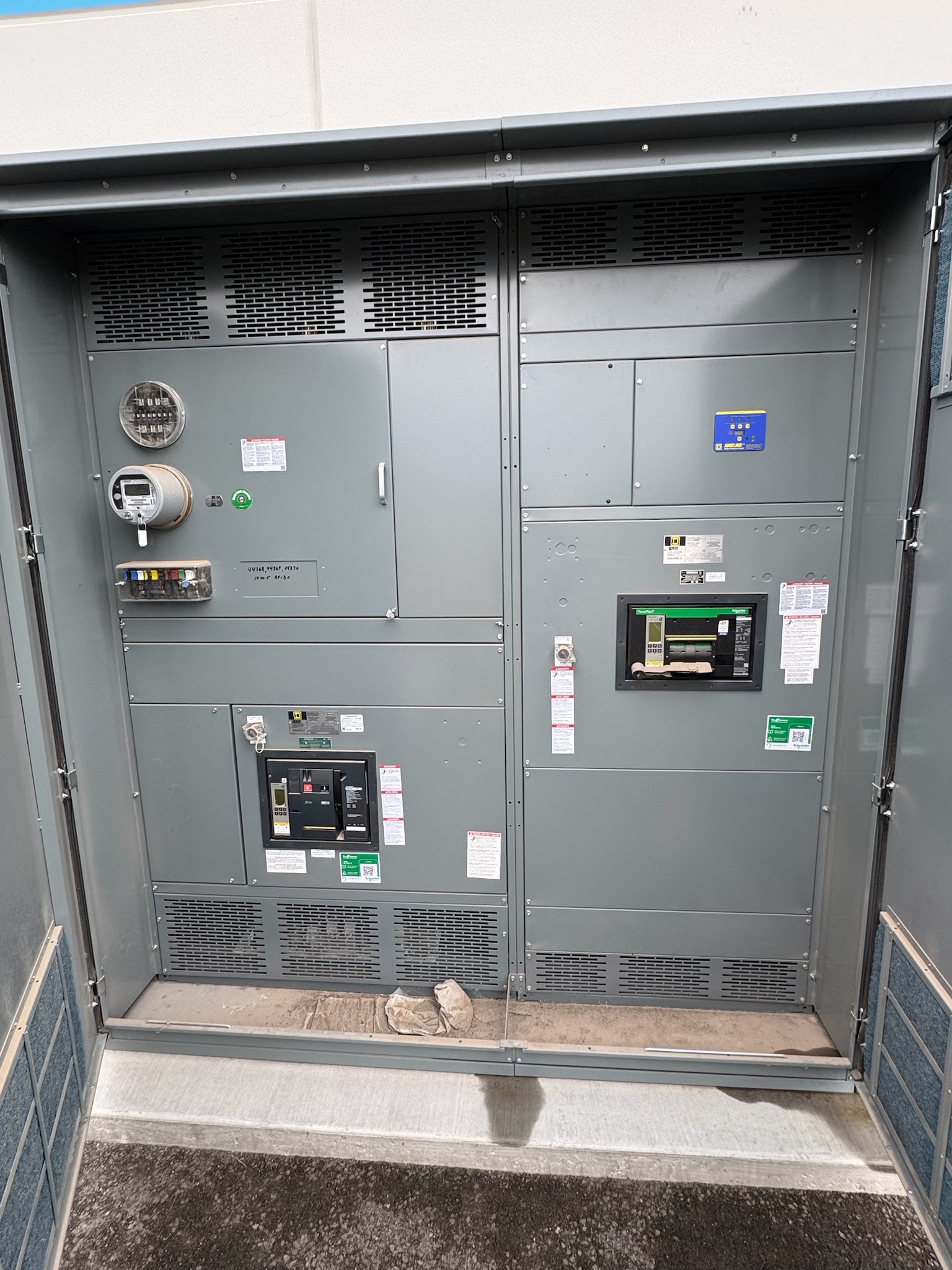
Useful existing material may include asset schedules, one-line diagrams, panel schedules, purchase records, decommissioning inventories, and prior photographs, if available and permitted to share. For new photos, use only safely accessible equipment exteriors and exterior labels or nameplates, from positions authorized under site rules. Keep cabinets closed: do not open enclosures or take internal photographs. Never approach, touch, operate, test, disconnect, remove, or move equipment that is energized or potentially energized. If access or status is uncertain, do not go closer to obtain information; rely on records or ask the site’s authorized personnel to provide what they can safely share. Missing data need not be invented to request an assessment.
Explain what is included—and what remains unknown
Alongside supported ratings, identify the asset type, quantity, general condition as already documented, location context, and any known exclusions or missing records. A panelboard described as having a marked main and unknown branch ratings is more useful than one presented with guessed branch values. Note whether the offer request concerns the assembly, separately identified devices, or both, but do not assume every component will be included in a purchase. The buyer reviews each opportunity and acceptance individually; a rating combination does not establish demand, condition, value, or availability. An assessment is not a promise to accept a particular asset, and no price or purchase timing is guaranteed.
Agree scope before removal planning
For an agreed purchase, the buyer covers necessary crane, rigging, disconnects, loading, freight, and hauling as arranged for that purchase; the seller does not hire or pay a removal crew. Confirm the purchased items, site access conditions, responsibilities, and handover sequence before work is scheduled. All electrical work must be performed by qualified, authorized personnel under site rules. The seller should not disconnect, remove, stage, lift, or handle equipment for an assessment, and no removal work should begin on energized or potentially energized equipment. The purchase arrangement covers the agreed equipment and logistics, not unrelated demolition or hazardous-material remediation. Any additional work requires its own appropriate arrangements and authorization.
Request an individual cash offer
Share the records already on hand, distinguish confirmed ratings from unknowns, and describe any site constraints relevant to a safe handover. The buyer makes cash offers and pays upfront for agreed purchases; payment and timing are subject to the individually assessed offer and acceptance, not a blanket guarantee. No seller testing is required, and the buyer purchases used, surplus, and decommissioned electrical equipment across all voltage classes. A request can include equipment from a decommissioned data center or shut-down power plant, without implying that any particular facility or asset will qualify. Keep all activity within site authorization, and leave electrical isolation and other electrical work to qualified personnel governed by site rules.