Separate the schedule entry from the equipment
Start with the source of the “225 amp” wording: it might appear on a panel schedule, an asset list, a breaker record or an equipment label. A schedule can list the main device separately from branch devices; a number beside one does not establish the rating of every component or the assembly. Preserve the document and its context rather than rewriting the entry as a confirmed switchgear specification. If records disagree, note the conflict. A buyer can assess the available information, but cannot treat a listing phrase as proof that a particular rating, configuration or complete assembly exists.
Keep voltage and current markings distinct
System nominal voltage describes the electrical system; it is not necessarily the equipment’s nameplate voltage. Where existing records support them, report system nominal voltage separately from assembly voltage and assembly continuous-current rating. Keep breaker frame, trip and interrupting ratings distinct as well: none is interchangeable with another, or established merely by a “225 Amp 120/240 Volt” description. Do not infer voltage class, application compatibility, suitability or availability from the phrase. A buyer purchases used, surplus and decommissioned electrical equipment of all voltage classes, but each asset and its documentation are assessed individually; the broad purchasing scope is not a claim that a particular item will be accepted.
Use records already on hand
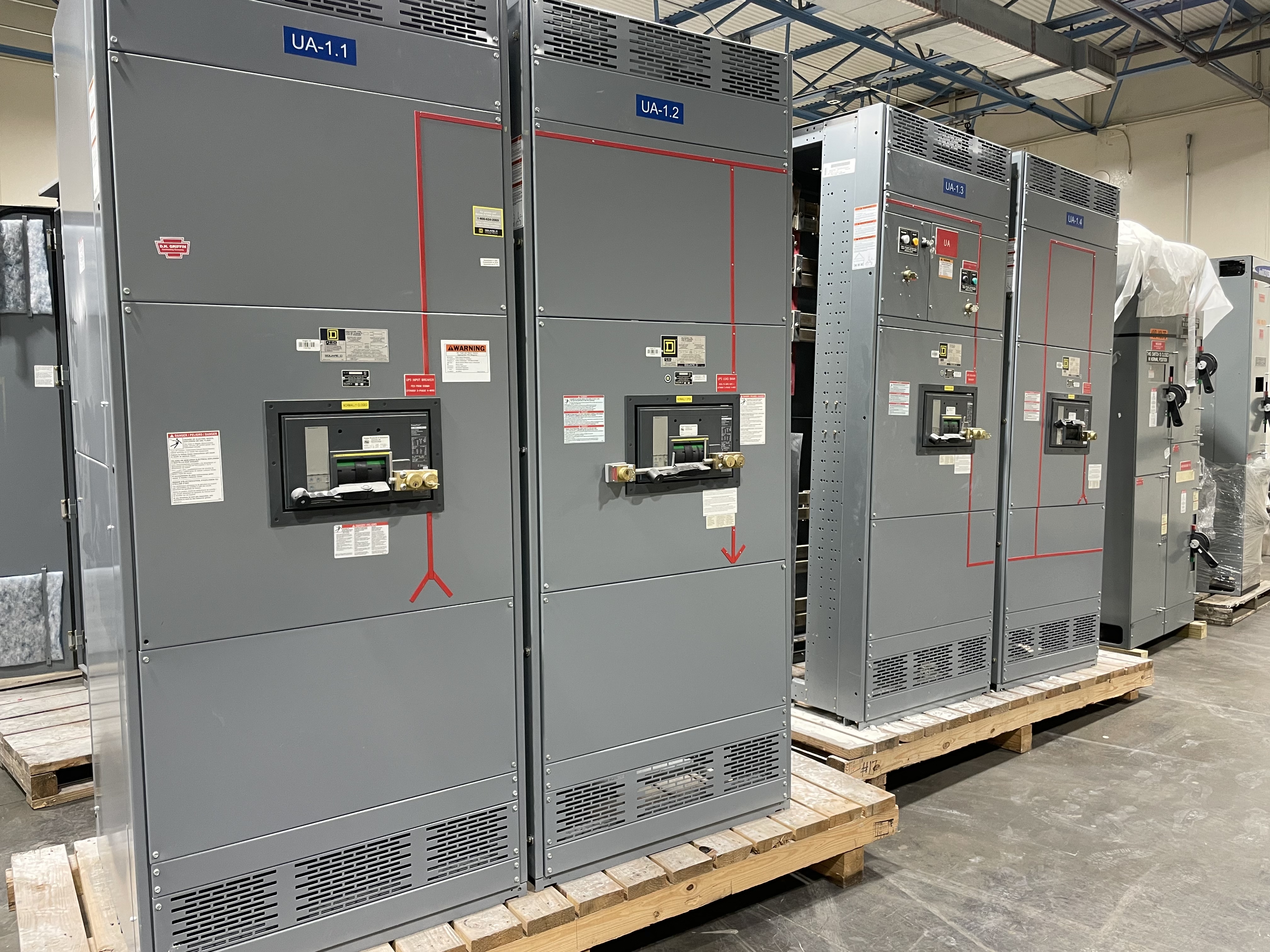
Useful existing information may include asset inventories, schedules, maintenance records, prior purchase documents and accessible exterior nameplate details. Share only records you are authorized to disclose; mark uncertain, missing or conflicting fields plainly instead of filling gaps with assumptions. Photos should be limited to safely accessible equipment exteriors and exterior labels or nameplates, taken from site-authorized safe positions. Never open a cabinet or take internal photographs. Do not approach, touch, operate, test, disconnect, remove or move equipment that is energized or may be energized. No seller testing is required to request an assessment, and you need not stage equipment, measure it or fabricate a replacement label.
Describe condition without creating a task list
For a useful assessment, report what existing records or safe visual access already show: whether the asset is represented as complete, whether accessories are separately inventoried, and whether documentation identifies omissions or damage. Distinguish recorded facts from recollections and unknowns. Do not open gear, inspect internal parts, verify operation, or arrange electrical work just to improve an offer request. If the asset’s status or location is uncertain, say so; do not move it for convenience. A buyer may request clarification, but acceptance and terms depend on an individual review. An inquiry is not a commitment to purchase every listed component or the entire installation.
Agree on scope and removal logistics
For an agreed purchase, the buyer covers necessary crane, rigging, disconnects, loading, freight and hauling under the agreed arrangement; the seller does not hire or pay a removal crew for those covered tasks. Confirm the included equipment, access conditions, responsibilities and handover plan before work is scheduled. Any electrical work must be performed only by qualified, authorized personnel under site rules. Never attempt to disconnect, lift or relocate energized or potentially energized equipment. An assessment does not include unrelated demolition or hazardous-material remediation. Explain known site restrictions using records or authorized contacts, without asking unqualified staff to investigate or prepare the equipment.
Request an assessment without assuming an outcome
Share the location in Georgia, the asset description as recorded, relevant existing documents, safe exterior photos if permitted, and known access or ownership constraints. The buyer makes cash offers and pays upfront for agreed purchases; each offer and acceptance is individually assessed, with no guaranteed price, acceptance or timing. The buyer also purchases equipment from decommissioned data centers and shut-down power plants; each proposed lot still requires individual review. Keep the handover conditional until terms and scope are agreed. If a rating cannot be substantiated in existing records, label it unknown rather than presenting 225 amps or 120/240 volts as a verified specification.