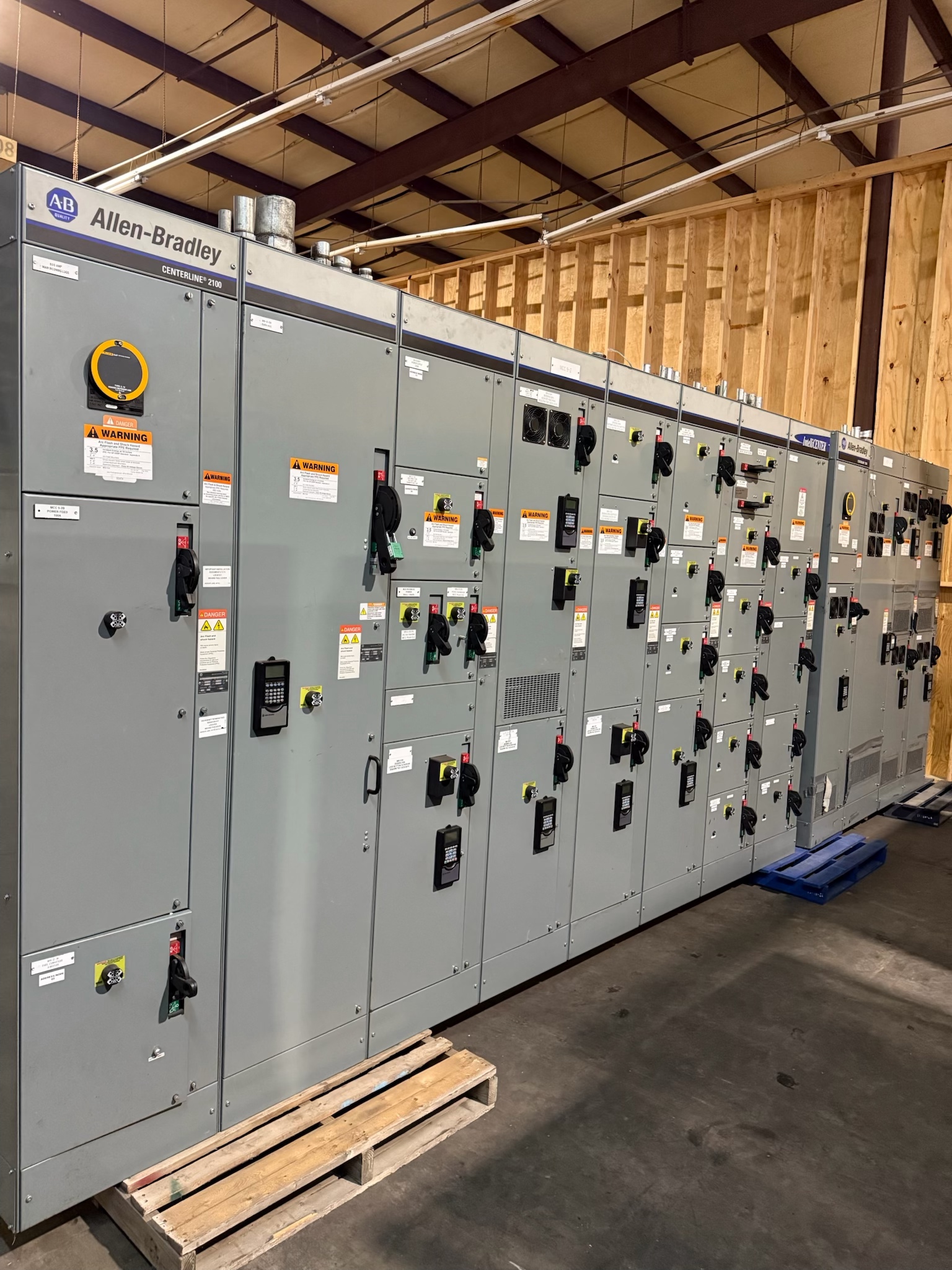
Read the ratings as separate records
A “480 V” entry can refer to nominal system voltage or an equipment nameplate value; record which one the source actually identifies rather than treating them as interchangeable. Likewise, “600 A” might describe assembly continuous current, while a breaker has separate frame, trip and interrupting ratings. Those values do not automatically coexist on one component or establish compatibility. For an assessment, share existing records with labels, units, context and the item each value describes. If a record does not say, mark that relationship as unknown instead of filling in the gap.
Describe the assembly and spare buckets
For a surplus motor-control assembly, list the main assembly separately from any included spare starter buckets. Note quantities and identifiers only where existing inventories or records support them; do not assume a spare is complete, interchangeable, or included in a rating shown for the assembly. Existing drawings, equipment schedules, purchase records and exterior nameplate information may help explain the scope. A buyer can assess the assembly and listed components as a proposed lot or separately, without presuming every component will be accepted. State plainly if records are missing or the relationship between a bucket and assembly is unconfirmed.
Use existing evidence; no seller testing
No seller testing is required to request a purchase assessment. Do not energize equipment, make measurements, operate devices, open cabinets or seek internal photographs. If useful and permitted, provide photographs only of safely accessible equipment exteriors and exterior labels or nameplates, taken from site-authorized safe positions; keep cabinets closed. Existing service documents, inventories and decommissioning records can be shared without creating new technical evidence. All electrical work must be performed by qualified, authorized personnel under site rules. Never approach, touch, open, operate, test, disconnect, remove or move equipment that is energized or potentially energized.
Flag condition, completeness and limits
Tell the buyer what existing records say about condition and whether the motor-control assembly and spare buckets are offered together, while distinguishing documented facts from estimates. Missing buckets, unknown internal condition, incomplete records, or uncertainty about whether an item is part of the lot can affect assessment. Do not infer interrupting capacity, system application, compatibility or remaining service life from a 600 A or 480 V marking alone. The buyer purchases surplus and decommissioned electrical equipment across all voltage classes, including equipment from decommissioned data centers and shut-down power plants; that broad scope does not promise acceptance of any particular asset.
Request an offer for an agreed scope
Send an inventory or a concise description of the equipment, available records, known exclusions and preferred contact details. Identify whether the cited voltage is nominal system voltage or equipment nameplate voltage, and whether current refers to the assembly or a device, only when existing documentation supports that distinction. The buyer makes cash offers and pays upfront for agreed purchases. Each offer and acceptance is assessed individually; price and timing are not guaranteed. Confirm the exact assets, included spare buckets, purchase terms and handover arrangements before treating an assessment as an agreed purchase.
Plan removal without seller-hired crew
Under an agreed purchase, the buyer covers necessary crane, rigging, disconnects, loading, freight and hauling. The seller does not hire or pay a removal crew. Coordinate access, scheduling, site approvals and responsibility boundaries before handover; the buyer’s coverage applies to necessary work for the agreed purchase, not unrelated demolition or hazardous-material remediation. No one should disconnect, lift, stage or handle energized or potentially energized equipment. Electrical work and any required disconnects must be handled by qualified, authorized personnel in accordance with site rules and applicable access controls.
Keep the handover within approved site controls
Before a proposed pickup, agree on the accepted scope and verify that site procedures allow access and removal at the scheduled time. The seller need not prepare, test, stage or fabricate equipment for a request. Do not move equipment to improve access or take photographs from an unauthorized or unsafe position; share only safe exterior views and existing records. If the equipment’s status or a proposed task is uncertain, defer to site controls and qualified authorized personnel. A purchase assessment is not authorization to enter restricted areas or alter electrical equipment.