Start by separating the two spreadsheet entries
A 480 V system label may describe the nominal voltage of a site or electrical system, not the voltage marked on a particular switchgear assembly. Likewise, “5,000 A” might be a recorded value, but without its source it cannot be confirmed as the assembly’s continuous-current rating or assigned to another component. Do not combine the entries into a presumed equipment specification. A buyer’s initial review can record both as unverified, note where each appeared, and seek matching existing documentation before drawing conclusions about the asset.
Ask what each rating actually identifies
Assembly voltage, continuous-current rating, breaker frame size, trip rating, and interrupting rating describe different things. A breaker marking does not, by itself, establish the assembly rating; a frame value is not automatically the trip setting or rating. An interrupting rating is also distinct from both. Record each value only when a nameplate, breaker label, or reliable existing record identifies what it belongs to. If the assembly nameplate is absent, unclear, or does not match the spreadsheet, leave the relevant field unknown rather than estimating it.
Build a useful record from material already available
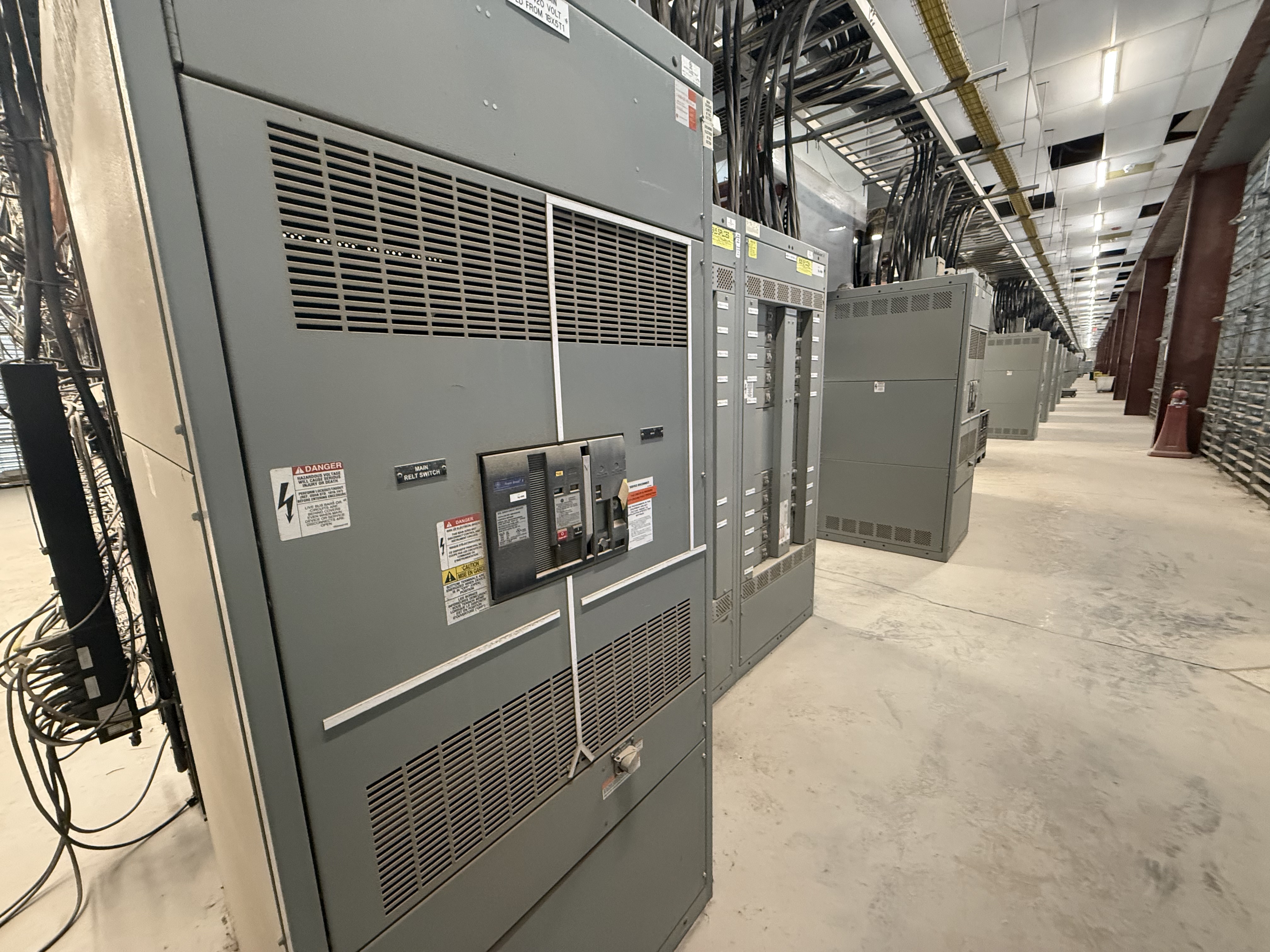
For a purchase assessment, share the spreadsheet and any existing one-line diagrams, asset schedules, invoices, manuals, or decommissioning records that can be lawfully provided. Note the document date and whether an entry refers to a system, assembly, or individual device. If site rules permit, photos may show only safely accessible exteriors and exterior labels or nameplates, taken from site-authorized safe positions. Do not open a cabinet or take internal photos. No seller testing, measurements, staging, or fabrication is required to request an assessment.
Keep the unknowns visible in the decision
Useful open questions may include the assembly’s actual nameplate voltage and continuous-current rating, the identity of the device associated with a breaker marking, and whether records refer to this exact asset. Condition, completeness, ownership authority, and access for removal also affect an individual review. A buyer should not infer voltage class, compatibility, availability, or value from “5,000 A” and “480 V” alone. Those figures are not automatically confirmed specifications for the equipment; a possible purchase depends on review and mutual agreement, with no guaranteed price or removal date.
Define exclusions before arranging removal
Clarify which identified equipment is included in an agreed purchase and what remains outside it. A purchase assessment is not a commitment to accept a particular assembly, remove unrelated site materials, perform demolition, or remediate hazardous materials. If the switchgear came from a decommissioned data center or shut-down power plant, that history may provide useful records, but does not prove a rating or condition. Buyers consider equipment across all voltage classes; the applicable class and purchase decision are assessed asset by asset.
Make freight planning part of the agreement
Large switchgear can require coordinated access, lifting and transport planning. Before an agreed purchase is scheduled, the buyer and seller should confirm the scope, site constraints, responsibilities, and safe handover sequence with authorized site contacts. For an agreed purchase, the buyer covers necessary crane, rigging, disconnects, loading, freight, and hauling under the agreement; the seller does not hire or pay a removal crew. This arrangement does not authorize work outside the agreed scope or override site safety controls, permits, or access requirements.
Protect people and property through handover
Never approach, touch, open, operate, test, disconnect, remove, or move equipment that is energized or may be energized. All electrical work must be performed only by qualified, authorized personnel under site rules; the seller need not test equipment to request a review. The buyer makes cash offers following assessment and pays upfront for agreed purchases. Acceptance, price, and timing are individually assessed, not guaranteed. Any handover should proceed only after authorization and responsibilities are clear, with safe work led by the appropriate site personnel.