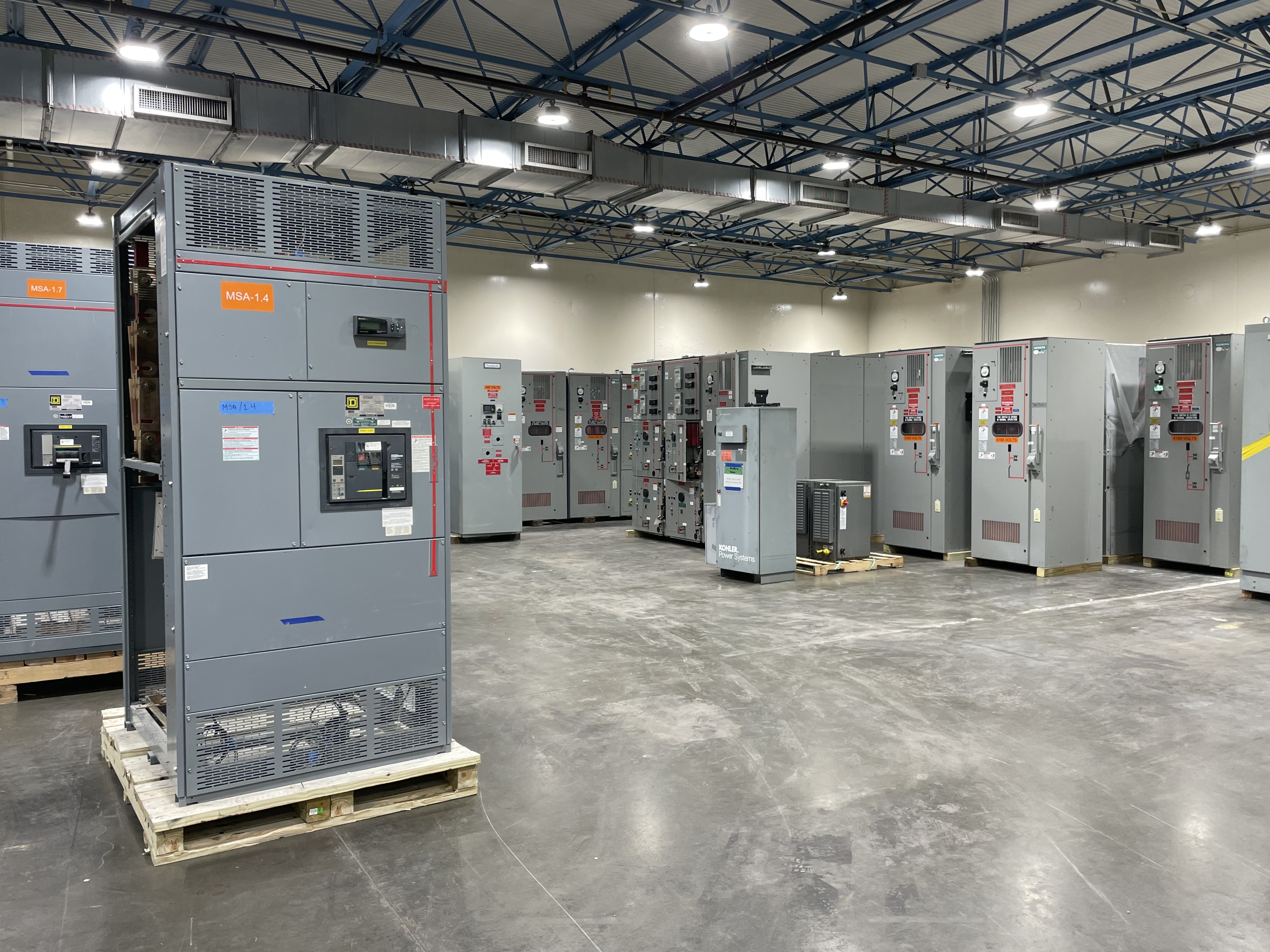
Define the asset against the closing schedule
Start with the proposed building purchase documents, especially the closing asset schedule and any exclusions, rather than assuming every nearby electrical assembly transfers with the property. Identify the main distribution switchboard by the exact wording used in records, then compare that description with any separately listed tenant-owned distribution equipment. A tenant panel or downstream assembly may be excluded even when it serves space connected to the same building. If ownership or inclusion is unclear, flag the question for the parties handling the sale. A buyer can assess only the equipment the seller is authorized to convey.
Use markings, not assumed product identity
“Square D” should be reported as marked or documented, not treated as proof of a particular product line, origin, configuration, compatibility, or manufacturer relationship. An independent buyer makes no affiliation or endorsement claim. Preserve exact wording from safely available records and exterior nameplates, including any visible designation; do not normalize incomplete or uncertain text into a model claim. If a nameplate is obscured or the paperwork differs from the exterior marking, note that discrepancy as unresolved. A purchase review can consider the available evidence without asking the seller to open a cabinet or investigate internal components.
Separate recorded ratings and unresolved details
Existing records may state nominal system voltage, assembly voltage, continuous current, device frame, trip rating, or interrupting rating. These are distinct values, not interchangeable shorthand. Report each only when supported by the relevant records or safely visible exterior marking, and keep the category beside the value. Do not infer an assembly rating from the building system, a trip rating from a frame, or compatibility from a brand name. Missing or conflicting information can remain unknown in an initial review; the seller need not test, measure, fabricate documentation, or resolve technical questions to request an assessment.
Make an initial review practical
A concise submission can identify the property’s Athens-area location, the switchboard’s stated ownership, its schedule entry, and any known exclusions or access restrictions. Share records already available, such as schedules, sale documents, prior inventories, or exterior nameplate text; there is no need to create new technical records. Photographs should show only safely accessible equipment exteriors and exterior labels or nameplates, taken from site-authorized safe positions. Never open a cabinet or provide interior photographs. If safe viewing is not available, rely on existing documentation and describe the limitation rather than approaching the equipment.
Keep electrical boundaries under site control
Do not approach, touch, open, operate, test, disconnect, remove, or move equipment that is energized or potentially energized. No seller testing is required for a purchase inquiry. Any electrical work, including isolation or disconnection where authorized and necessary, must be performed only by qualified, authorized personnel under the site’s rules. The buyer does not ask an owner or tenant to take on unsafe preparation to improve an offer. Where status or access is uncertain, stop and defer to site authority; a purchase assessment is not permission to enter a restricted area or alter equipment.
Agree scope and removal responsibilities in writing
When the parties agree on a purchase, the buyer covers the necessary disconnects and rigging, crane support, loading, hauling and freight. The seller does not hire or pay a removal crew. Confirm in writing which scheduled asset is included, what is excluded, who authorizes site access, and how removal will be coordinated within site rules. The purchase does not automatically include unrelated building demolition, tenant property, or hazardous-material remediation. If the sale schedule changes or access conditions differ, the parties should revisit the scope before any work is arranged.
Offers depend on individual assessment
The buyer makes cash offers and pays upfront for purchases agreed with the seller; the offer, acceptance, payment arrangement, and timing are assessed individually, with no price or schedule guaranteed. The buyer considers the documented identity and ownership of the switchboard, stated condition, records, exclusions, and workable handover logistics. It buys used, surplus, and decommissioned electrical equipment across all voltage classes, but that breadth does not mean every asset will be accepted. A clear schedule entry and accurate exterior markings help frame a decision without committing either party before terms are agreed.