Start with the markings actually present
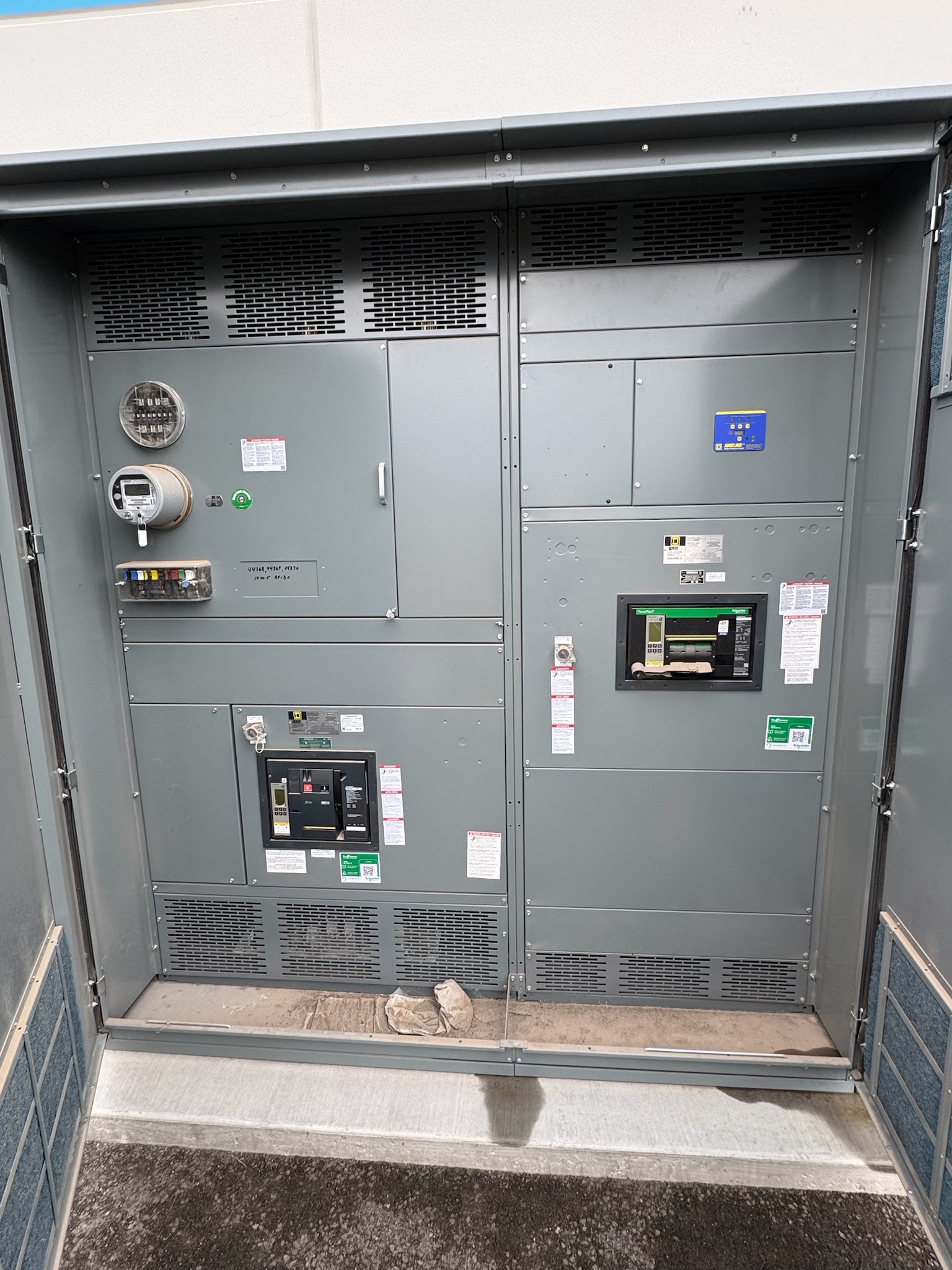
Describe what can be read on safely accessible exterior labels or nameplates, including the stated manufacturer marking, model or catalog identifier, serial number, and any listed ratings, if present. Do not infer that a GE marking establishes origin, product family, compatibility, or a particular specification. If a label is faded or partly obscured, report that plainly rather than guessing. Existing photographs are useful only when taken from a site-authorized safe position and showing the exterior or an exterior label. Never open a cabinet or make an internal photograph. A buyer can review available details without asking you to operate, inspect internally, or test the equipment.
Describe outdoor storage without diagnosing it
For an outdoor enclosure, distinguish what is known from what is uncertain: for example, whether records or staff indicate indoor or outdoor storage, approximate duration if documented, and whether the unit was covered, without treating appearance as proof of serviceability. Note visible exterior conditions such as a damaged door, missing exterior label, or apparent water staining only if they can be observed safely from an authorized position. Do not clean, dry, open, repair, or restore equipment for an assessment. If storage history is unknown, say so. That uncertainty may affect review, but it does not establish a condition, a value, or an automatic decision about purchase.
Use records, and keep rating categories separate
Useful existing records may include an inventory entry, a decommissioning list, a shipping document, or a prior equipment schedule. Share only values the records explicitly identify, and preserve their labels: nominal system voltage is not the same as assembly voltage; continuous-current rating is distinct from device frame and trip ratings; interrupting rating is another separate figure. Do not calculate a missing value or assume a rating from a GE marking, enclosure appearance, or nearby equipment. Records can help identify an item, but they may not resolve storage exposure or establish present condition. If documentation conflicts with an exterior label, report both sources and let the buyer assess the discrepancy.
Clarify the scope of a possible purchase
An independent buyer considers used, surplus, and decommissioned equipment across all voltage classes, including equipment from decommissioned data centers and shut-down power plants. Those categories describe potential sources, not a promise to accept a particular Moultrie item. Identify whether the offer concerns one listed unit or a defined group, and disclose known exclusions, missing parts, or uncertain ownership records where available. Do not assume associated wiring, controls, foundations, or other materials are included unless the agreed purchase states so. The buyer makes cash offers and pays upfront for purchases that are individually assessed and agreed. Neither an offer amount nor a removal date is guaranteed before agreement.
Set safe boundaries for review and handover
No seller testing is required, and sellers do not need to prepare, measure, stage, disconnect, or move equipment to request an assessment. Never approach, touch, open, operate, test, disconnect, remove, or move equipment that is energized or potentially energized. Any electrical work must be performed by qualified, authorized personnel under site rules. For an agreed purchase, the buyer covers necessary crane, rigging, disconnects, loading, freight, and hauling; the seller does not hire or pay a removal crew. Coordinate site access and any required approvals before handover. This scope concerns agreed equipment logistics, not unrelated demolition, site restoration, or hazardous-material remediation.
Send a clear, limited inquiry
A concise inquiry can include the item count, exact exterior markings that are safely readable, available records, known storage exposure, and the limits of what is known. If useful, attach exterior-only photographs made from site-authorized safe positions; do not enter restricted areas or take a photograph that requires approaching potentially energized equipment. State plainly when a label cannot be read or history is unavailable. The buyer can then decide whether to make an offer and what additional information is appropriate without requiring seller testing or fabrication. Acceptance, purchase scope, and logistics remain subject to an individual assessment and agreement; do not treat an inquiry as authorization to handle equipment.