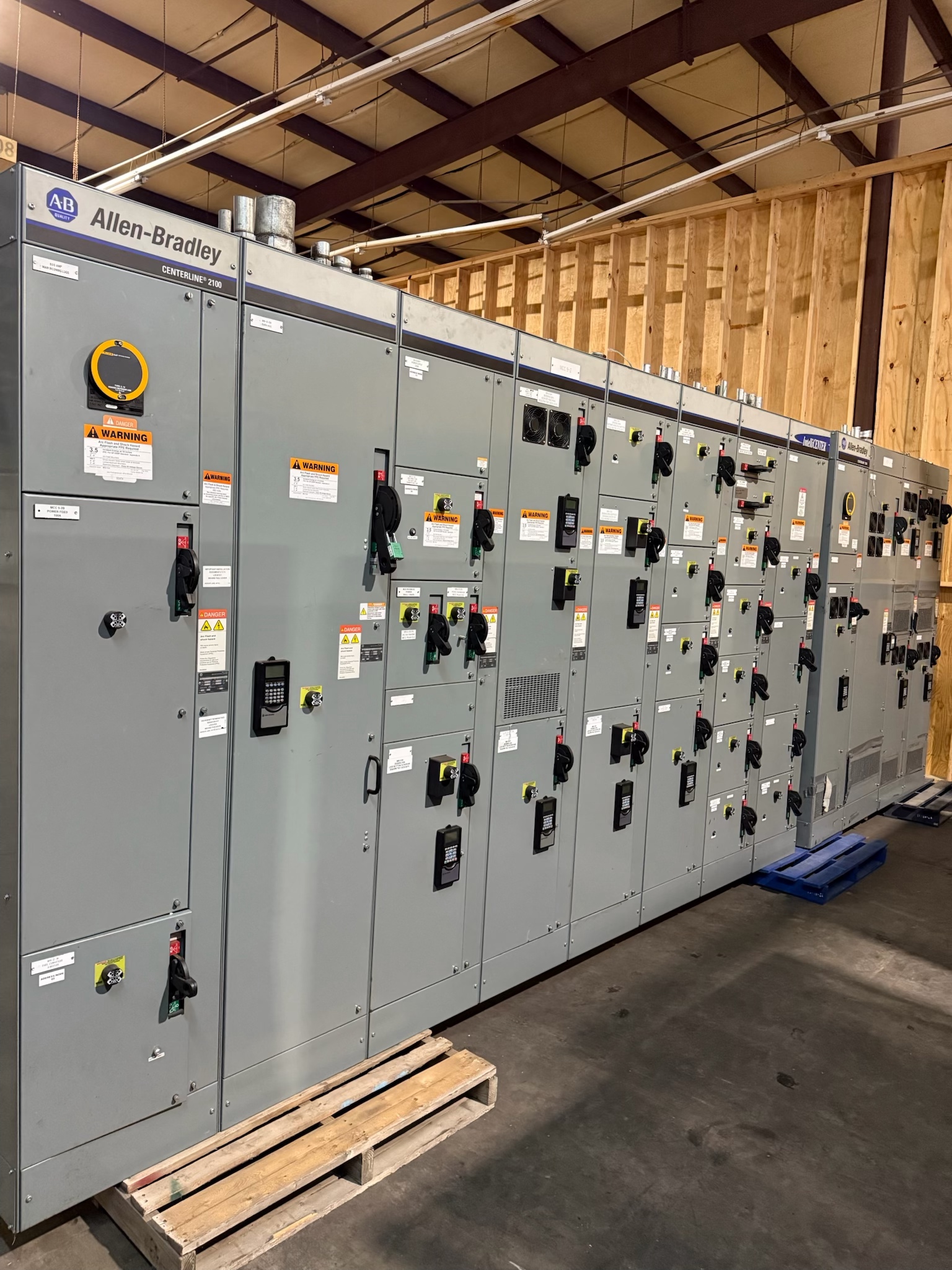
Resolve the handback boundary first
At lease handback, a tenant may believe a feeder section belongs to its business while the building owner regards it as part of the premises; the main section may have a different owner again. Do not infer ownership from which tenant used the equipment or paid for an installation. Check the lease, amendments, landlord correspondence, asset register, and any removal or restoration clause. If those records conflict, pause the sale discussion until the authorized parties resolve title and permission. A buyer assesses equipment offered for purchase, not the parties’ legal rights, and cannot turn an ownership dispute into an agreed transaction.
Use the labels that are actually present
For a Square D-marked switchboard, record exact wording that is safely visible on the exterior nameplate and exterior labels, such as the displayed manufacturer name, catalog or identification text, and any section designation. Preserve spelling and punctuation; do not supply a missing model, infer a product family, or treat the marking as proof of origin, age, or compatibility. A feeder label and a main label can help distinguish sections, but neither settles ownership. Records may also identify a serial or asset number. Share only information authorized by the site, and redact access codes, security details, and unrelated tenant data.
Keep equipment ratings in their proper categories
When available from authorized records or safely visible exterior labels, keep voltage, current, frame, trip, and interrupting ratings as separate entries rather than compressing them into one description. Nominal system voltage is not automatically the assembly’s rating, and a breaker’s rating does not establish the switchboard’s rating or suitability for another installation. Do not guess at missing values or ask anyone to inspect internal components. A buyer can consider surplus electrical equipment across all voltage classes, including low-, medium-, and high-voltage categories, while making no assumption that an offered section matches a particular system or application.
Build a useful record without testing
A concise inventory can list each section separately, its apparent role as labeled, exterior identification, quantity, known ownership, and whether supporting documents are available. Useful records may include purchase or lease documents, prior asset lists, and service records already held by an authorized party; they need not be created or updated for an inquiry. No seller testing is required, and the seller need not prepare the equipment. Do not ask staff to operate, open, touch, approach, test, disconnect, remove, or move energized or potentially energized gear. Any electrical work must be performed only by qualified, authorized personnel under site rules.
Share photographs only from safe positions
If site policy permits, photographs may show only safely accessible equipment exteriors and exterior labels or nameplates visible from site-authorized safe positions. Do not open cabinets, take internal photographs, or approach gear to improve a picture. If a label cannot be seen safely, report it as unavailable rather than seeking a closer view. A written transcription, existing approved record, or simple note that the exact label is not accessible can still support assessment. Before sharing images, check that they do not disclose restricted areas, credentials, people, tenant information, or security-sensitive details.
Scope removal around the agreed asset
If a purchase is agreed, the buyer covers the necessary crane, rigging, disconnects, loading, freight, and hauling under the agreed scope; the seller does not hire or pay a crew. Confirm in writing which tenant or building sections are included, who grants access, and how the handback boundary will be respected. The buyer’s payment is upfront for agreed purchases, with cash offers made after individual assessment; neither acceptance, value, nor timing is guaranteed. Work remains subject to site authorization and safety requirements, and electrical tasks belong only to qualified authorized personnel. This arrangement is not a promise to demolish the site or remediate hazardous materials.
Assess the whole inventory, not a presumed match
For equipment in Dunwoody, share the location, access conditions, ownership details and scope so we can evaluate a pickup. The independent buyer considers used, surplus, and decommissioned equipment, including equipment from decommissioned data centers and shut-down power plants, across all voltage classes. That broad scope does not guarantee acceptance of a particular Square D-marked switchboard, feeder, or main section. Send the exact available labels, authorized records, ownership status, and safe exterior images if permitted. Each offer and acceptance is assessed individually, without requiring seller testing or preparation.