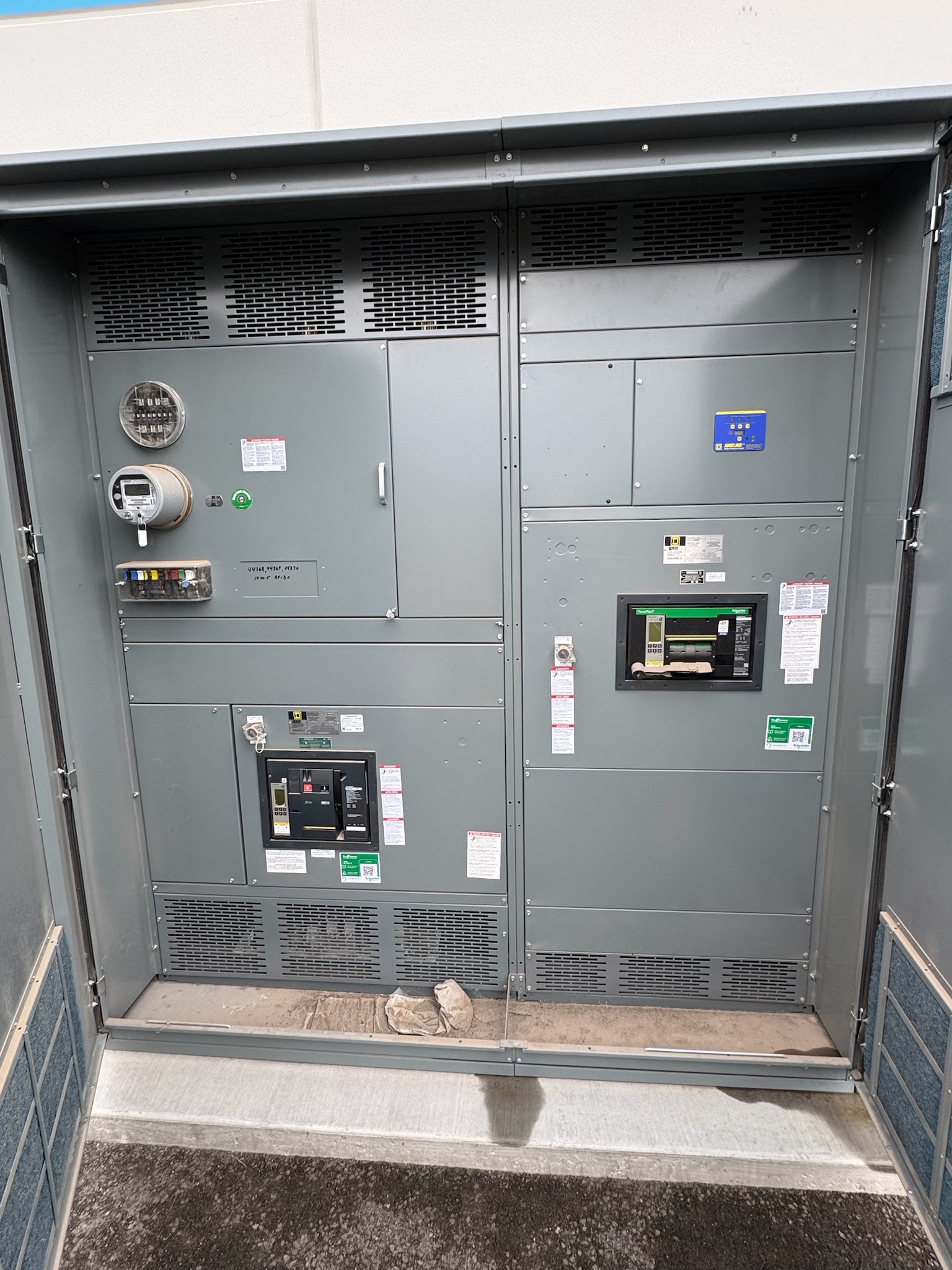
Describe the purchase boundary on paper
Start with an existing lineup drawing, equipment schedule, asset register, or other site record that identifies the switchgear and the feeder section to retain. Mark the proposed purchase scope and the exclusion by their recorded identifiers; avoid relying on a casual description such as “everything except the last section.” Record discrepancies as questions rather than resolving them through guesswork. The buyer can assess only the assets specifically presented, and a listed exclusion does not establish that equipment is electrically isolated or safe to handle. No field investigation by the seller is needed to request an assessment.
Keep ratings distinct and evidence-based
Existing records may show different kinds of ratings, so keep each value attached to its label and source. Nominal system voltage is not the same as assembly voltage; continuous current, device frame, trip setting or rating, and interrupting rating are separate details, not substitutes for one another. Include only values supported by available documentation or visible exterior nameplates. If a record is missing, inconsistent, or unreadable, identify that uncertainty instead of estimating. A buyer can review equipment across all voltage classes, but no rating alone establishes compatibility, condition, or acceptance for purchase.
Check what the exclusion actually means
A retained feeder section may be adjacent to, connected with, or part of a lineup described in the same records as surplus. Paperwork can define the commercial exclusion without proving a safe physical separation, independent operation, or a permissible removal boundary. Have qualified, authorized electrical personnel interpret the site’s configuration under applicable site rules; the seller should not open cabinets, operate devices, test circuits, disconnect conductors, or move equipment to clarify scope. If the records cannot distinguish included assets from retained assets, pause the proposed boundary for review rather than asking a buyer or unqualified staff to resolve it onsite.
Share useful information without preparing equipment
For an initial review, provide available records and a concise list of the assets proposed for sale, the retained section, and any known documentation gaps. Photographs are optional and should show only safely accessible equipment exteriors or exterior labels and nameplates, taken from site-authorized safe positions. Never open a cabinet or photograph its interior. Do not approach, touch, operate, test, disconnect, remove, or move equipment that is energized or could be energized. No seller testing, measurements, staging, fabrication, or special preparation is required to request a purchase assessment.
Agree on scope before arranging removal
If both parties agree to a purchase, document the included assets, explicit exclusions, access conditions, and handover responsibilities before scheduling work. For that agreed partial purchase, the buyer covers applicable disconnects, crane and rigging services, loading, hauling and freight. The seller does not hire or pay a removal crew. Electrical work must be performed only by qualified, authorized personnel following site rules. Do not treat a commercial agreement as permission to begin work: site authorization and safe work planning remain essential. The arrangement concerns the purchased equipment and does not imply demolition of unrelated property or hazardous-material remediation.
Understand the offer and payment basis
The buyer makes cash offers and pays upfront for purchases that are agreed. Each proposed purchase and acceptance is assessed individually, based on the documented scope, available records, access, and other relevant circumstances; neither price nor timing is guaranteed. A review is not a commitment to accept every listed asset, including the section presented as surplus. Make sure the written agreement identifies what is included and what remains with the company, and confirms the agreed payment and handover terms. A potential transaction in Bartow County is assessed on its own facts, not presumed from location.
Use a clear route from inquiry to handover
Send the scope list and existing records through a company-approved contact route, then resolve documentation questions before any site work is considered. A buyer may assess surplus from many sources, including decommissioned data centers and shut-down power plants, and considers equipment of all voltage classes; that broad buying scope does not guarantee acceptance of a particular lineup or feeder. If a transaction is agreed, coordinate access and contractor activity with the site’s authorized representatives. Keep retained equipment outside the documented purchase scope, and leave all electrical decisions and physical work to qualified, authorized personnel under site rules.