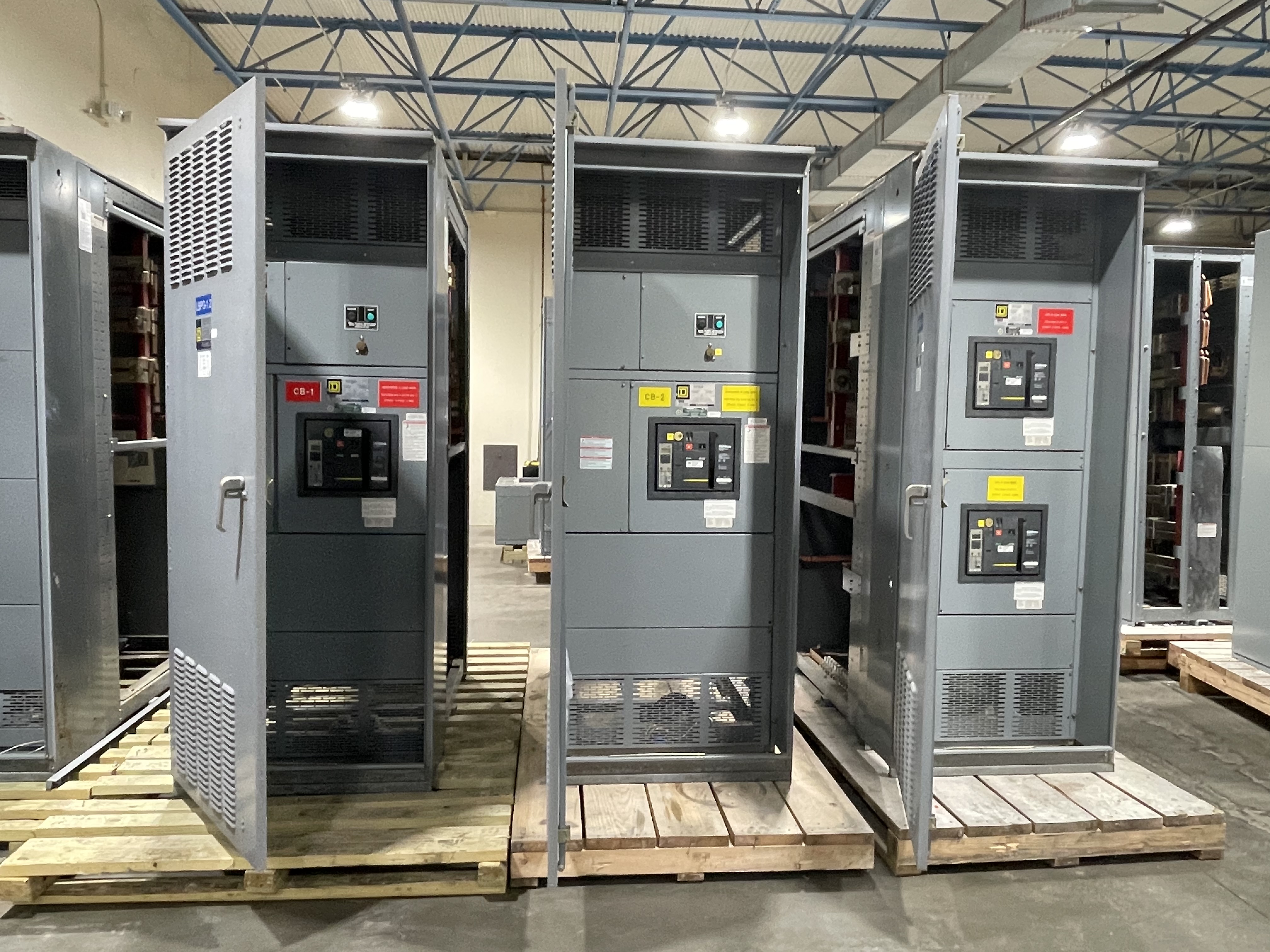
Define the MCC being offered
Start by drawing a clear boundary around the sale. An MCC may be offered as a lineup, selected sections, or particular components, but those descriptions are not interchangeable. Record which sections belong to the proposed sale and whether associated items—such as buckets, doors, control components, or loose breakers—are included, excluded, or still being identified. Do not infer that an item belongs with the MCC just because it is nearby. A simple section-by-section inventory prevents confusion if the facility plans to retain a spare bucket or reuse a control component. Photograph only safely accessible exterior nameplates and equipment from authorized safe positions; do not approach or handle equipment to obtain a photograph.
Capture identifying information without testing
Use existing records and safely visible exterior nameplates to describe the assembly and its sections. Note manufacturer and catalog or lineup identifiers when legible, section labels, visible voltage information, and any recorded ratings; mark missing or unreadable information as unknown rather than filling gaps from memory. Distinguish the MCC assembly from individual breakers and their frame or trip ratings: a breaker detail does not, by itself, describe the complete lineup or establish its suitability for another application. No seller testing is required. If a document conflicts with a visible label, preserve both references and flag the discrepancy for review instead of attempting electrical checks. An individual assessment can consider the information available.
Separate observed condition from assumptions
Record known condition in plain terms: whether a section is reported complete, whether components are known to be missing, and whether damage or prior service history is documented. Separate what someone observed from what is merely suspected. For example, “two buckets listed as removed” is more useful than calling a section incomplete without identifying why. Do not open, operate, or test equipment to improve the description. If records show that some components were retained, identify them and decide whether the remaining assembly is offered without them. Clear exclusions help an assessor evaluate the actual package, while an unknown condition should remain explicitly unknown rather than being represented as verified.
Coordinate qualified disconnection before removal
An inventory does not authorize electrical work. Disconnection and other electrical tasks must be performed by qualified, authorized personnel under the site’s rules. Agree who controls that work, how its completion will be communicated, and which areas or boundaries govern a later removal handoff. The buyer can review an MCC for purchase without requiring seller testing or seller preparation; do not treat that as permission for anyone to approach or handle energized equipment. If the facility’s shutdown plan separates electrical disconnection from physical removal, document the sequence and responsible parties so the proposed pickup window follows the site’s authorized release process rather than an assumed ready date.
Build a removal schedule around the actual lineup
Section count and arrangement matter to removal planning. Record the lineup’s approximate overall dimensions if they are already available, the number of sections, and any known access, doorway, staging, or loading constraints. Identify whether sections are expected to leave together or in planned groups, and note dependencies such as a retained adjacent section that must remain undisturbed. Do not move or handle equipment to measure it; use existing drawings or measurements obtained through authorized, safe procedures. A schedule should leave room to confirm the inventory and site access before a handoff. Timing and acceptance are assessed individually, so avoid treating a preliminary removal date as guaranteed.
Make the offer scope and logistics explicit
Send the section inventory, available records, known exclusions, condition notes, and safe exterior photographs together so the offered scope is understandable. Specify that the equipment is a decommissioned MCC, not a promise that every section is complete or reusable. The buyer purchases used, surplus, and decommissioned electrical equipment across all voltage classes and assesses each asset individually. Offers may include cash paid upfront; the seller is not required to test the MCC. The buyer covers freight, crane, rigging, disconnects, loading, and hauling as applicable to the reviewed arrangement. Confirm access and removal coordination, while leaving all electrical work to qualified authorized personnel under site rules.
DECOMMISSIONING / THE COMPLETE SERVICE
From shut-down site to paid seller.
We buy electrical switchgear from decommissioned data centers and shut-down power plants. We handle all rigging and logistics: crane, rigging, disconnects, loading, freight and hauling are on us. Qualified personnel handle electrical disconnects and isolation according to site safety procedures. The seller does nothing but get paid.
We make cash offers, pay upfront, require no testing from the seller, and buy all voltage classes. Share the site and equipment details you know; photos are helpful only when they can be taken safely. Never open or touch energized equipment or disturb a live installation.