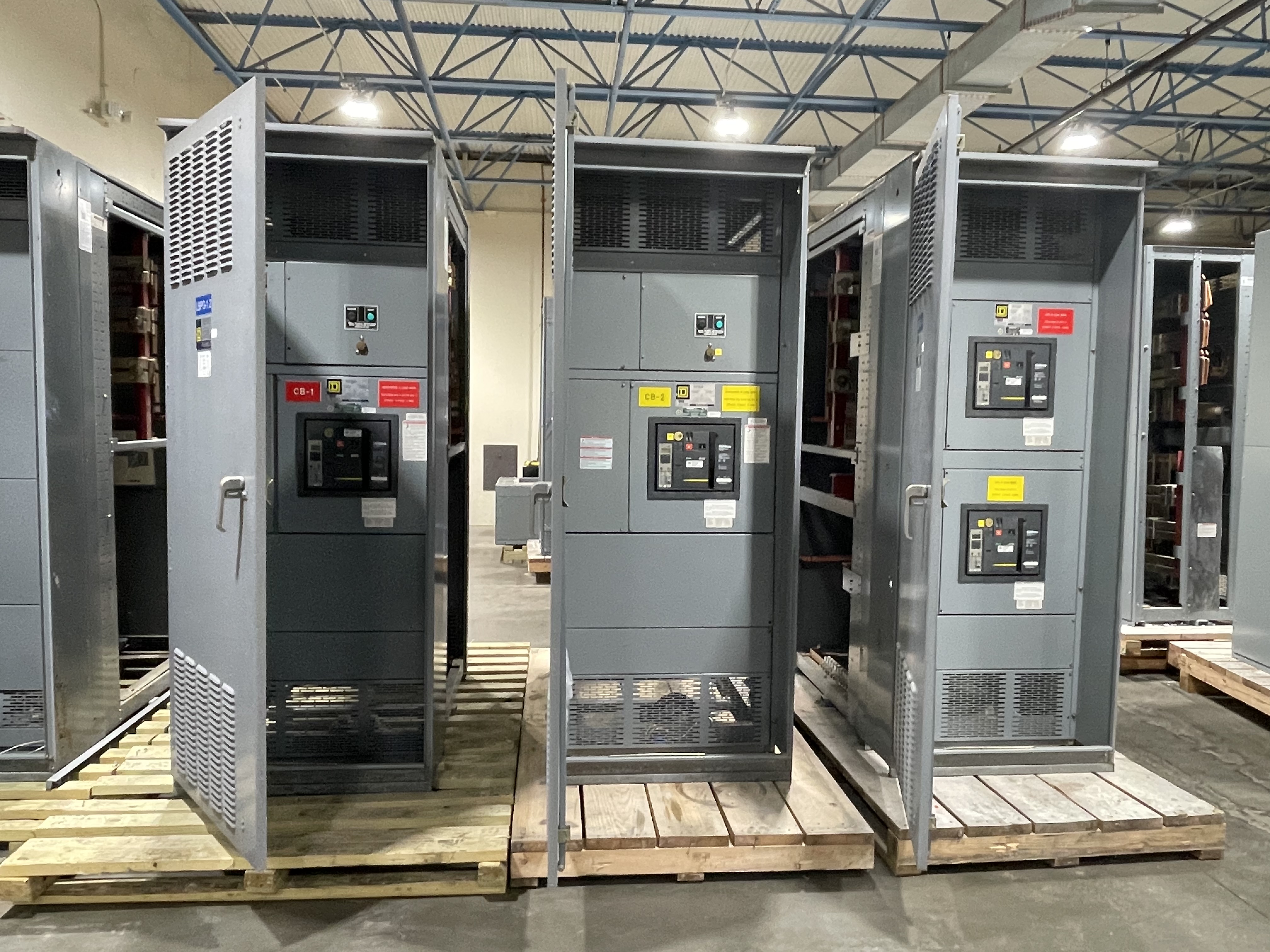
Define the lineup being offered
Describe the motor control center (MCC) as an assembled lineup, then distinguish that assembly from its sections, vertical units, and removable buckets. Record how many sections are present and identify any that are stored separately or were never installed. If the offer covers only selected sections, state that plainly rather than using a lineup-wide description that could imply more equipment is included. A simple sequence of section identifiers, where available, helps connect records and photographs to the physical inventory without assuming every position is populated or complete.
Resolve what “stored section” means
A stored MCC section may be unused, removed from a lineup, or held as a spare; those descriptions are not interchangeable. Note what is known about its history and whether it has remained separate from the installed assembly. Identify whether associated doors, bus components, barriers, or units are present, but do not infer that an empty enclosure contains them. If provenance or storage conditions are uncertain, mark them as unknown. This distinction lets a buyer review a spare section on its own merits instead of treating it as a verified match to the operating lineup.
Inventory buckets and loose components
List buckets by their visible labels or other existing identifiers, and separate installed units from loose or stored items. Record missing buckets, empty spaces, removed covers, or loose components as observed; avoid describing a position as complete unless that is known. Breakers, starters, and other devices should be identified as equipment present, not assumed from a bucket label alone. If components are offered separately from the MCC, specify whether they are included in the same offer. That clarity matters when the lineup and loose inventory may have different completeness or condition.
Document ratings without filling gaps
Capture legible exterior nameplate information from a safely accessible position, along with manufacturer and lineup identifiers if visible. Distinguish an assembly rating from a breaker rating, frame designation, trip information, and nominal voltage; one does not establish the others. Do not guess at obscured, missing, or unreadable data. The buyer considers all voltage classes, but that does not mean every combination or application is suitable. Sellers need not test equipment or open covers to provide information: report what existing records say and label any uncertain detail as unverified.
Describe known condition and limits
Condition notes should separate firsthand observations from historical reports. For example, say that a section is stored separately or that a bucket is absent, rather than declaring the MCC operational or complete without a basis. Mention known damage, corrosion, water exposure, missing labels, or prior removal if that information is available. Do not energize, open, or handle equipment to improve a listing or confirm a suspected defect. No seller testing or preparation is required; the buyer reviews the available information and assesses each asset individually, including uncertainty and apparent completeness.
Plan removal around the actual configuration
Handling depends on whether the offer is a connected lineup, separated sections, or a mix of installed and stored equipment, as well as site access and lifting constraints. Share available access details and explain which pieces are grouped together; do not assume a section can be moved as one unit. Electrical disconnects and other electrical work must be performed by qualified, authorized personnel under site rules. The buyer covers crane, rigging, disconnects, loading, freight, and hauling as applicable to an accepted purchase, with logistics assessed for the specific equipment and site.
Make the offer scope and sale terms explicit
Before review, state whether the sale includes the complete lineup, identified sections only, buckets, loose components, or accompanying records. Flag anything excluded or awaiting separate disposition so it is not mistaken for included inventory. Share safely accessible exterior nameplate photographs only from authorized safe positions; photographs never justify approaching or handling energized equipment. The buyer purchases used, surplus, and decommissioned MCCs, including equipment from shut-down power plants and decommissioned data centers. Offers are assessed individually; accepted purchases are paid upfront in cash, without a promise of acceptance, price, or schedule.