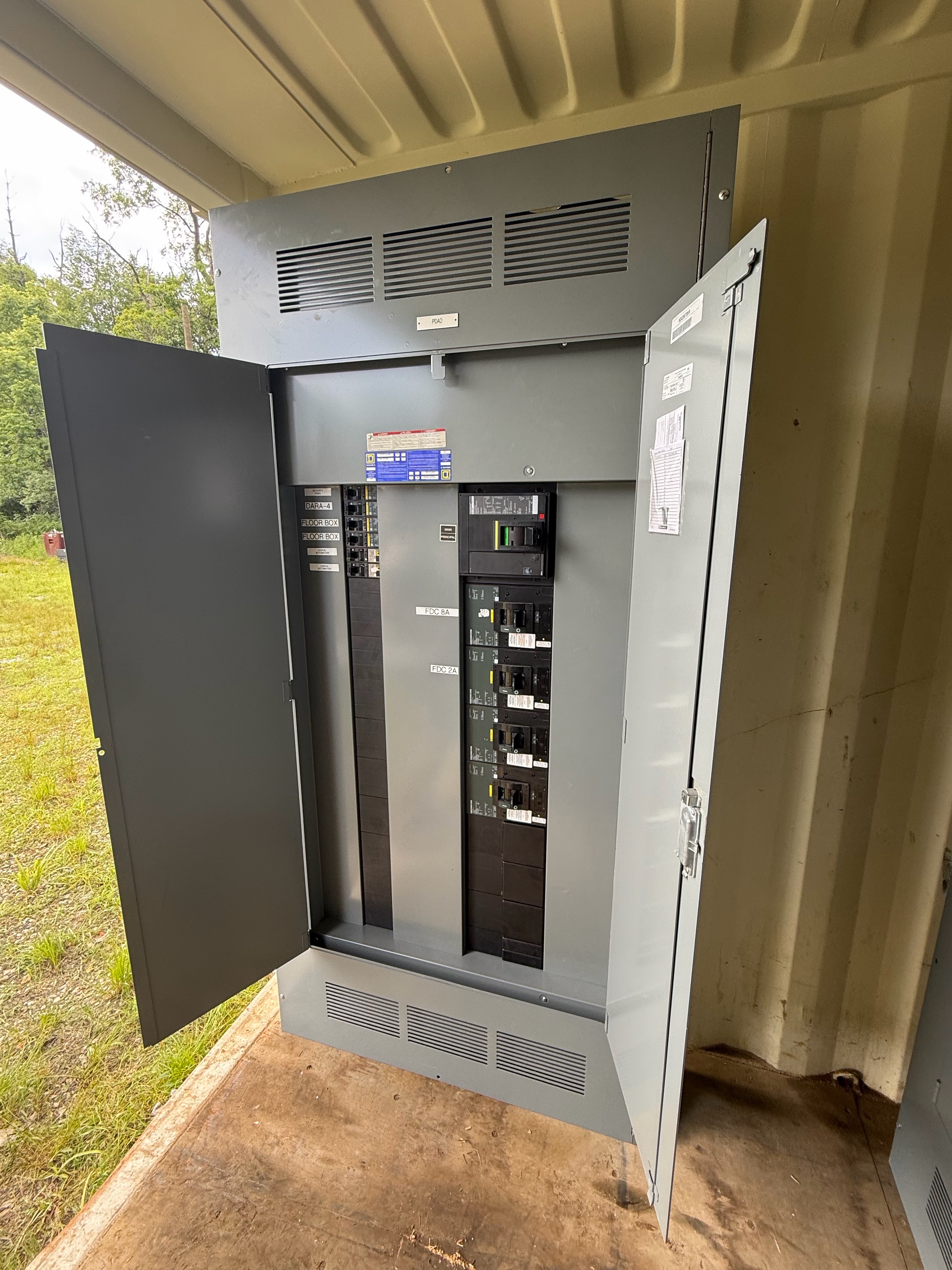
Separate the assembly’s weight from its ratings
Before discussing transport, distinguish the complete switchgear assembly from its individual breakers and components. Record any existing shipping weight or equipment weight shown in reliable records, and identify whether it refers to one section or the lineup. Do not infer total weight by adding nameplate ratings: voltage, continuous-current rating, interrupting rating and trip settings describe electrical characteristics, not lifting weight. If records are incomplete, say so rather than estimate. This distinction helps a buyer and rigging specialists decide what information still needs verification without asking the seller to inspect or handle equipment.
Document dimensions without approaching equipment
For a potential oversize load, transport dimensions matter alongside weight. Share verified overall length, width and height from drawings, prior shipping documents or other records already available. Note whether figures describe an individual section, a connected lineup or a crated unit; these are not interchangeable. If dimensions are unknown, flag them as unknown. Do not approach, open or touch switchgear to measure it or take photographs. Safe exterior nameplate photographs are appropriate only from an authorized, safe position. Accurate source notes let specialists identify uncertainties without turning seller documentation into a site inspection.
Give access windows and constraints early
A narrow pickup window can change the feasible transport and removal plan. If the property has scheduled access, security procedures, loading-hour limits or a required clearance time, provide those constraints early and distinguish confirmed requirements from preferences. Describe the pickup area and route only from information you are authorized to share; do not enter restricted areas to gather details. A longer window may offer more scheduling flexibility, while a short window could require additional coordination. Neither guarantees a particular method or date. Specialists must confirm the approach against actual access conditions and applicable site rules.
Let rigging specialists confirm the method
Do not choose a crane, lifting point, rigging configuration or loading sequence from appearance or an old drawing. If the assembly is heavy or oversized, qualified rigging specialists must assess the method, equipment and site conditions. Their review can determine whether dimensions, weight records and access information are sufficient or whether further authorized coordination is needed. Any disconnects or electrical work must be performed by qualified, authorized personnel under site rules; sellers should not disconnect, remove or move energized equipment. The buyer can coordinate crane, rigging, disconnects, loading, freight and hauling, with buyer-paid freight, subject to individual assessment.
Balance load configuration against transport constraints
An intact lineup may preserve context and reduce seller-side handling, but its overall transport dimensions could create a larger-load challenge. Separate sections might be easier to transport in some circumstances, yet separation is not automatically safer, cheaper or appropriate. It can alter what is being evaluated and requires authorized electrical and rigging decisions. If drawings identify shipping splits, share them as records—not as instructions to dismantle. Ask whether the review concerns the complete assembly or identified sections, and make clear which measurements and weights apply to each. Specialists must confirm any proposed configuration and method.
Make the offer terms and scope explicit
For a sale, clarify which equipment is included, its documented condition and what records accompany it. A buyer may make a cash offer and pay upfront, but offers and acceptance depend on individual assessment; no price, acceptance or timing is assured. The buyer requires no seller testing or equipment preparation. This matters when the gear is decommissioned or access is controlled: do not energize it, open compartments or arrange testing to support a sale. The buyer purchases used, surplus and decommissioned electrical equipment, including from decommissioned data centers and shut-down power plants, with each asset reviewed individually.
Prepare a safe, useful handoff
A concise handoff can include ownership or authority to sell, equipment identification from safely accessible exterior nameplates, available drawings, known weights and dimensions, and confirmed pickup constraints. State clearly where a figure came from and mark gaps rather than filling them by guesswork. If photographs are useful, take only exterior nameplate images from an authorized safe position; never approach equipment for a picture. Ask who will coordinate access and which site rules apply. This gives the buyer information to assess the opportunity while leaving technical verification, disconnects, lifting and transport decisions to qualified authorized personnel and specialists.