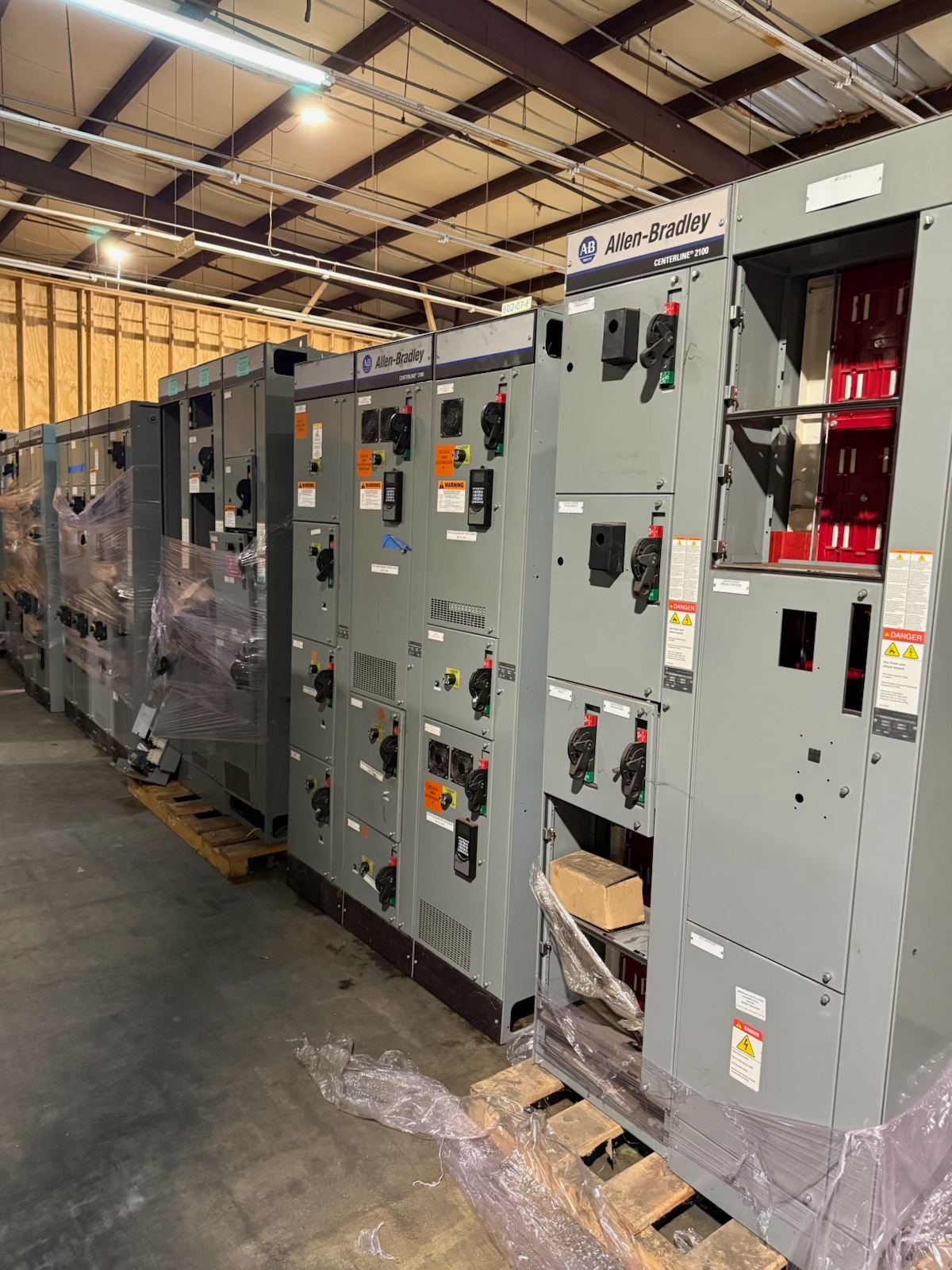
Draw the boundary around the retiring MCC
Start with the physical lineup and its service role, not with the relocated machine’s parts list. Identify which MCC sections are being retired and whether any sections or feeders continue serving equipment that stays at the site. A shared lineup may include common controls, spare spaces, or control devices associated with other loads; their presence does not make them automatically available for sale. Record the seller’s proposed boundary using existing drawings or a site-authorized equipment list. Do not ask anyone to open cabinets or verify internals. Electrical work and any isolation must be performed only by qualified, authorized personnel under site rules. The buyer assesses the specific items offered; an inventory is not acceptance.
Separate machine-specific items from common controls
Trace ownership and intended use on paper before treating an item as part of the MCC sale. Machine-mounted pushbuttons, local disconnects, control stations, cable, and automation components may have moved with the line, remain with the facility, or be owned under a different agreement. Classify each as included, excluded, or uncertain, and identify its location by existing labels or records. Do not infer that a device belongs to a particular starter solely because it is nearby. If common MCC controls remain in service, mark them as excluded and state that they are not to be disturbed. This distinction avoids an offer based on an incomplete boundary and helps prevent accidental inclusion of property the seller cannot convey.
Use records without confusing ratings
Useful records can include lineup schedules, one-lines, elementary diagrams, maintenance histories, and existing nameplate data, if available and shareable. Keep the terms distinct: system nominal voltage, equipment or assembly voltage, motor voltage, current rating, frame size, trip setting, and interrupting rating describe different things. None alone establishes compatibility or suitability for another application. Note missing or conflicting records as uncertainty rather than filling gaps with assumptions. An independent buyer purchases used, surplus, and decommissioned electrical equipment across all voltage classes, including equipment from decommissioned data centers and shut-down power plants. The buyer makes cash offers and pays upfront for purchases agreed to individually; records support assessment but do not guarantee acceptance, price, or timing.
Share only safe, authorized exterior information
For a preliminary review, share an inventory, available records, and photographs only when the equipment exterior or an exterior label or nameplate is safely visible from a position authorized by the site. Do not open cabinets, remove covers, enter restricted areas, or take internal photographs. Never operate, touch, approach, test, disconnect, remove, or move equipment that is energized or potentially energized. No seller testing is required, and the seller need not prepare equipment for assessment. If information is unavailable without access or electrical work, say so; do not create a task to obtain it. Any electrical work must be handled by qualified, authorized personnel under site rules, with responsibilities agreed separately.
Set exclusions and handover conditions in writing
Before agreeing a purchase, list the included MCC sections and separately identify retained sections, machine-specific items, connected loads, and any property whose ownership is uncertain. State known site-access limits, required approvals, and whether the asset’s condition or records are incomplete. Do not assume a purchase includes building demolition, unrelated removal, or hazardous-material identification or remediation. For an agreed purchase, the buyer covers necessary crane, rigging, disconnects, loading, freight, and hauling under the agreed scope; the seller does not hire or pay a removal crew. This does not authorize work on live or potentially live equipment. The parties should coordinate timing and safe handover with site personnel and qualified authorized electrical workers.
Assess the offer against the actual boundary
A clean inventory can still leave uncertainty about condition, completeness, access, or what remains connected. Share those limits directly and let the buyer assess the particular offer; neither a cash offer nor a proposed collection schedule is guaranteed. Tell us where the equipment is located in or around LaGrange so we can evaluate access and coordinate pickup. Compare the proposed purchase scope with the written exclusions and handover plan before acceptance. The buyer pays upfront for agreed purchases, but terms, price, and timing are assessed individually. If the boundary cannot yet be established safely, pause the assessment rather than asking staff to inspect or prepare the MCC.