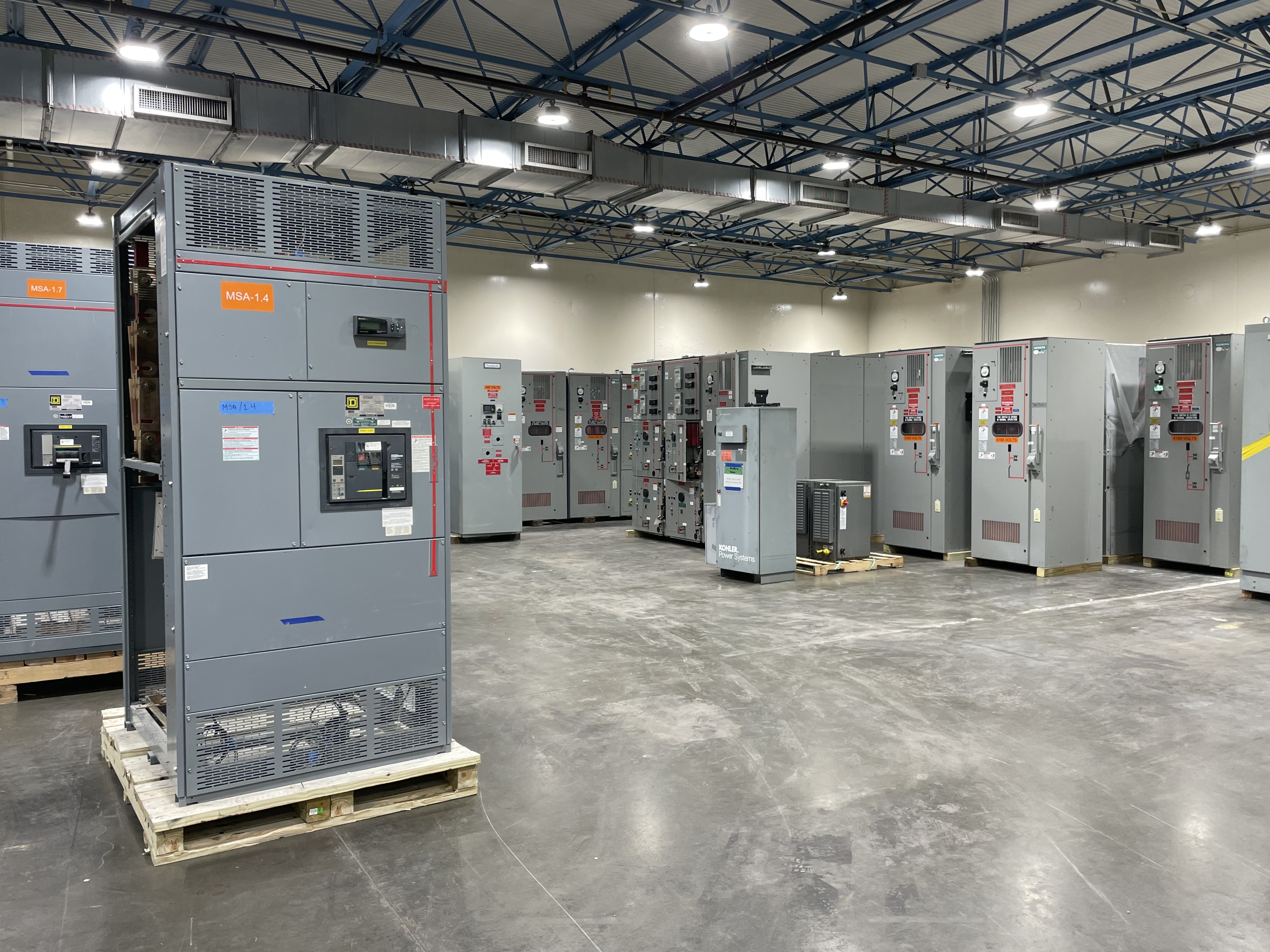
Establish authority before combining properties
When one organization controls several properties, the person coordinating disposal may not have authority to sell every asset. Confirm the legal owner of each switchgear assembly and document who can sign for that owner. A portfolio manager might coordinate schedules while separate property owners or lenders must approve disposition; those roles are not interchangeable. Ask whether authority covers the complete assembly, removed breakers, or both. If approvals are still pending, keep that property’s equipment out of a proposed sale until the authorized signatory can confirm what may be included.
Give every property its own inventory boundary
A portfolio spreadsheet should identify the pickup property and distinguish each lot by building, electrical room or other site-approved identifier, without assuming similarly described equipment is interchangeable. Record visible nameplate details only when they can be read from a safely accessible position. Note whether an entry refers to a switchgear assembly, an individual breaker, or a loose component, and avoid assigning a component to a lineup based on appearance alone. If ownership or location is uncertain, flag it for resolution rather than merging it into the nearest lot.
Keep site contacts separate from signatories
The person authorized to sell may have no access to a site, while a site contact may have no authority to transfer ownership. Record both roles for each property, along with the contact’s permitted coordination responsibilities. Ask who can confirm access rules, loading constraints, escort requirements and approved work windows; separately ask who can approve the sale and resolve inventory questions. If one contact serves multiple properties, verify access and rules property by property. This separation helps prevent a scheduling message from being mistaken for sales authorization or permission to perform electrical work.
Build lots around what is actually included
Decide whether each offer should cover a complete lineup, selected assemblies, or separately identified breakers. The tradeoff is clarity versus flexibility: a combined lot may simplify administration, but it can obscure which property owns a component or whether a breaker is included. Identify the assembly and breaker separately, and record visible frame or trip information only where safely accessible. Do not treat a shared nominal voltage or similar label as proof of compatibility, matching ratings, or common ownership. Resolve exceptions before asking for an assessment.
Describe ratings without overstating what they mean
For each lot, share legible exterior nameplate information when safely accessible, plus available records that identify the equipment and its ownership. Distinguish nominal voltage from equipment ratings, and distinguish a breaker’s frame rating from its trip rating; one number does not establish the other. A listed assembly rating should not be inferred from a breaker label, or vice versa. If labels are incomplete or records conflict, report the uncertainty instead of guessing. Equipment can be considered across all voltage classes, but each asset and offer is assessed individually, not accepted on a label alone.
Coordinate removal around authorized site work
Before scheduling, ask each site contact to explain access procedures and identify the qualified, authorized personnel responsible for electrical work under that property’s rules. Disconnects and any other electrical work belong to those personnel, not to an unqualified seller or a buyer’s assumption about site conditions. The buyer covers crane, rigging, loading, freight and hauling as applicable to an agreed transaction; confirm access and handling constraints early so the proposed plan can be assessed. No one should approach, operate, open, test, disconnect or move energized equipment. No seller testing or preparation is required.
Align approvals, offers and payment by lot
Once authority, inventory boundaries and site coordination are clear, request an individual assessment for each property or agreed lot. Ask how the offer identifies included equipment, which authorized representative must approve it, and how separate ownership records will be reflected. The buyer offers cash and pays upfront for accepted transactions, but neither acceptance nor a particular price or schedule is guaranteed; assets and offers are assessed individually. Keep the final inventory and approvals with the relevant property file. This makes it easier to reconcile what was authorized, what was included and which site contact coordinated access.