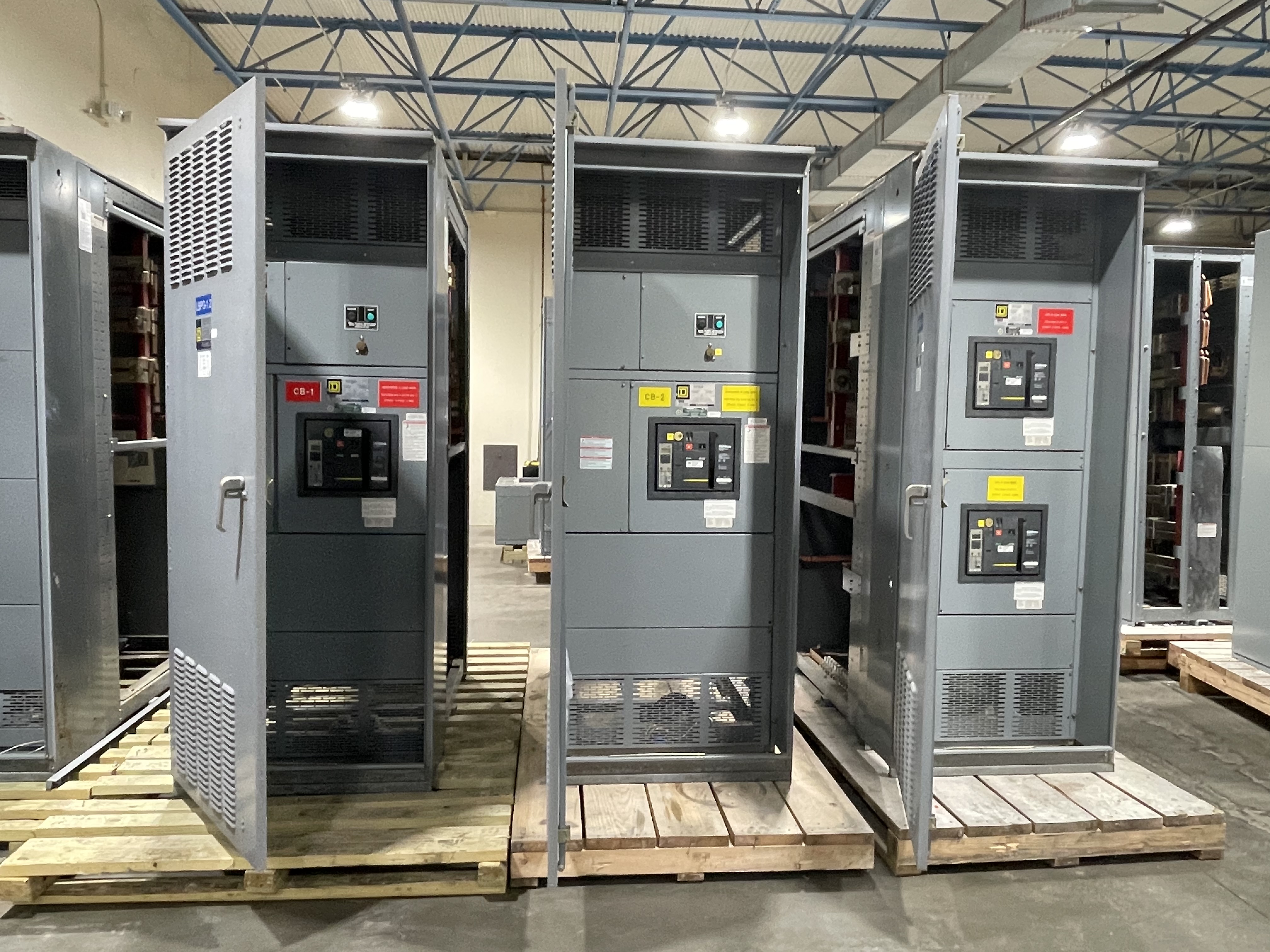
Read the bus and device labels as separate records
Start with the assembly’s bus nameplate, then record the main and feeder device labels separately. A bus rating describes the bus under its stated conditions; a main breaker label describes that device, while feeder labels describe individual outgoing devices. For example, a board might show one bus rating while its main and several feeders show different ratings. That mix is not, by itself, proof of an error or evidence that the board can support a particular load. Do not add feeder ratings, infer a lower or higher assembly capacity, or claim coordination from the labels. Keep each value, unit, location, and source distinct for review.
Document configuration without drawing conclusions
Make an inventory that ties each visible label to its position: bus nameplate, main device, and each identifiable feeder device. Note whether a value is a frame rating, trip setting, nominal voltage, or another marked rating only when the label explicitly says so. A breaker’s frame and trip information are not interchangeable, and neither substitutes for the board’s bus marking. If wording is unreadable or a label cannot be safely viewed, record it as unknown rather than filling in a likely value. Qualified personnel can interpret technical documentation under site rules; a buyer can assess the offered equipment from available information without asking you to establish system performance.
Choose photographs that show evidence safely
Useful images can reduce ambiguity, but obtaining them must not create an electrical exposure. Photograph only exterior nameplates and equipment that are safely accessible from an authorized position, following site rules. Do not open covers, approach energized gear, or enter a restricted area to improve a view. A clear overall exterior image can help identify the assembly, while separate safe close-ups may show the bus and device labels. Include a simple written map of which image corresponds to which label. If a detail is not safely visible, say so; no seller testing or additional access is required to submit an initial inventory.
Describe the mismatch without promising capacity
When the labels differ, explain the difference plainly instead of resolving it with an unsupported capacity claim. For instance, note that the bus nameplate shows one marked rating, the main label another, and feeder devices carry several other markings. Do not call the board suitable for a load, electrically compatible with another system, or selectively coordinated based on those figures alone. Voltage class is also distinct from current ratings and device settings. We buy equipment across all voltage classes, but each asset and offer is assessed individually. If drawings or records are available, identify them as supporting documents, not as a substitute for the visible nameplates or qualified engineering review.
Plan removal around authorization and site control
Before any transaction proceeds, confirm that you own the switchboard or have authority to sell it, and identify who controls access and removal approvals. If the equipment is installed, technical electrical work—including any required disconnection—belongs to qualified, authorized personnel working under the site’s procedures. Do not disconnect, dismantle, or move it yourself for a sale. Discuss access constraints, equipment dimensions if already documented, loading conditions, and any known restrictions so removal can be evaluated realistically. We cover crane, rigging, disconnects, loading, freight, and hauling as applicable, with logistics and acceptance determined for the individual equipment and site.
Compare an offer using complete, bounded information
A useful submission combines ownership authority, equipment identification, the separate bus and device markings, known condition, safe exterior photographs, and pickup constraints. Disclose missing labels or uncertain configuration rather than treating uncertainty as a defect or concealing it. We provide cash offers and pay upfront when proceeding with a purchase; there is no seller testing requirement, and no seller preparation is required. Those terms do not guarantee acceptance, a particular price, or a specific schedule: assessment depends on the individual asset and circumstances. If a board comes from a decommissioned data center or shut-down power plant, identify that context only if accurate, and keep the location and removal details precise.