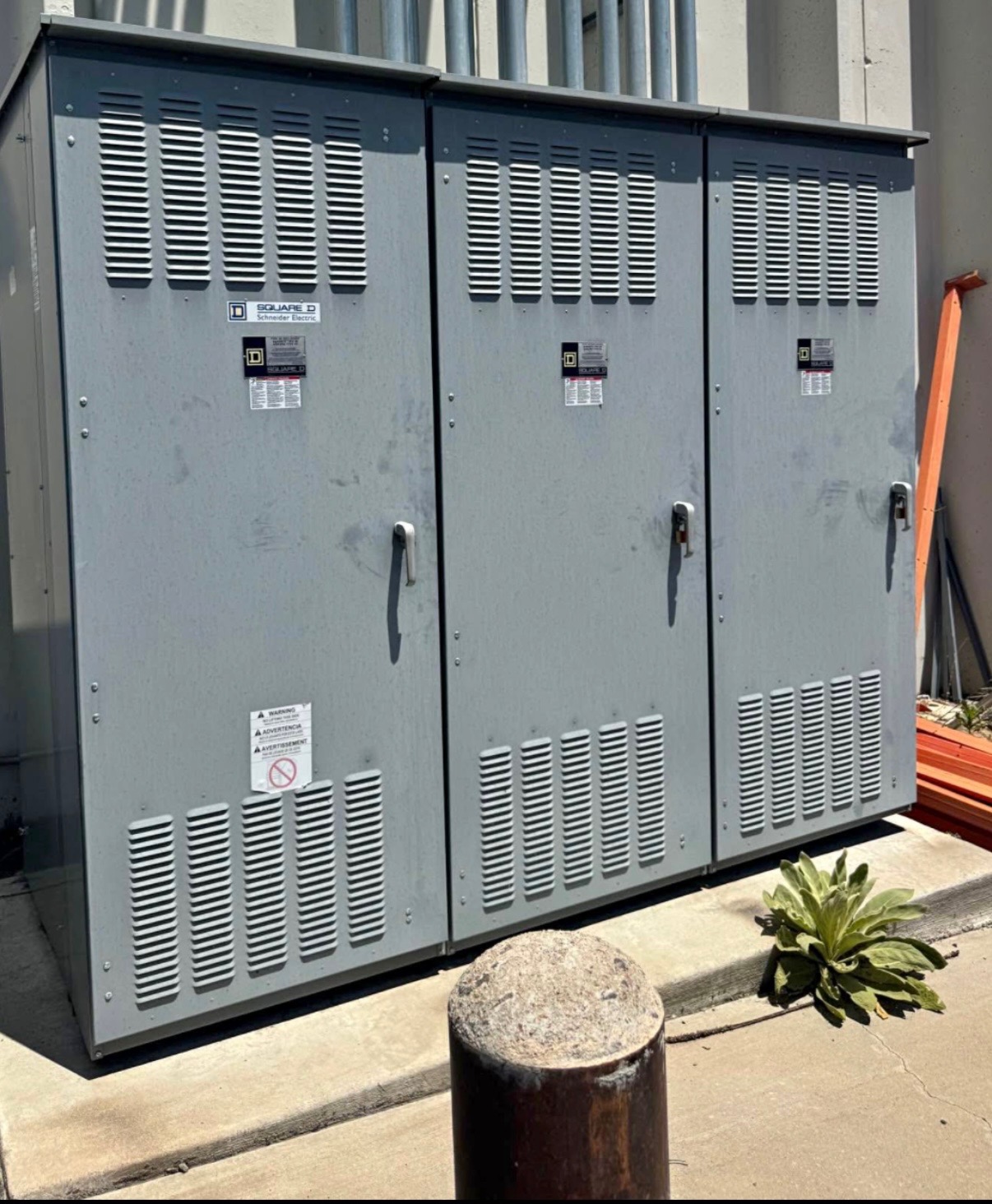
Use packaging as evidence of identity, not condition
If a pallet appears unused, compare the manufacturer and catalog information on its exterior labels with the paperwork that came with it. A carton marked for one switchgear assembly, for example, may be accompanied by an invoice listing a breaker or accessories; those are distinct assets, not interchangeable descriptions. Photograph only safely accessible exterior labels and packaging from an authorized safe position. Do not open a package to verify contents or infer that a sealed box proves the equipment is undamaged. Record discrepancies for review instead of resolving them by handling the gear.
Separate visible damage from unknown internal condition
Crushed corners, punctures, water staining, or broken pallet boards can affect confidence in packaging, but none alone establishes the state of the equipment inside. Conversely, clean packaging does not confirm that internal components remain intact or unused. Note the location and extent of visible damage, whether labels remain readable, and whether the packaging is open or resealed. Avoid describing a component as tested, sound, or ready for service without authorized evidence. The practical tradeoff is straightforward: more exterior documentation can improve an assessment, while opening or manipulating equipment creates risk and is not required for a sale inquiry.
Reconcile paperwork without overstating what it proves
Gather purchase records, packing lists, shipping documents, surplus schedules, and any records that identify the equipment or its ownership. Compare dates, quantities, catalog numbers, and descriptions, and flag conflicts rather than editing them into a single assumed match. Paperwork may establish what was ordered or recorded, not necessarily what is inside a package today. If a label identifies an assembly while a document names a breaker, explain that distinction. Include missing documents as missing; do not substitute a guessed rating or model. This gives an assessor useful context without implying a technical inspection occurred.
Identify the actual asset and its ratings carefully
Switchgear is an assembly; a breaker within it is a separate component, and a frame or trip description does not by itself identify the entire assembly. Record only information legible on safely accessible exterior nameplates, such as manufacturer, catalog or serial identifiers, and stated ratings. Keep nominal voltage distinct from current or interrupting ratings, and do not infer compatibility from a brand name or one matching number. If labels are obscured or records conflict, say so. Buying is considered across all voltage classes, but each asset and offer is assessed individually; no voltage class establishes acceptance or suitability.
Confirm ownership and authority to sell
Before requesting an assessment, establish that you own the surplus equipment or are authorized to sell it on the owner’s behalf. For a business disposal, clarify who can approve a sale and who can provide asset records; a carrier or storage contact may not have that authority. If paperwork lists another entity, resolve the authorization question before treating the equipment as available. Share the pickup location in Fulton County and a useful description of packaging and access, without implying any particular facility or project. The location helps frame logistics; it is not evidence of local inventory or a local buyer office.
Plan safe, practical pickup access
Packaged switchgear can be heavy, awkward, or difficult to reach, so describe observed access conditions without moving it to improve a view. Useful details include pallet count, approximate exterior dimensions if already documented, loading-dock availability, door or route constraints, and known site restrictions. Do not approach or handle energized equipment or ask unqualified staff to disconnect, rack out, or reposition it. Any electrical work must be performed by qualified, authorized personnel under site rules. Depending on the assessment and site conditions, buyer-paid freight, crane, rigging, disconnects, loading, and hauling may be considered; arrangements are not automatic.
Request an assessment with clear expectations
Send the label and packaging observations, relevant paperwork, ownership confirmation, and access information together so uncertainties are visible. No seller testing or seller preparation is required, and do not open, energize, or alter equipment for an inquiry or photograph. If the assets are considered, the buyer may make a cash offer with upfront payment, subject to individual assessment and agreed transaction details; acceptance, price, timing, and specific logistics are not guaranteed. A useful request asks which records or exterior views would clarify the discrepancy, who may authorize access, and how a potential pickup would be coordinated without unsafe handling.