Start with authority to sell, not the equipment list
Before asking for an offer, establish who owns each switchgear lineup and has authority to sell it. A campus building may be owned by one entity while a utility, tenant, service provider, or another campus department owns a meter, control panel, or related component. Those items should not be treated as included merely because they sit beside the gear. Ask the property representative to identify ownership and any restrictions in writing, and flag disputed or excluded items. We can assess equipment individually; the seller remains responsible for confirming sale authority and defining the offered scope.
Choose building-by-building release or a combined package
Releasing one building at a time can keep the inventory and access boundaries clear, especially if other buildings remain occupied or have different closure dates. A combined release may simplify coordination when ownership, access, and removal authority align across buildings, but it can leave uncertain items mixed into the scope. For example, a clearly identified lineup in a closed building is easier to distinguish from a shared control cabinet serving two buildings. Document which building each asset serves, whether it is included, and when that building may be released; offers and acceptance are assessed individually, not guaranteed by package size.
Separate metering and control boundaries carefully
Metering and control equipment can complicate a sale even when the main switchgear appears surplus. Ask the owner’s facilities and electrical representatives which meters, control devices, and associated assemblies belong to the seller, and whether any serve another building or remain under a third party’s control. Record identifiers from safely accessible exterior nameplates and existing asset records; do not open equipment to resolve uncertainty. If ownership or service boundaries are unclear, keep the component out of the proposed sale scope until authorized representatives settle the question. This avoids treating proximity as proof of ownership or disconnection authority.
Describe the inventory without seller testing
No seller testing or seller preparation is required for us to consider equipment. A useful inventory can include building designation, lineup or assembly identification, quantity, visible exterior nameplate details, known condition history, and any documented exclusions. Distinguish an assembly from its breakers, bus, frame, and trip unit where records or safe exterior identification make that possible; these are not interchangeable descriptions. Note nominal voltage and ratings only when supported by a legible nameplate or reliable records, without assuming compatibility from appearance. Photographs should show only safely accessible exterior nameplates and equipment from authorized safe positions.
Plan the sequence around access and safe release
For a staged closure, agree which building can be released first and who controls access to each area. A building-by-building sequence may reduce interference with occupants, retained services, or later work, while a single coordinated release may suit a fully cleared area. The schedule must reflect the owner’s shutdown and access controls; it is not a reason to rush a release. All electrical work, including disconnects, must be performed by qualified authorized personnel under site rules. Never approach, touch, open, test, operate, or move energized equipment, or take photographs from an unsafe position.
Compare removal scope and payment terms
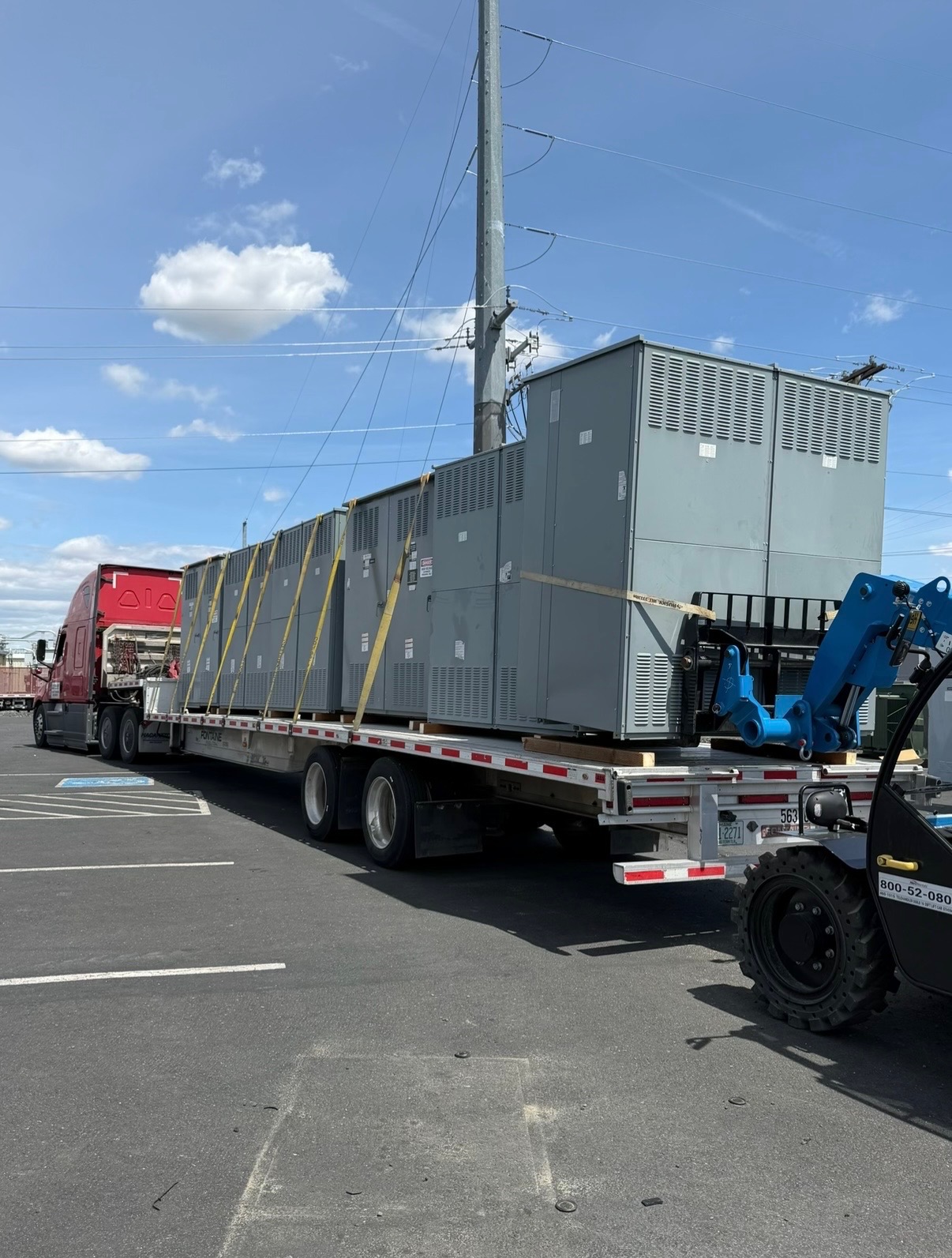
When evaluating an offer, clarify the equipment scope and the practical removal responsibilities rather than comparing a price in isolation. We buy across all voltage classes, but each asset is assessed individually and no particular item or outcome is promised. If an offer is accepted, payment is upfront; there is no requirement for seller testing. We cover buyer-side freight and hauling, and can coordinate crane, rigging, disconnects, and loading as applicable to the agreed scope. Confirm access limits, building release order, and any excluded property in writing so those arrangements match the actual assets and authorized work.
Make the handoff building-specific
Before a handoff, reconcile the inventory against the building release plan: identify included equipment, excluded meters or controls, access authorization, and any items still serving another area. A designated representative can confirm that the seller has authority to transfer the listed assets and that qualified personnel have handled required electrical work under site rules. If a later building becomes available, treat it as a separate proposed release rather than assuming it is covered by an earlier agreement. This keeps the scope understandable for both parties while leaving acceptance, valuation, and removal details subject to individual review.