Start with separate property boundaries
If equipment is being considered at more than one property, define each lot before asking for a combined review. A lot might include one switchgear lineup at a particular building, while a nearby transformer or spare breaker belongs to another owner or is excluded. Marking the boundary in a written inventory prevents a broad phrase such as “all electrical gear” from creating uncertainty. Record the property identifier, equipment area, included items, and exclusions separately. A buyer can then assess whether one coordinated purchase makes sense without treating distinct properties as one undifferentiated asset.
Confirm authority for every asset
Ownership and sale authority should be checked for each property, not assumed from a shared management contact. One company may own the building, another may own installed equipment, and a lender or former operator may have an interest that needs resolution. Identify the legal seller for each lot and note who can approve a sale and access. If authority differs between sites, document that distinction before comparing offers. The buyer assesses assets and offers individually; clear authority helps avoid including equipment that the proposed seller cannot legally transfer.
Build an inventory that distinguishes components
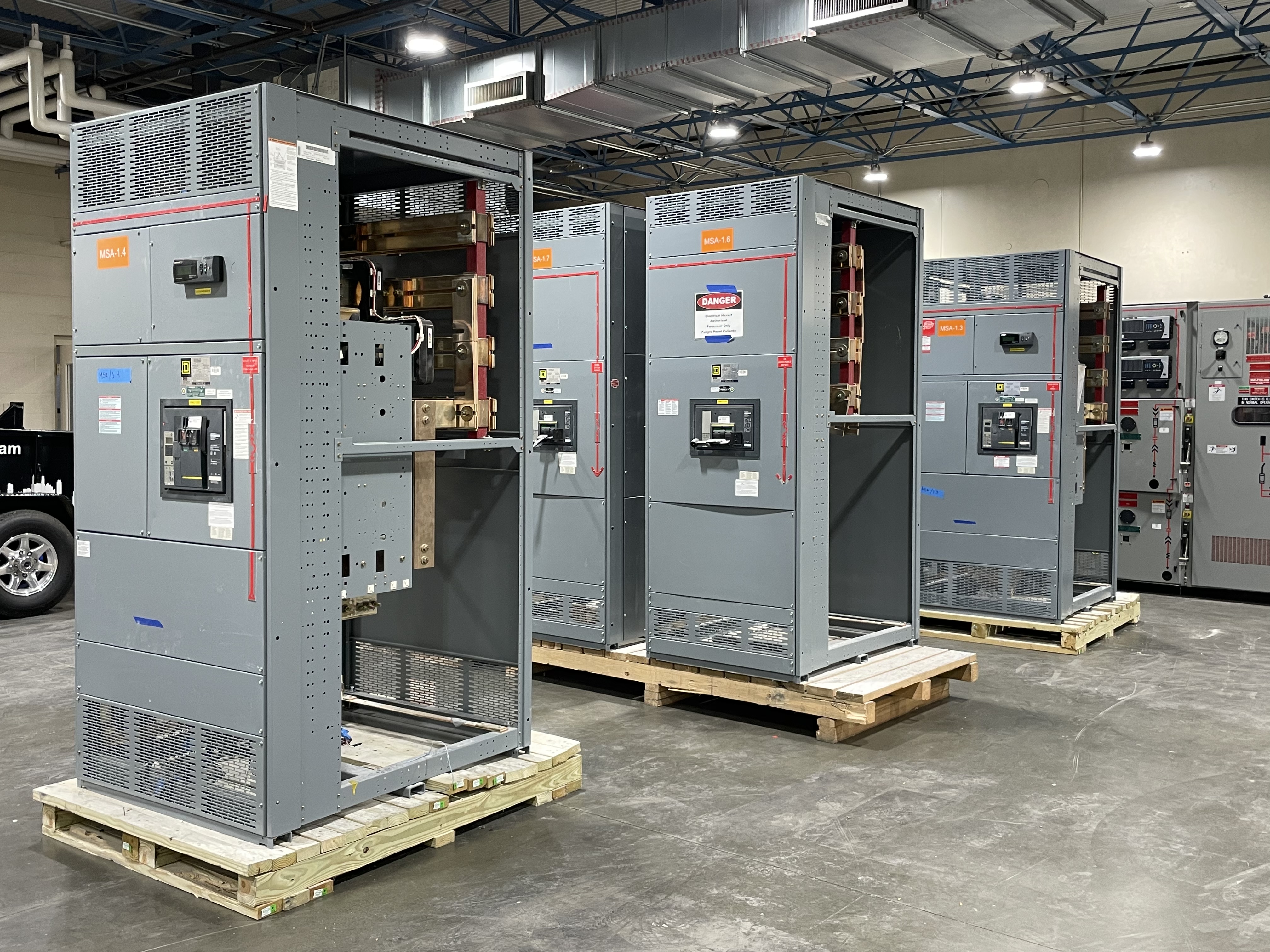
Use one inventory sheet per property, with a shared summary only for coordination. Describe the switchgear assembly and, where safely identifiable, list breakers as separate components rather than treating every breaker as a complete lineup. Record visible manufacturer and nameplate information without assuming that a breaker’s frame, trip unit, or rating describes the entire assembly. Note quantities and apparent condition only from safe, authorized viewing. Exterior photos may show equipment and exterior nameplates when visible from an authorized safe position; do not approach or handle gear to obtain images.
Coordinate access without combining site control
Separate access times can make a single review practical, but each property still needs its own host, entry approval, and site rules. Compare proposed windows against escort availability, operating restrictions, and any limits on vehicles or lifting equipment. For example, one site may allow a short exterior review while another requires a scheduled escort; that difference can affect coordination without changing ownership or inventory. Ask who will authorize entry at each property and what areas are off limits. Do not assume permission at one address grants access to another.
Compare offers on consistent terms
Request that the review identify which property and inventory each offer covers, even if the owner prefers one overall decision. This makes it possible to compare a combined proposal with separate property offers without confusing scope or valuation. The buyer offers cash and pays upfront for an agreed purchase, but acceptance, price, timing, and outcome depend on the individual assessment. No seller testing is required, and equipment from all voltage classes may be considered. Voltage alone does not establish condition, compatibility, or value, so use available records and visible identification rather than unsupported assumptions.
Assign removal work and costs explicitly
For an agreed purchase, the buyer covers applicable disconnects, crane and rigging, loading, freight, and hauling; the buyer does not require the seller to hire or pay a removal crew. Clarify which services apply at each property, since access, lifting needs, and the agreed scope can differ. Electrical disconnects and related technical work must be performed by qualified, authorized personnel under site rules. The seller should not disconnect, move, prepare, or test equipment. Confirm in writing how the buyer’s removal plan fits each lot boundary and any site-specific access conditions.
Keep the records useful through completion
Maintain a property-by-property file containing the inventory, ownership confirmation, access contact, agreed scope, and any exclusions. Add the final written purchase terms to the matching file rather than relying on a shared email subject or informal shorthand. If equipment is associated with a decommissioned data center or shut-down power plant, note that context only where it helps identify the asset; it does not establish condition or guarantee an offer. Before scheduling removal, reconcile the approved inventory with the agreed purchase and access permissions. This avoids confusion across separate visits while leaving technical work to authorized personnel.