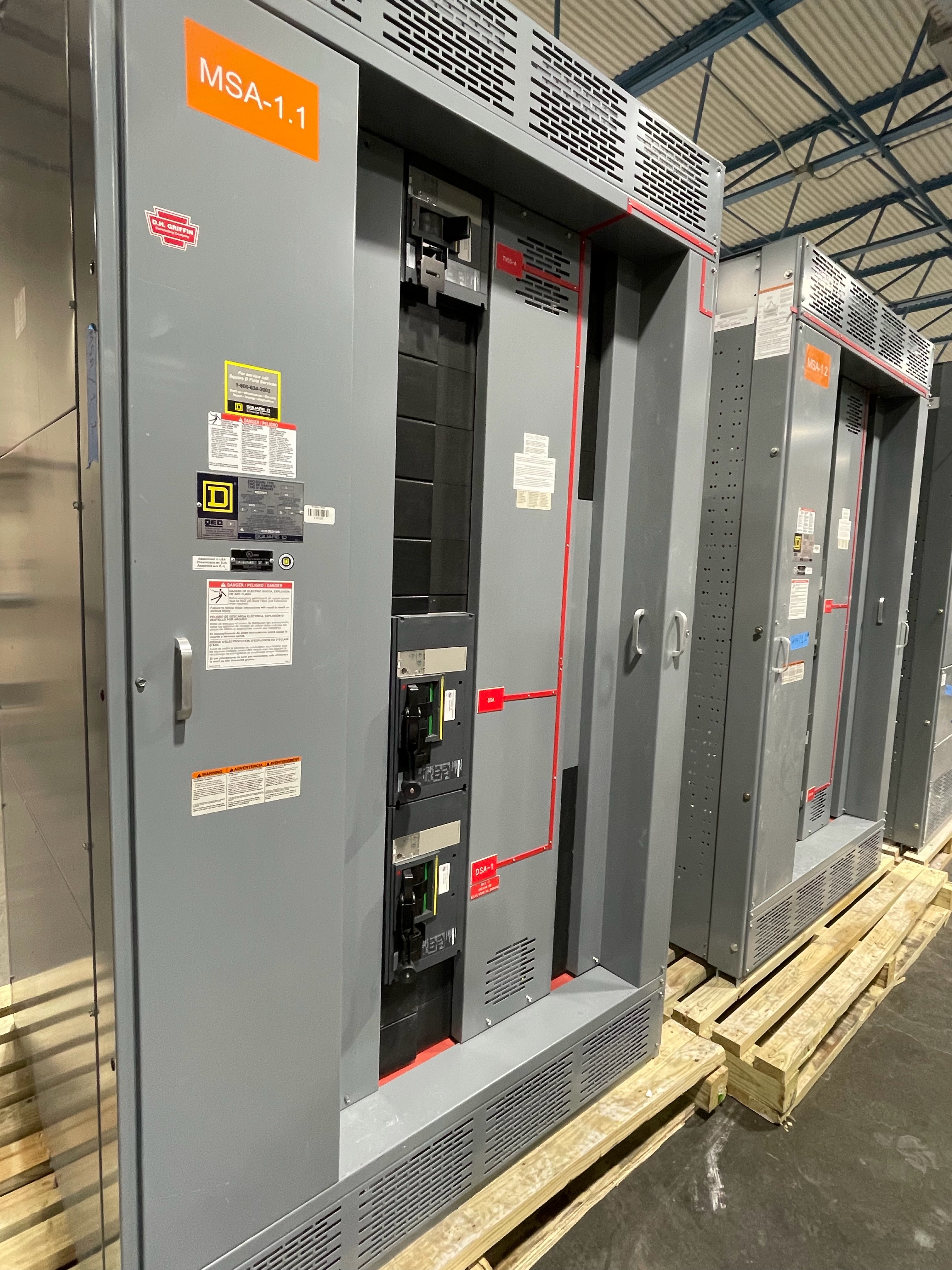
Separate the panelboard from its installed devices
For a possible panelboard upgrade, first distinguish the enclosure and its internal assembly from the branch breakers installed in it. A panelboard may include a cabinet, interior, bus structure, and a particular breaker arrangement; the branch devices are not automatically a separate sale or interchangeable with another panel’s devices. If the project intends to keep selected breakers for reuse, identify them as excluded rather than describing the entire panelboard as available. Record what is included at the assembly level and what is not, based on project documents and safe visual identification.
Make the sale boundary match the project scope
A contractor or owner may plan to replace a panelboard while retaining certain circuits, devices, or associated equipment. That creates a practical tradeoff: offering the complete assembly may simplify the inventory, but it conflicts with a project scope that reserves components. Conversely, a partial offer needs a precise boundary so neither party assumes that retained devices, covers, or related equipment are included. Write down the panelboard identifier and list excluded items separately. Do not remove devices to create a sale package; electrical disconnection and removal belong to qualified, authorized personnel following site rules.
Document identity without relying on assumptions
Useful inventory details can include the manufacturer and catalog information visible on an exterior nameplate, the panelboard identification used by the site, and a count or description of installed branch devices if that information is safely observable. A breaker’s frame, trip, and ratings are distinct details; do not infer one from another or treat them as the panelboard’s bus or assembly rating. If a nameplate is unreadable or a rating is uncertain, mark it unknown for review instead of estimating. Photographs should show only safely accessible exterior nameplates and equipment from an authorized safe position.
Decide whether the offer is for an assembly or a defined lot
If all installed branch devices are included, an assembly-level description may suit the proposed sale, subject to individual assessment. If some devices are excluded, describe the offered panelboard and the retained items separately, including quantities when reliably known. If project records conflict with what is visible, pause the inventory decision and ask the owner or authorized project contact to resolve the boundary. This avoids pricing expectations based on a supposedly complete panel when important devices are reserved, while also preventing a buyer from assuming that loose or removed components accompany the enclosure.
Keep condition and electrical work separate
No seller testing is required for an offer, and a seller does not need to prepare, open, operate, disconnect, or dismantle equipment for evaluation. Condition descriptions should report only what is known from records or safe exterior observation; do not claim a breaker operates or a panel is suitable for reuse without qualified evaluation. All voltage classes are considered for purchase, but that does not mean every assembly, breaker, or rating is compatible with a future application. Any electrical identification, isolation, or removal must be handled by qualified authorized personnel under site rules.
Plan pickup around the authorized removal scope
Before a possible sale proceeds, establish which equipment is included, who has authority to release it, and how the site will coordinate access and removal. We cover buyer-paid freight, crane, rigging, disconnects, loading, and hauling, with arrangements assessed for the particular assets and site; that does not authorize anyone to perform electrical work outside site controls. A seller should not hire crews or move equipment to make it ready for us. Confirm practical access and pickup constraints with the responsible site contact, while qualified personnel manage any required electrical tasks.
Request an offer with a clean inventory record
Send the panelboard description, visible nameplate information, included-device scope, explicit exclusions, and any known access constraints, using only safely obtained information. Clarify whether the proposed sale is for the enclosure and assembly with installed branch devices or for a defined subset. We make cash offers and pay upfront when a purchase is agreed, but acceptance, price, and timing depend on individual assessment; an inquiry is not a commitment to purchase. If the equipment comes from a decommissioned data center or shut-down power plant, identify that context only when accurate and authorized.