Start with the dock approach, not the equipment dimensions alone
If switchgear is inside a building with a constrained dock approach, describe the route from the public access point to the loading position: turning space, overhead clearance, gate restrictions, slope and any time limits. A truck that fits the dock opening may still lack room to turn or align safely. Do not move equipment to improve access. Instead, share available building or dock drawings, measured clearances already documented by authorized staff, and known restrictions. Ask what vehicle access and pickup arrangement the buyer would consider, subject to review. These details help compare a direct dock load with another authorized pickup configuration without assuming either will work.
Floor level and elevation affect the loading plan
A dock-height floor, a grade-level doorway and a raised electrical room create different transitions for equipment and lifting gear. If the switchgear is below or above the truck bed, note the approximate floor elevation and any fixed threshold, pit, ramp or level change along the route. Identify whether a freight elevator or shared service corridor is involved, including its stated capacity if records are available. Do not test limits or alter the route to gather information. The tradeoff is practical: an apparent short path may require specialized rigging, while a longer route could offer a more suitable loading position. Ask which dimensions the buyer needs reviewed before confirming a plan.
Keep the equipment in place; document the path safely
A tight path can tempt sellers to clear obstacles, reposition sections or disconnect cables before a buyer has assessed the asset. Avoid that. No seller testing or preparation is required, and electrical disconnects and other electrical work belong to qualified, authorized personnel following site rules. From authorized safe positions, provide a simple route description and photographs only of safely accessible exterior nameplates and equipment. Never approach, open, touch, operate, test, move or disconnect energized gear to obtain details. Note fixed obstructions and access-control requirements rather than asking staff to stage equipment. This preserves the actual pickup conditions and gives the buyer a more useful basis for evaluating logistics.
Describe the switchgear identity without guessing at ratings
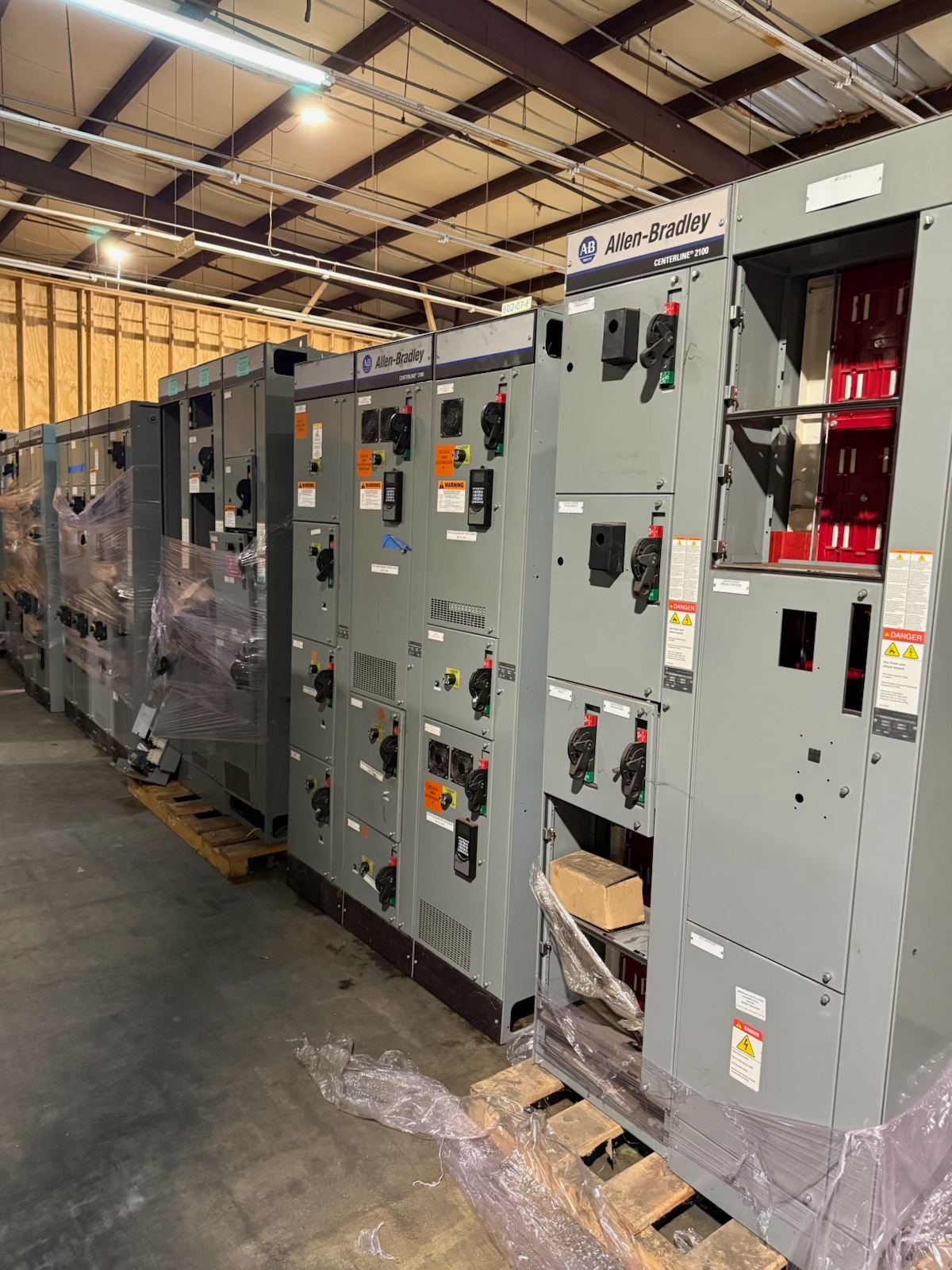
For a possible surplus sale, distinguish what can be read from an exterior nameplate from what is inferred about the assembly. A lineup’s overall assembly, individual breakers, bus, frame, trip unit, nominal voltage and ratings are related but not interchangeable descriptions. If labels are safely visible, report their wording or share safe exterior nameplate images; mark unreadable fields as unknown rather than estimating. The buyer considers equipment across all voltage classes, but that does not establish compatibility, condition or acceptance for any particular asset. If the lineup serves a decommissioned data center or shut-down power plant, identify that context only if accurate and authorized to disclose. Ownership or authority to sell must also be clear.
Appointment and route constraints shape pickup options
If the property requires scheduled truck arrivals, escorted access, a specific dock window or advance vehicle approval, record those rules and the contact process. Explain whether the route is shared with deliveries, whether a truck can wait nearby under site rules, and whether the loading point is available only at certain times. These constraints can affect the choice between a larger vehicle with direct access and a different arrangement that requires more handling. Do not reserve a truck, promise a loading window or authorize site work on the buyer’s behalf before the plan is reviewed. Ask what information is needed to evaluate the appointment and route. No particular timetable or pickup outcome can be assumed until the asset and logistics are assessed.
Compare offers on responsibility as well as price
When reviewing an offer, clarify what it covers: cash payment upfront, and buyer-paid freight, crane, rigging, disconnects, loading and hauling, as applicable to the reviewed asset and site plan. Confirm responsibilities in writing rather than assuming a tight dock makes the seller responsible for crews or staging. Ask how the buyer’s proposed scope accounts for the actual floor level, approach and path constraints, and whether any site approvals remain necessary. Do not agree to unsafe handling or work outside site authorization. Offers and assets are assessed individually; neither acceptance nor a specific price is guaranteed. A sound decision weighs the proposed terms against documented access conditions, ownership authority and the work qualified personnel must perform.