Separate carton damage from equipment condition
If packaging has been crushed or torn, describe that as an observation about the packaging—not proof that the switchgear inside is damaged or intact. For example, a dented shipping box with no visible equipment may leave the actual condition unknown; an open carton may expose a readable nameplate without revealing the condition of concealed parts. Keep those distinctions in your description. Do not open packaging or handle equipment to improve an inspection. Any access or electrical work must be performed by qualified, authorized personnel under the site’s rules.
Record quantities and identifiers while safely accessible
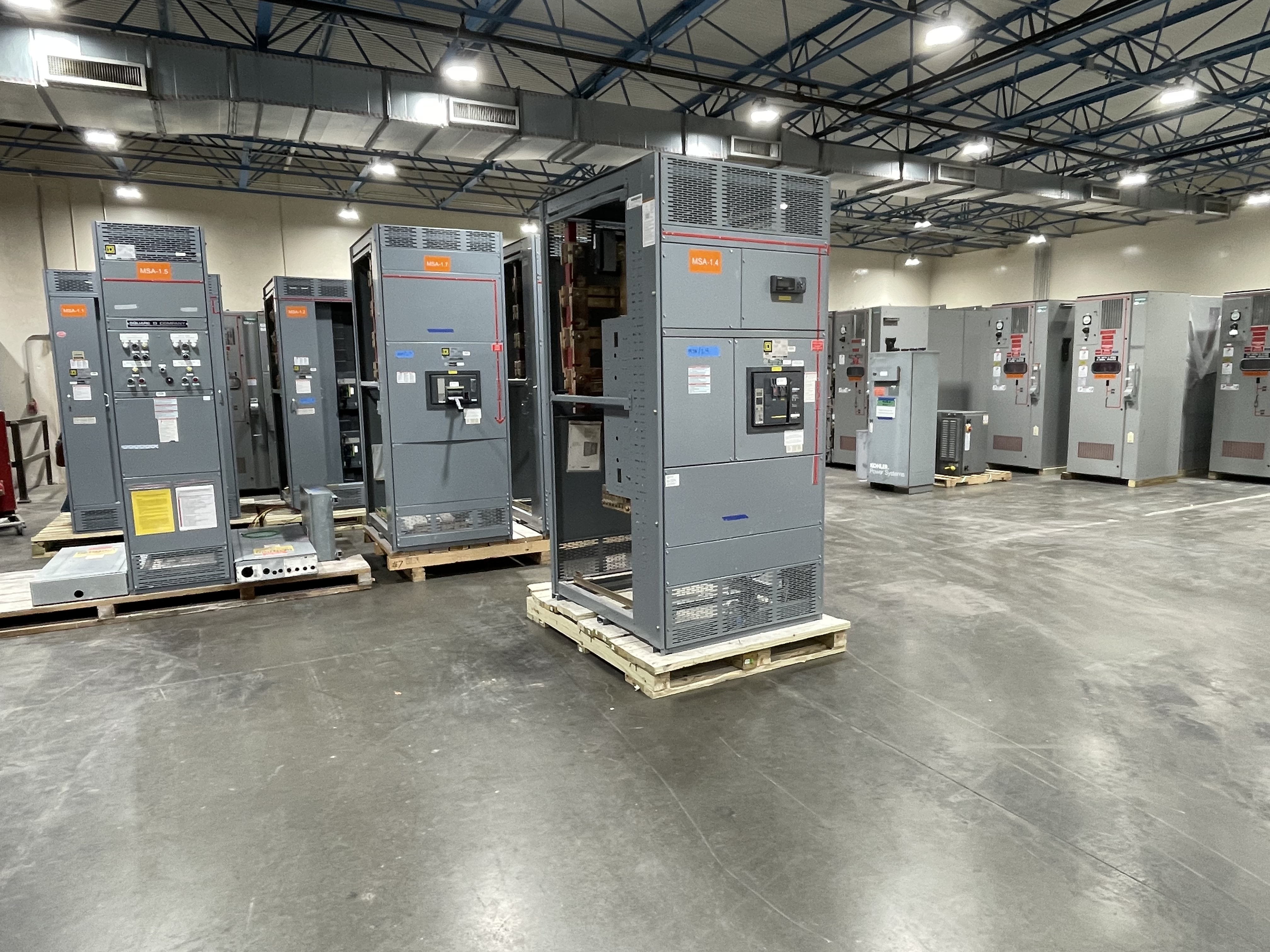
Inventory is more useful when the count is specific: note the number of cartons and, when visible from an authorized safe position, the quantity of equipment and each part number. If two cartons carry the same label, record both the repeated identifier and the count rather than assuming they contain identical assemblies. Photograph only safely accessible exterior labels and nameplates from a permitted position. Do not approach energized equipment or open, move, or rearrange anything for a picture. Mark obscured or unreadable identifiers as unknown instead of guessing.
Keep “unused spare” separate from verified status
A seller may know a spare was purchased for inventory and never installed, while still lacking evidence about its present condition, completeness, or storage history. State what is documented—such as a purchase record or original label—and what is not confirmed. A sealed carton can support a description of packaging, but does not independently establish every component’s condition. Conversely, damaged packaging does not automatically rule out a useful spare. Share uncertainties plainly so the buyer can assess the particular assembly, breaker, or other item without treating assumptions as inspection results.
Decide whether to offer a mixed or partial lot
When several packages are involved, compare the convenience of offering them together with the clarity of separating identifiable items. A lot with clear counts and matching part numbers may be easier to describe as one group; mixed labels, unknown quantities, or visibly different packaging may justify an itemized inventory. Do not discard packaging, consolidate contents, or separate equipment merely to make the lot look consistent. If ownership covers only some items, identify those boundaries. The seller must own the equipment or have authority to sell it.
Share useful records without creating new risk
Helpful information can include safely accessible exterior label photos, package counts, visible part numbers, known purchase or storage records, and a direct account of what the seller has and has not verified. Avoid claiming a rating or voltage from an unclear label; record the visible wording or mark it unreadable. No seller testing or preparation is required, and do not test, open, or handle equipment to complete an inquiry. Electrical identification or work beyond safe exterior observation belongs to qualified, authorized personnel following site requirements.
Assess the sale and pickup as one decision
After reviewing the information, the buyer assesses each asset and offer individually; acceptance, price, timing, and outcome are not guaranteed. The company buys surplus and decommissioned electrical equipment across all voltage classes and may offer cash with upfront payment, subject to the agreed transaction. For accepted equipment, buyer-paid freight and arrangements for crane, rigging, disconnects, loading, and hauling can be considered as part of the pickup plan. Sellers do not need to hire crews or perform technical work; qualified, authorized personnel must handle electrical work under site rules.
Coordinate access without disturbing the equipment
Before any pickup planning, identify who can authorize access, any site restrictions, and whether the equipment’s location or packaging affects a safe removal plan. Do not move cartons, expose concealed gear, disconnect conductors, or bring people close to energized equipment to help estimate handling needs. If access conditions are unclear, say so; qualified, authorized personnel and the buyer can address the appropriate arrangements under site rules. Clear information about count, packaging, and known identifiers helps distinguish a logistics question from an equipment-condition question without implying a confirmed pickup.