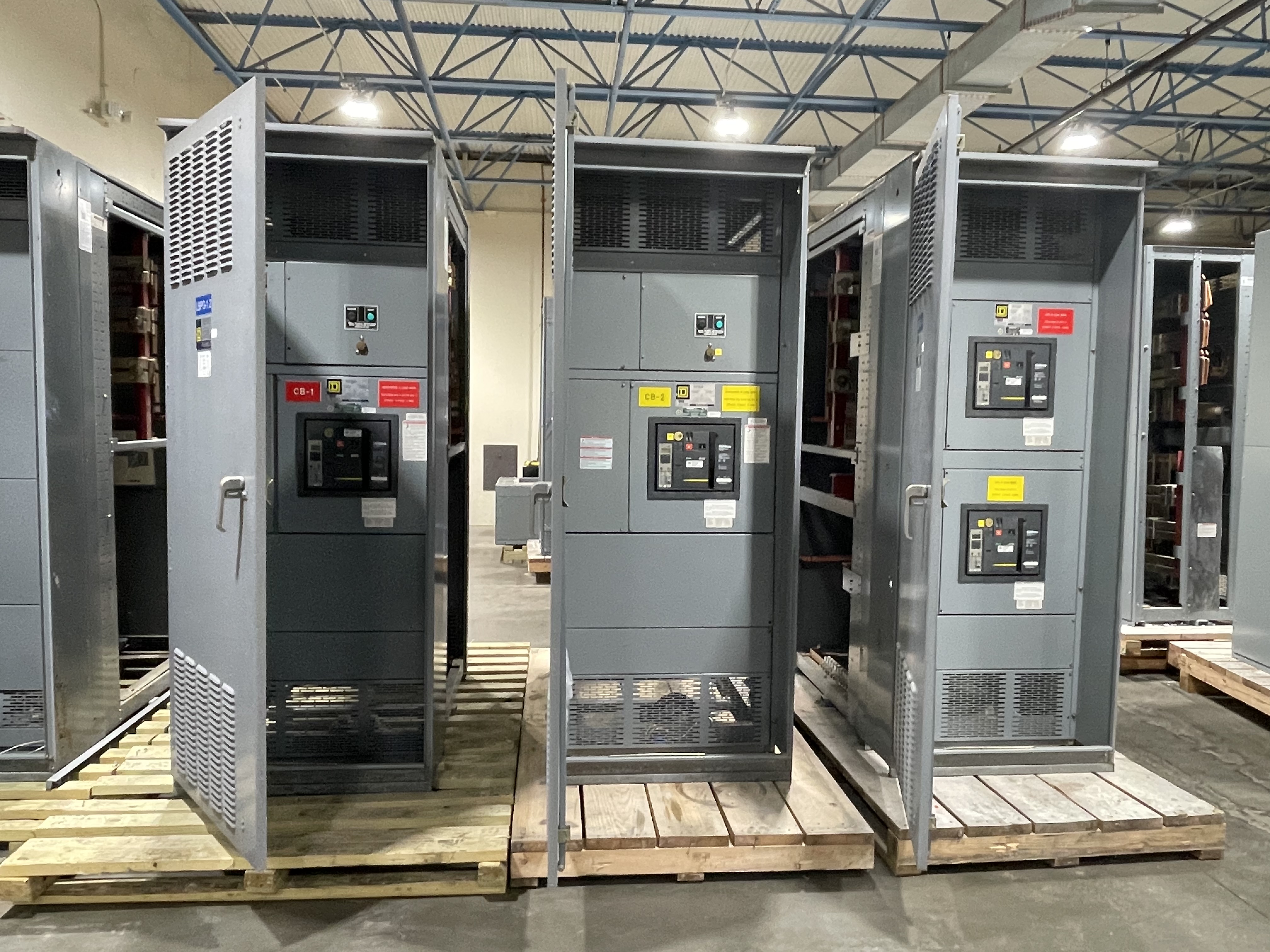
Establish the construction designation from records
Start with the switchgear’s existing identification documents, such as purchase records, drawings, schedules, or maintenance files, and record the construction designation exactly as written. Do not infer metal-clad construction from a cabinet’s appearance or use the terms metal-clad and metal-enclosed interchangeably in the sale description. If records conflict, preserve both descriptions and flag the discrepancy for review. Safely accessible exterior nameplate photographs may help document the assembly identification; take them only from an authorized safe position, without approaching or opening equipment. Note whether the designation applies to the lineup, a section, or an individual device, when the records make that distinction. This establishes what is actually represented without claiming unverified configuration or specifications.
Separate lineup identity from device inventory
A lineup and its drawout breakers are related assets, but they are not one interchangeable count. Build an inventory from existing schedules, labels already visible from an authorized safe position, and other available records. For each listed device, capture its recorded identifier, quantity, and any documented association with a lineup section or position. Keep device details separate from assembly details: breaker identification does not by itself establish the assembly’s construction, and an assembly nameplate does not establish which breakers are included. If a schedule lists six devices but only four are offered, state that difference plainly. If a stored device cannot be safely identified from existing information, list it as unidentified rather than assigning it a rating or position.
Define exactly what the offer includes
Set the sale boundary in writing before requesting an assessment: lineup sections, drawout breakers, accessories, spare devices, and loose parts should each be marked included, excluded, or unconfirmed. For example, a seller might offer the switchgear lineup and two identified breakers while retaining a separate spare; another may offer the lineup with all devices shown on a particular inventory. Avoid describing an assembly as complete unless available records support that description and the included items are clearly accounted for. If ownership or authority to sell differs across equipment or stored devices, resolve that distinction before representing them as one package. Offers are assessed individually, so a clear scope gives the buyer a sound basis for reviewing the actual assets.
Report known condition without creating new tests
Share existing, supportable condition information: recorded service status, known damage, missing-device notes, prior maintenance documentation, or a documented decommissioning status. Distinguish observations from conclusions; a file noting that a breaker was removed is not proof that it is defective, and a past maintenance record does not establish present operating condition. Do not energize, open, touch, test, or move equipment to answer an inquiry, including to obtain photographs. No seller testing or preparation is required. A buyer may consider used, surplus, or decommissioned equipment from a data center or shut-down power plant, but acceptance and valuation depend on individual review. The buyer considers all voltage classes without implying universal compatibility or acceptance.
Plan pickup around the actual equipment boundary
Pickup planning should reflect what is included and where each listed item is situated, based on information the seller is authorized to provide safely. Note existing access constraints, approximate section count, known separation between lineup and stored breakers, and any available handling records; do not estimate weights or lifting points without reliable documentation. The buyer covers crane, rigging, disconnects, loading, freight, and hauling, with electrical work performed by qualified, authorized personnel under site rules. Sellers need not hire crews or prepare equipment. Discuss logistics before agreeing on a scope, especially if breakers are stored away from the lineup or the listed inventory spans more than one controlled area.
Request an assessment with a traceable inventory
Send the construction designation as recorded, assembly identifiers, device inventory, inclusion boundaries, known condition notes, and safely obtained exterior nameplate images where available. Mark unknowns explicitly and identify any mismatch between records and the proposed sale. This helps distinguish a documented lineup with accounted-for drawout devices from an assembly whose device count or included spares remains uncertain. The independent buyer purchases used and surplus electrical equipment, offering cash with payment upfront for assets it agrees to buy; pricing, acceptance, and timing are determined individually, not guaranteed by an inventory format. Keep records of ownership or authority to sell and identify who can coordinate access and site-approved electrical work if an assessment proceeds.