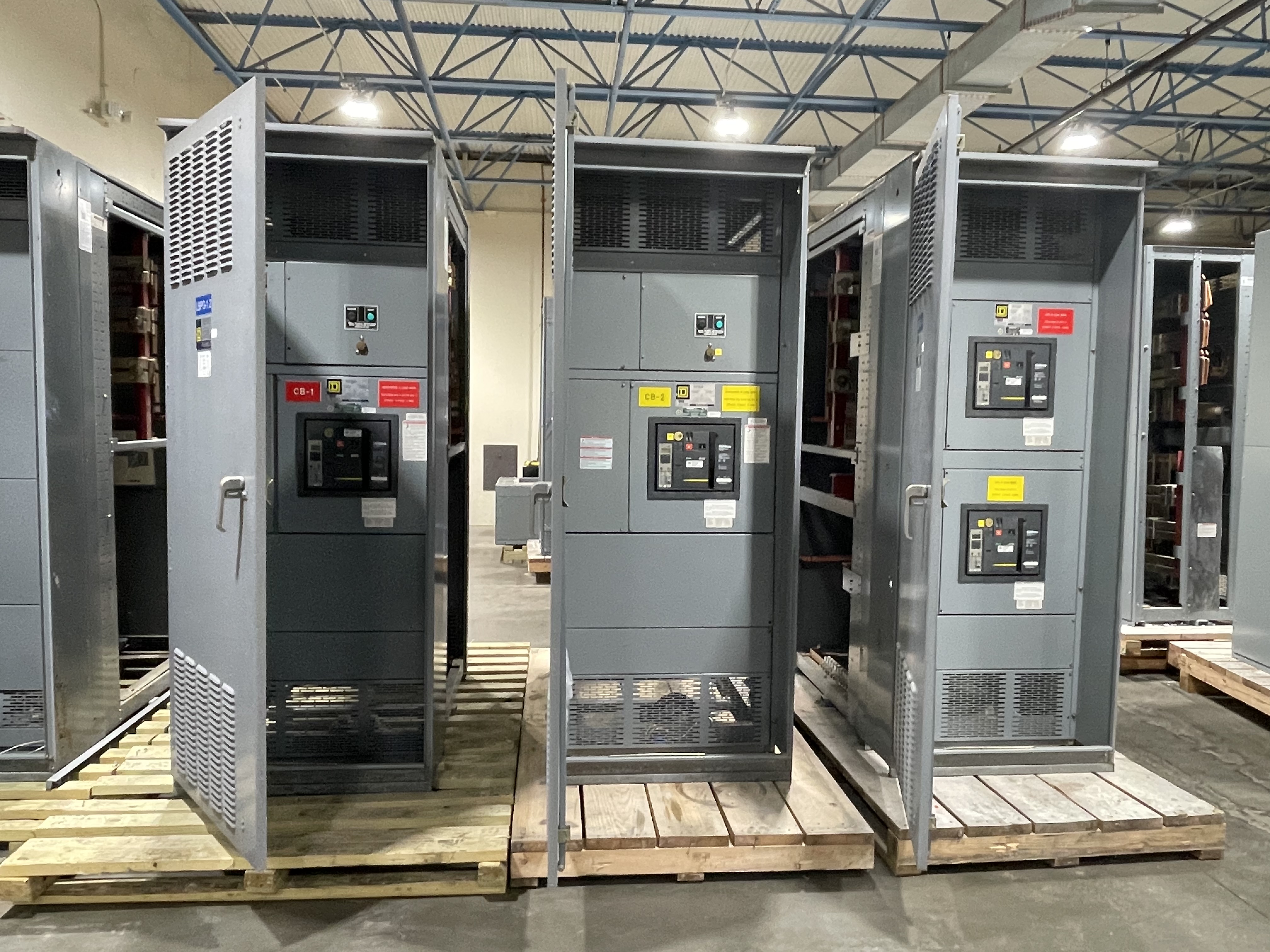
Separate the retired assembly from protected functions
If a facility retires a switchboard or switchgear lineup, its former connection to emergency power does not establish that every associated component is included in the sale. A fire-pump feeder, transfer equipment, control wiring, or an interface to a suppression system may remain part of a protected installation, even when adjacent distribution gear is surplus. Ask the owner’s authorized electrical and life-safety personnel to define the approved sale boundary from records and site requirements. Do not direct staff to operate, isolate, open, or disconnect equipment to confirm that boundary. Record the identified lineup, sections, and excluded interfaces in writing before requesting an assessment; uncertainty is a reason to pause scope definition, not to disturb equipment.
Distinguish equipment identity from system function
Names such as “emergency switchgear” can blur important differences. An assembly is the lineup or enclosure arrangement; a breaker is an individual switching and protective device; a bus is the conductor system; and a frame or trip description identifies breaker construction or a trip unit, not necessarily the system’s complete rating. A nominal voltage label also does not alone establish every device’s suitability or condition. For a retired lineup, safely accessible exterior nameplate photographs and available schedules can help identify what is offered, provided images are taken only from authorized safe positions and without approaching hazards. Share recorded identifiers as observed, flag missing or conflicting records, and avoid claiming compatibility with retained emergency or suppression equipment.
Choose what to document without testing
There is a practical tradeoff between a detailed inventory and the risk of gathering information unsafely. Useful records may include existing asset lists, drawings approved for release, section designations, exterior nameplate details, known exclusions, and whether breakers or accessories are included. No seller testing is required, and a seller need not open gear, rack out breakers, inspect internal bus, or energize anything for photographs. If documentation is incomplete, say so rather than infer a rating or operational status. Ask the buyer what additional records would help assess the specific surplus lot; any electrical inspection or technical work must be handled by qualified authorized personnel under site rules, not improvised for a sale.
Make exclusions and ownership explicit
Before discussing removal, confirm that the seller owns the equipment or has authority to sell it. Then distinguish included distribution assets from retained life-safety interfaces, facility wiring, controls, or other items outside the sale. A concrete example: a seller might offer a retired distribution section while expressly excluding a connected emergency transfer function pending the owner’s approved scope determination. That distinction is not a recommendation to separate or disconnect anything; only authorized personnel can define and perform electrical work under site rules. Put unresolved boundaries, access restrictions, and any required coordination in the asset description. A clear exclusion may narrow the lot, but it can prevent an offer from being based on equipment the seller cannot transfer.
Compare offer scope with removal responsibilities
For equipment within an agreed scope, ask which removal and logistics activities the buyer would cover and how the proposed pickup would be coordinated with site authorization. This buyer offers cash and pays upfront, buys equipment across all voltage classes, requires no seller testing, and covers crane, rigging, disconnects, loading, freight, and hauling when applicable to an accepted transaction. These terms do not authorize work on protected systems or guarantee that a particular assembly will be accepted. Qualified authorized personnel must perform electrical work under site rules. Compare the written offer’s asset scope and handling plan with the owner’s exclusions, access limits, and safety controls; do not have unqualified staff prepare equipment for removal.
Keep life-safety continuity outside the sale decision
If retired gear is near an operating emergency-power or fire-suppression system, the sale discussion should not become an informal system-change plan. The owner’s responsible personnel should determine independently what remains in service, what approvals apply, and whether any future electrical work is authorized. A buyer’s assessment concerns the offered surplus assets, not whether a life-safety system can be bypassed, isolated, or replaced. Share only information the seller is authorized to disclose, and use safe, accessible records rather than creating new observations around energized equipment. If ownership, boundary, or removal authority is unclear, resolve it before proceeding. Offers and logistics are assessed individually, with no assured acceptance, price, or schedule.