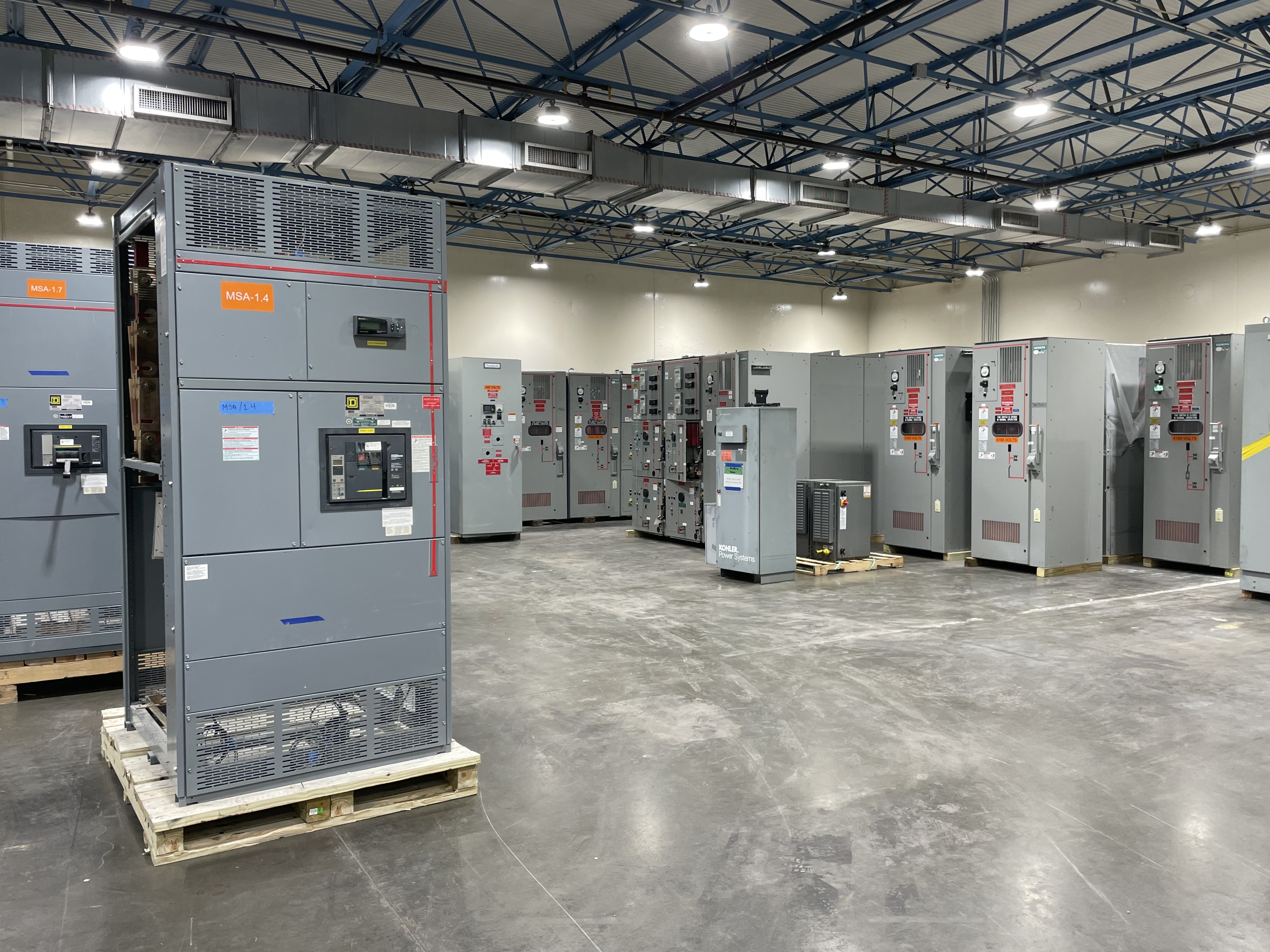
Separate installed gear from stored equipment
Build an inventory with one entry for each lineup, section or separately stored assembly, using existing asset lists and site records where available. Identify whether an item is installed, disconnected, awaiting removal, or simply stored—but do not investigate physically if that would require approaching or handling it. A status label is not proof of electrical condition. Note who controls the building and equipment, whether access is authorized, and any known operating or decommissioning history. The buyer reviews each item individually; inclusion in an inventory does not guarantee acceptance or establish that components belong together.
Use records to describe, not assume, ratings
Share existing nameplate transcriptions, equipment schedules, drawings, maintenance files and photographs if they are already available and authorized for release. Keep rating categories distinct: nominal system voltage, assembly or equipment voltage, continuous-current rating, device frame, trip setting or rating, and interrupting rating are not interchangeable. Record a value only when a document or legible exterior nameplate supports it, and identify its source. Missing, conflicting or unreadable data can remain unknown. Do not create measurements or request tests for a purchase inquiry; a buyer can assess available information and decide whether further review is warranted.
Describe condition without disturbing equipment
For safely accessible items, exterior photographs can help show overall arrangement, visible damage and exterior labels. Take them only from positions permitted by the site, without approaching equipment that may be energized; never open a cabinet or photograph its interior. Do not approach, touch, open, operate, test, disconnect, remove or move equipment that is energized or could be energized. Any electrical work, including verification of status or isolation, belongs solely to qualified personnel authorized for the task and acting under site rules. If safe access is uncertain, rely on existing records and let the site’s responsible personnel determine next steps.
Flag boundaries, gaps and exclusions early
Clarify which assets the seller owns or is authorized to transfer, and distinguish switchgear from adjacent controls, transformers, wiring or building systems. Existing records may help identify boundaries, but do not infer compatibility or a shared configuration from appearance, matching labels or proximity. Note known missing sections, incomplete documentation, access restrictions and any equipment the seller does not wish to include. State unknowns plainly rather than presenting them as confirmed defects or specifications. A buyer may exclude an item or decline a proposed purchase after review; evaluating switchgear does not mean taking on unrelated building demolition or hazardous-material remediation.
Understand how an offer and payment are assessed
After reviewing the available inventory, ownership information, records, condition descriptions and access constraints, the buyer may make a cash offer for selected equipment. Each proposed purchase and acceptance is assessed individually, so neither price nor timing is guaranteed. For an agreed purchase, payment is made upfront according to the agreed terms. Put the accepted asset list, any exclusions, access arrangements and payment terms in writing before work begins. If information changes or a listed item cannot be safely reached under site controls, pause the handover discussion and reassess the agreed scope rather than assuming the original offer still applies.
Set removal responsibilities before scheduling
When a purchase is agreed, the buyer covers the necessary crane, rigging, disconnect work, loading, freight and hauling as applicable to that purchase and the agreed scope. The seller is not expected to hire or pay a removal crew. Coordinate dates, access permissions, building rules, utility or site coordination and any required work approvals in advance. The seller should not prepare equipment by disconnecting, staging or moving it. Qualified, authorized personnel must perform electrical tasks under site rules; lifting and transport arrangements should also be handled by the responsible qualified contractors within the approved plan.
Make a useful inquiry from Mitchell County
A concise inquiry can identify the property’s general location in Mitchell County, the number and status of the stored and installed groups, available records, ownership authority and known access limits. Attach only permitted exterior photographs of safely accessible equipment and exterior nameplates, taken from site-authorized safe positions; no interior images are needed. There is no seller testing, measurement, fabrication or staging requirement to request an assessment. Include a contact who can coordinate authorized site access and clarify documentation. The buyer can then determine whether to propose an individually assessed purchase and, if accepted, agree on payment and removal logistics.