Confirm who can authorize the handover
A tenant, contractor or renovation manager may identify surplus switchgear without having authority to approve its removal. Before requesting an assessment, establish who owns the equipment and who can authorize its sale, site access and any work affecting the building. If a property owner must approve a rigging route, ask that question early; route approval may depend on doors, corridors, loading areas, operating schedules or other site conditions. Share only the access details you are authorized to provide. No assumption is made that a particular route is available, and an equipment purchase does not itself grant access or building permission.
Start with records already available
Existing asset registers, purchase documents, maintenance files and clear exterior nameplate information can help identify what is being considered. Share records as they are; do not commission testing or measurements just to request a purchase assessment. If photographs are appropriate and permitted, limit them to safely accessible equipment exteriors and exterior labels or nameplates, taken from site-authorized safe positions. Do not open a cabinet or photograph its interior. In records, keep nominal system voltage distinct from assembly voltage, continuous-current rating, device frame, trip setting or rating, and interrupting rating. Do not infer missing values or compatibility from appearance.
Understand the buyer’s scope and exclusions
Equipment is reviewed individually, and submitting an item does not guarantee an offer or acceptance. The assessment can consider used, surplus and decommissioned switchgear across all voltage classes, including material from decommissioned data centers and shut-down power plants. An agreed purchase includes a cash offer paid upfront, with the specific assets and handover terms settled between the parties. The purchase scope is not a promise to demolish building areas, perform unrelated construction or manage hazardous-material remediation. If the site identifies separate building or environmental work, keep that scope with the responsible property parties and qualified contractors.
Make rigging approval part of the plan
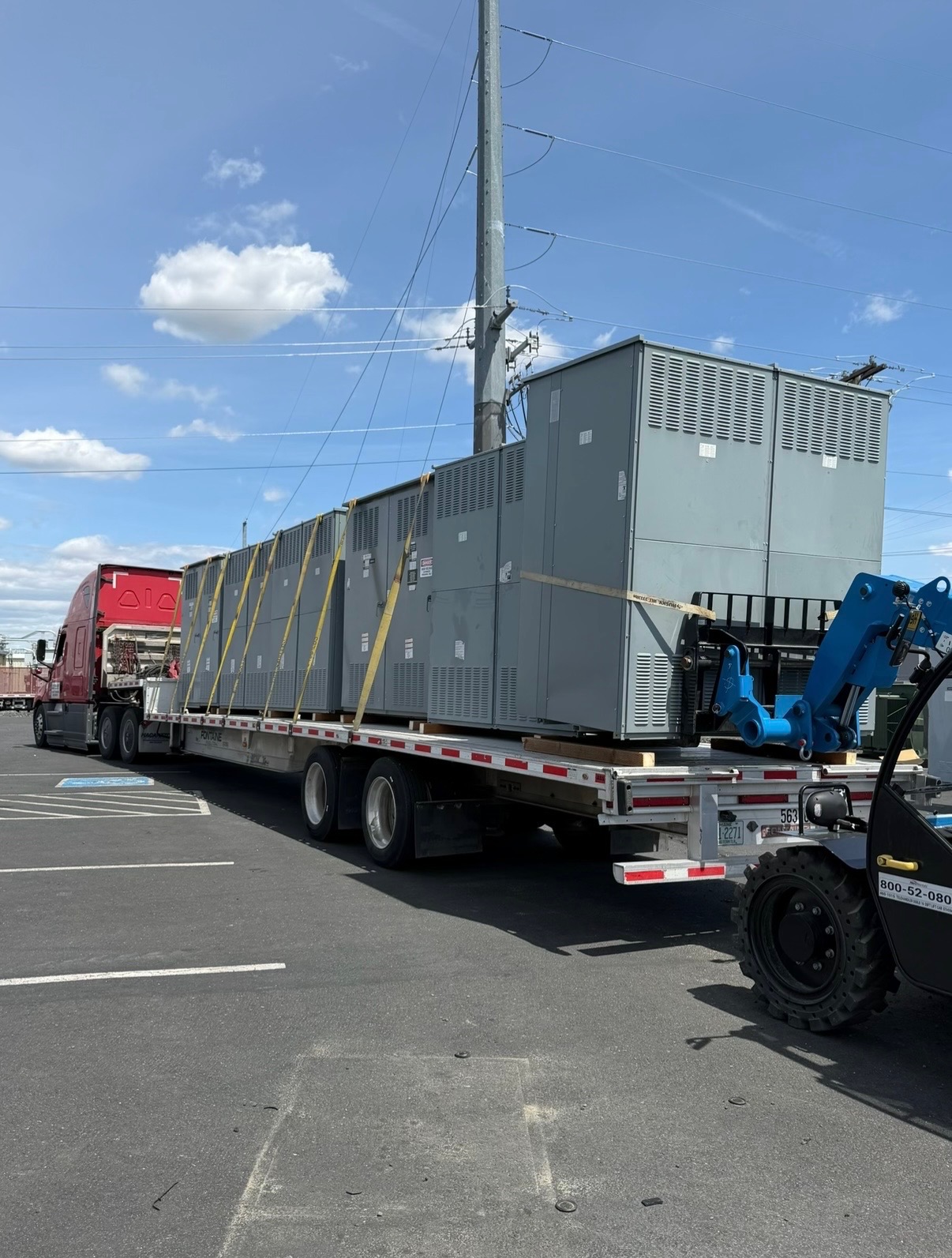
For an accepted purchase, the buyer covers necessary crane, rigging, disconnect work, loading, freight and hauling under the agreed arrangement. The seller is not expected to hire a removal crew or pay a crew for that work. This does not remove the need for property-owner authorization, site access approval, scheduling coordination or clearly agreed scope. Resolve route permissions and any site restrictions before setting a handover date; do not treat a preliminary discussion as confirmation that lifting or access is feasible. Offer amounts and timing depend on the individual assessment and agreement, so neither should be assumed in advance.
Keep safety decisions with authorized site personnel
Potentially energized equipment is not a seller-preparation task. Do not approach, touch, open, operate, test, disconnect, remove or move equipment that is energized or may be energized. Any electrical work must be performed only by qualified personnel authorized for that work and acting under the site’s rules. The buyer’s interest in an asset does not replace the site’s electrical-safety controls, authorization process or access limits. If safe exterior information cannot be obtained from an approved position, leave it unavailable rather than attempting a closer view or asking an unqualified person to investigate.
Agree on a controlled handover
Before scheduling collection, align the owner’s approval, asset list, access conditions, work boundaries and agreed pickup arrangements with the parties responsible for the site. Clarify who can release the equipment and who will coordinate any required site permits or escorts. Keep the equipment in its existing condition; no staging or seller preparation is required for an initial assessment. If an offer is accepted, confirm the agreed purchase and payment terms before the handover. Crane and freight arrangements are handled within the agreed buyer-covered scope, while site personnel retain control of authorization and safety. A request alone does not commit either party to a transaction.