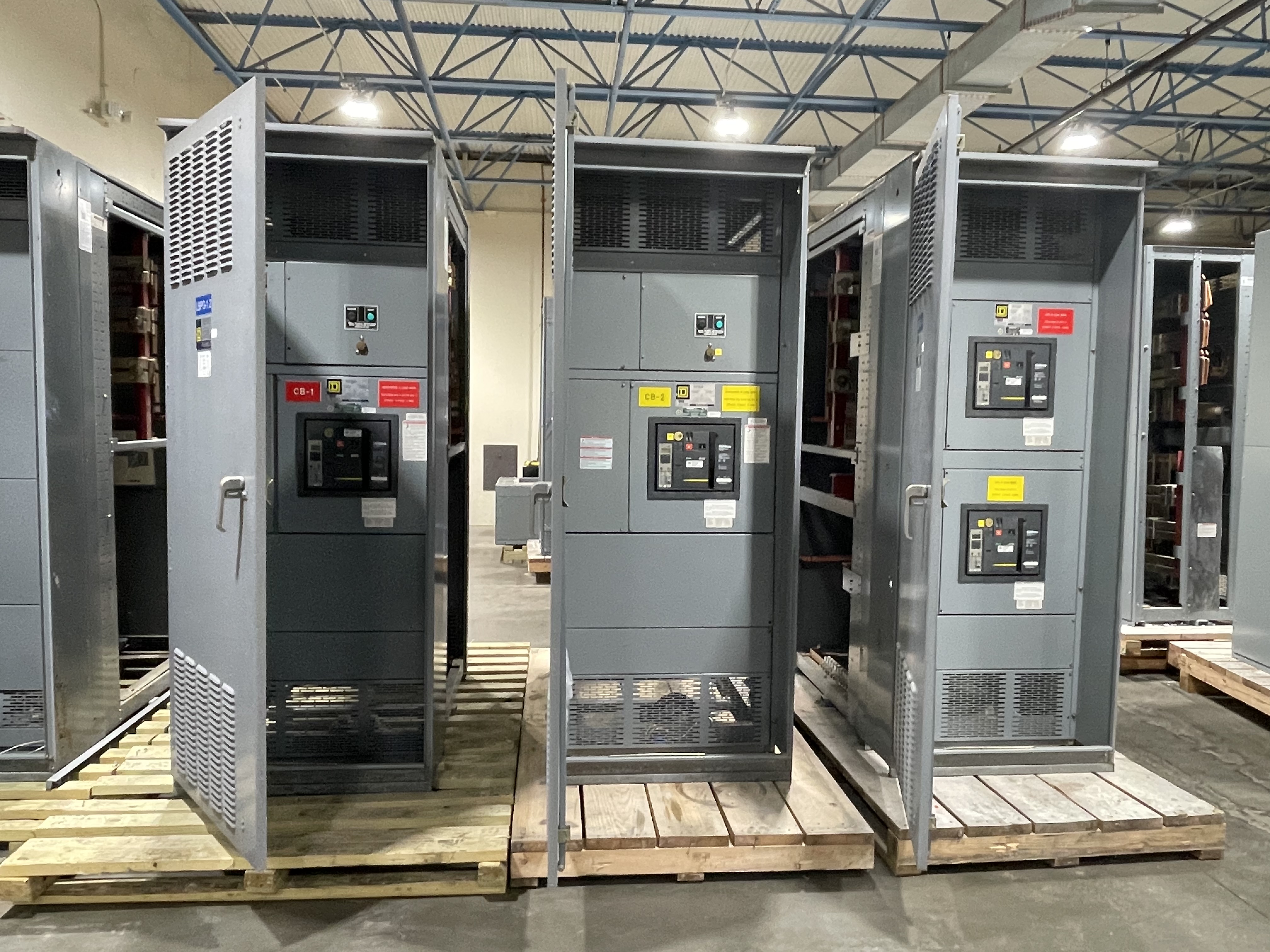
Build an inventory around rooms and boundaries
Start with the room names and boundaries already used in site drawings, asset registers, or decommissioning documents. List candidate assets by location and visible identity, such as a switchgear lineup, transformer, motor control center, or control panel, without assuming that everything in a room is available. Mark retained, excluded, and uncertain items separately. A room-based list helps a project team reconcile equipment with maintenance records and clarify which party controls each item. It also reduces the risk of treating connected infrastructure, building services, or another contractor’s property as part of a proposed sale. The buyer can assess only assets the authorized seller identifies for consideration.
Confirm who can approve a sale and release
A plant closure can involve an owner, asset manager, lender, decommissioning contractor, and site operator, with different responsibilities. Before an offer is accepted, identify the legal seller and the person authorized to approve the sale, agree on scope, and release the equipment for pickup. Existing purchase or disposition approvals, ownership schedules, and project handover records may help resolve questions; the buyer should not assume that a contractor’s access authority includes sale authority. Record who will confirm the boundaries and the release date under site rules. If title, ownership, or approval remains unclear, pause that asset’s assessment rather than folding it into a room-wide agreement.
Use records to describe equipment, not guess ratings
Useful existing records may include one-line diagrams, equipment schedules, nameplate transcriptions, maintenance files, and decommissioning lists. Keep recorded values distinct: nominal system voltage is not necessarily assembly voltage, and continuous current, device frame, trip, and interrupting ratings describe different matters. Report a value only when supported by an existing record or safely visible exterior nameplate; mark other details unknown instead of inferring them from appearance. The buyer can consider incomplete records, but missing data may affect whether an item can be assessed or included. No seller testing, measuring, opening, or internal inspection is required to request a purchase assessment.
Set clear exclusions for the closeout scope
A room inventory is not a demolition specification. State whether equipment is retained, excluded, or being considered for purchase, and identify adjacent building systems or materials that are outside the proposed asset scope. A buyer’s equipment purchase does not include unrelated demolition, building removal, or hazardous-material identification or remediation. Where boundaries are uncertain, use project records and the responsible site team to resolve them before acceptance; do not rely on a buyer’s offer as a substitute for the site’s decommissioning plan. The independent buyer considers used and surplus electrical equipment across all voltage classes, including equipment from decommissioned data centers and shut-down power plants, but may decline any particular asset.
Coordinate a qualified, controlled handover
Electrical work must be performed only by qualified, authorized personnel under site rules. Never approach, touch, operate, test, open, disconnect, remove, or move equipment that is energized or potentially energized. If an agreed purchase requires disconnects or removal, those activities must be authorized and handled through the site’s approved process by qualified personnel. For an agreed purchase, the buyer covers necessary crane, rigging, disconnects, loading, freight, and hauling; the seller does not hire or pay a removal crew. Agree on access, release conditions, pickup boundaries, and coordination with other contractors before scheduling. This is a controlled handover, not permission to bypass site procedures.
Share safe information and evaluate offers individually
For an initial review, provide the room inventory and relevant existing records, noting uncertainty and any items the site retains. Photographs should show only safely accessible equipment exteriors and exterior labels or nameplates, taken from site-authorized safe positions. Never open a cabinet or take internal photographs, and do not enter a restricted area or approach equipment to improve a photo. The buyer makes cash offers and pays upfront for agreed purchases. Each asset, proposed scope, and acceptance is assessed individually, so neither an offer nor a pickup date is guaranteed. Keep site release and access approvals separate from the commercial agreement, and confirm both before handover arrangements proceed.
DECOMMISSIONING / THE COMPLETE SERVICE
From shut-down site to paid seller.
We buy electrical switchgear from decommissioned data centers and shut-down power plants. We handle all rigging and logistics: crane, rigging, disconnects, loading, freight and hauling are on us. Qualified personnel handle electrical disconnects and isolation according to site safety procedures. The seller does nothing but get paid.
We make cash offers, pay upfront, require no testing from the seller, and buy all voltage classes. Share the site and equipment details you know; photos are helpful only when they can be taken safely. Never open or touch energized equipment or disturb a live installation.