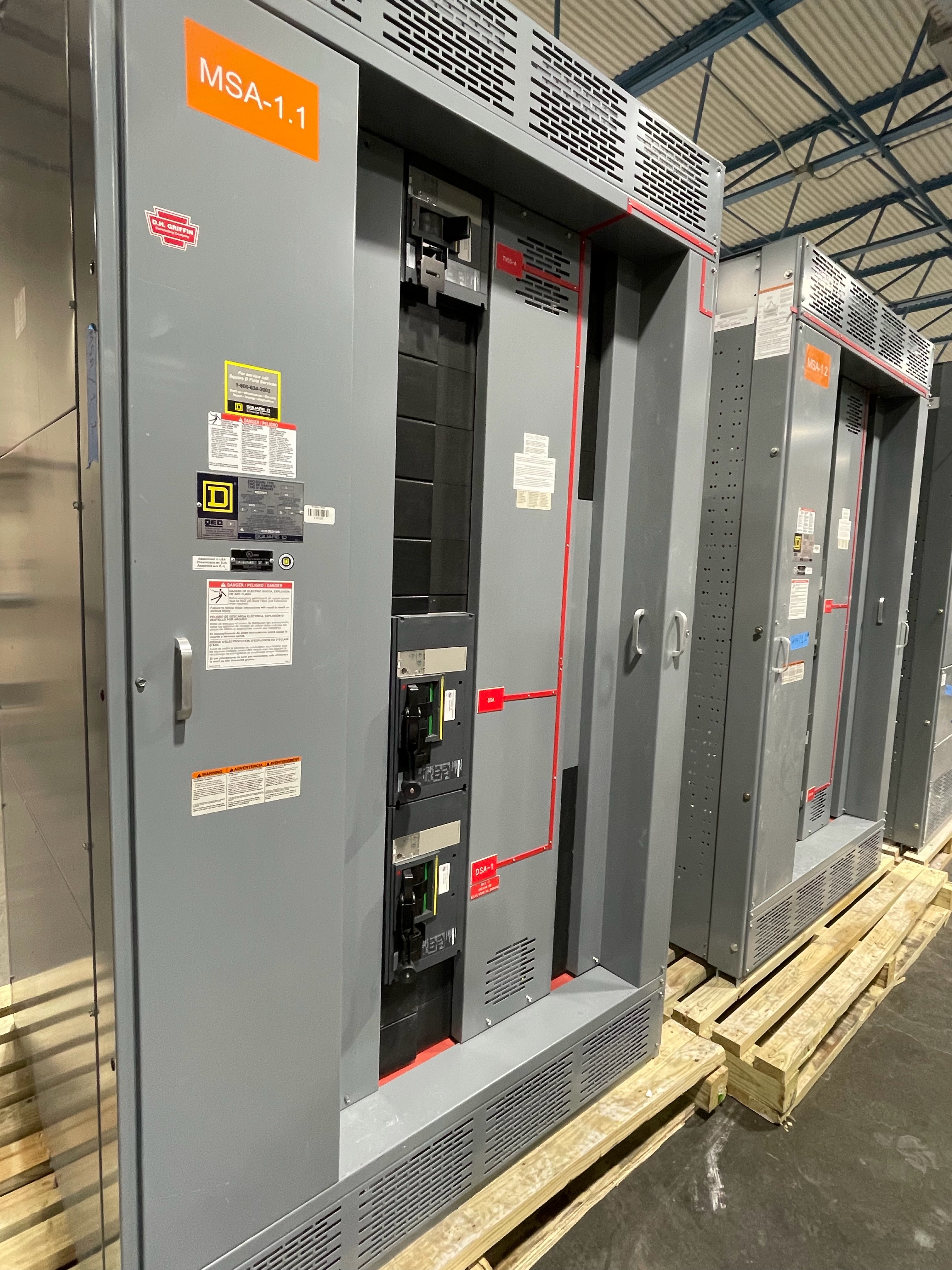
Separate retained breakers from the sale scope
Start with an asset list that distinguishes every breaker the owner intends to keep from the switchgear cabinets being considered for sale. Identify retained devices by existing panel schedules, asset tags, or other records already available; do not remove covers or inspect interiors to create an inventory. Explain whether the cabinets are offered as a complete group or whether particular sections are excluded as well. A buyer needs to understand what remains in place after the transaction, not just what might be removed. Clear boundaries can prevent a retained spare from being mistaken for an included component and help determine whether the remaining cabinets warrant an offer.
Make the release date part of the discussion
A cabinet may be available for purchase before the site is ready to release it. Give a realistic window for when access, operational approvals, and any planned shutdown or decommissioning will permit transfer. If selected breakers must remain on site until a later date, state that constraint and whether the cabinets can be released separately. Do not assume that an offer holds indefinitely or that a buyer can meet a preferred date: offer terms and acceptance are assessed individually, with no guaranteed price or schedule. Confirm the agreed release conditions in writing before arranging pickup, especially if site occupancy or other work could change the available access window.
Use records without adding seller testing
Existing nameplate information, equipment schedules, drawings, maintenance records, and prior scope documents can help describe the assembly. Keep distinct any recorded nominal system voltage, switchgear assembly voltage, continuous current, breaker frame and trip ratings, and interrupting ratings; one value does not establish another. Records may be incomplete or refer to a different configuration, so identify uncertainty rather than filling gaps by inference. No seller testing, measurements, staging, or special preparation is required to request an assessment. If useful, provide photographs only of safely accessible equipment exteriors and exterior labels or nameplates, taken from positions authorized by the site. Do not open a cabinet for a picture.
Assess the value of keeping spare devices
Retaining breakers can support the owner’s own maintenance strategy, but it changes what the buyer is evaluating. The remaining cabinets may be less complete, and records may not establish which devices were originally associated with them. Conversely, a defined exclusion can be straightforward if the offered scope is clearly documented. Avoid assuming that a breaker’s appearance or frame designation proves its trip setting, interrupting capability, or suitability for another assembly. The buyer evaluates the actual proposed assets and available evidence; no particular cabinet or device is automatically accepted. Ask for a cash offer based on the stated scope, then compare the proposed payment and removal terms with the value of keeping the reserved spares.
Plan a safe, agreed handover
For an agreed purchase, the buyer covers necessary crane service, rigging, electrical disconnects, loading, freight, and hauling as set out in the transaction. The seller is not expected to hire or pay a removal crew. Before work is scheduled, the parties should confirm access arrangements, site restrictions, the exact equipment included, retained items, and the release window. Electrical tasks and any work near electrical equipment must be handled only by qualified, authorized personnel following site rules and required controls. Never approach, touch, operate, open, test, disconnect, remove, or move equipment that is energized or may be energized; site personnel determine safe access and status.
Request an assessment with a useful scope
A concise inquiry can identify the Savannah-area site, general equipment description, cabinet count if already documented, known exclusions, available records, and likely release period. Include exterior photographs only when the equipment and nameplates are safely accessible and photography is permitted; interior images are neither needed nor appropriate. The buyer makes cash offers and pays upfront for purchases that are agreed, subject to the individually reviewed scope and terms. Payment timing, price, and acceptance are not guaranteed before agreement. This approach also applies to equipment originating at decommissioned data centers or shut-down power plants, across all voltage classes. It does not include unrelated demolition or hazardous-material remediation.