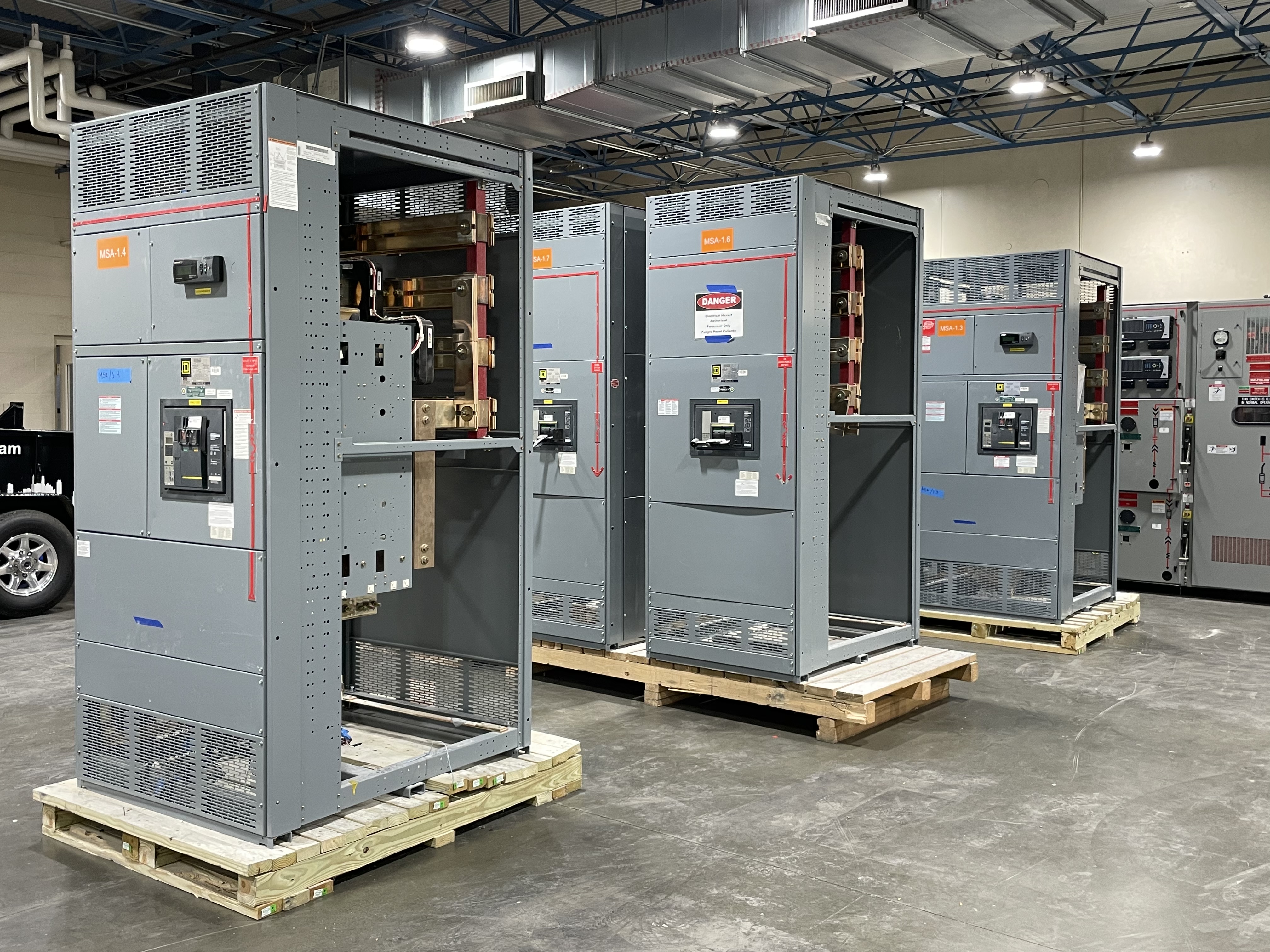
Start with identity, not a presumed package
For a storeroom cleanout, sort relays, breakers and MCC buckets into separate groups before describing them. Record manufacturer and model exactly as legible on safely accessible exterior nameplates, along with visible catalog or part numbers. A breaker and a relay may have similar storage labels but different functions and evaluation criteria; an MCC bucket is an assembly, not merely its breaker. Do not combine unlike items under one broad description or suggest loose components complete an assembly unless that is documented. Clear identification helps the buyer decide what merits individual review.
Make condition notes useful and honest
Condition affects how an item can be assessed, but a storeroom label such as “spare” does not establish that it works. Note what is known: whether an item is identified as new surplus, previously installed, removed from service, incomplete, or of unknown history. Keep observed facts separate from assumptions, and identify missing covers or visible damage without handling the equipment. No seller testing is required, and sellers should not test, open, or operate equipment to improve its description. A concise, accurate condition record is more useful than an unsupported claim of functionality.
Separate loose parts from assemblies
Sorting by model and condition helps reveal which pieces are clearly identifiable, but it does not mean every relay, breaker, accessory or bucket will be accepted. A loose breaker may lack information needed to associate it with a particular MCC lineup; a bucket may be incomplete or have a different recorded model from neighboring units. Keep uncertain associations marked as uncertain rather than building a package around them. Ask whether the buyer wants an itemized inventory or grouped descriptions, and be prepared for each asset or group to receive an individual assessment rather than one blanket decision.
Record ratings without conflating them
Where nameplates provide the information, transcribe voltage and current ratings as written and note which component each rating belongs to. For a breaker, distinguish its frame, trip unit or trip rating, and interrupting rating when those details are available; they describe different attributes, not interchangeable numbers. For MCC equipment, record the bucket identification separately from any breaker information visible on that bucket. Do not infer a lineup’s rating from one loose component, or claim compatibility from matching appearance. The buyer may consider equipment across all voltage classes, but suitability and acceptance remain item-specific.
Choose photographs and records safely
Useful documentation can include an inventory table with item type, recorded model, visible rating details, quantity, and stated condition. Photographs should show only safely accessible exterior nameplates or exterior views from authorized safe positions. Never approach, touch, open, test, disconnect, remove, rack out, move or handle energized equipment to obtain a picture or record. If information is not safely accessible, mark it unavailable and ask qualified authorized personnel what can be documented under site rules. This avoids turning a sales inquiry into an electrical task or treating an unreadable detail as a confirmed specification.
Plan pickup around responsibility and access
If the inventory is in a controlled storeroom or near installed equipment, clarify access, loading constraints and the responsible site contact before arranging a review. Qualified authorized personnel must perform any electrical work under site rules; the seller need not disconnect or prepare equipment. Depending on the assessed assets and site conditions, the buyer covers freight, crane, rigging, disconnects, loading and hauling. Describe access facts rather than promising that every item can be removed in a particular way. No unrelated demolition or hazardous-material remediation should be assumed as part of an equipment purchase.
Compare the offer with the actual inventory
Once ownership or authority to sell is established, provide the inventory and available safe documentation for an individual assessment. The buyer purchases used, surplus and decommissioned electrical equipment, including equipment from decommissioned data centers and shut-down power plants. If an offer is made, it is a cash offer paid upfront; its terms and scope should be checked against the items actually included. Ask which identified groups are covered and how uncertain or excluded loose parts will be treated. Acceptance, pricing and timing depend on assessment, so avoid counting on a sale until terms are confirmed.