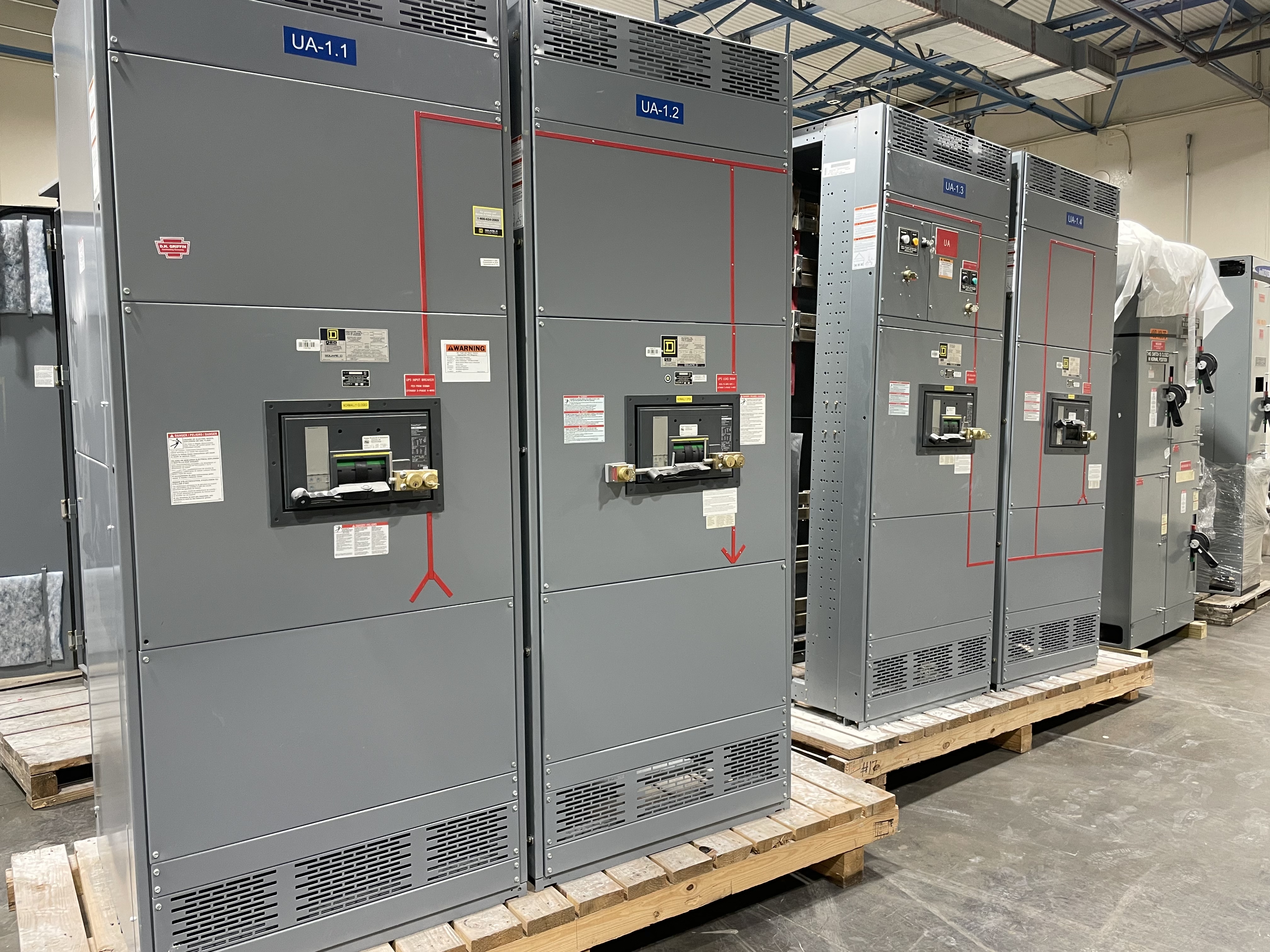
Separate the switchgear lineup from loose spares
Start the inventory with two distinct groups: installed or stored cabinets, and loose devices kept separately. Record cabinet identifiers and lineup or section designations where visible from an authorized safe position; list each spare device by its own exterior nameplate details. A loose breaker or switching device is not automatically part of the cabinet lineup merely because it was stored nearby. Without documented association, treat fit, function and interchangeability as unknown. A buyer can assess the assembly and individual devices separately, and may value, exclude or decline items independently after reviewing the proposed scope.
Keep rating fields distinct
Existing one-line diagrams, equipment schedules, nameplate photographs or maintenance records may help establish what the cabinets and devices are. Preserve the fields as written rather than combining them: nominal system voltage is not the same as assembly voltage; continuous current is not a device frame rating; frame is not trip rating; and interrupting rating is a separate value. Report a value only when supported by an existing record or clearly readable exterior marking, and identify which item it applies to. Do not infer ratings from cabinet size, nearby equipment, an old label on another section or a loose spare.
Make the inventory useful without testing
A concise list can include quantity, cabinet or device identifier, exterior manufacturer and model markings, known storage or service status, and the records available for review. Note gaps plainly: missing labels, uncertain lineup boundaries, incomplete drawings, or spares with no documented cabinet association. No seller testing is required to request an assessment, and do not operate equipment to answer questions. The buyer purchases used, surplus and decommissioned electrical equipment across all voltage classes, including equipment from decommissioned data centers and shut-down power plants; that broad scope does not establish acceptance of any specific item.
Use safe, limited visual documentation
Photos are optional and should show only safely accessible equipment exteriors and exterior labels or nameplates, taken from positions authorized by the site. Never open a cabinet or photograph its interior. Do not approach, touch, operate, test, disconnect, remove, lift, stage, move or handle energized or potentially energized equipment to improve an inventory or image. If markings cannot be viewed safely, leave them unknown and provide existing records instead. All electrical work, if later required under an agreed scope, must be performed only by qualified, authorized personnel and in accordance with site rules.
Define what is and is not offered
Describe the proposed sale boundary in writing: included cabinet sections, separately offered devices, associated parts if any, and items expressly excluded. Clarify whether the offer concerns equipment only; it does not imply acceptance of an entire facility, demolition, or hazardous-material remediation. If records conflict with exterior markings, flag the discrepancy rather than choosing one account. The buyer evaluates each proposed asset and each offer and acceptance individually. Condition, completeness, identification, records and removal requirements can affect the decision, but an assessment carries no guaranteed price, acceptance or schedule.
Agree on removal responsibilities before handover
After a purchase is agreed, necessary electrical disconnects, crane service and rigging, as well as loading, hauling and freight, are covered by the buyer; the seller does not hire or pay a removal crew. Confirm access arrangements, site authorization, work boundaries, scheduling and any facility-specific rules before handover. The buyer covers necessary disconnects, and all electrical work must be performed by qualified, authorized personnel under site rules. Do not prepare, move or stage equipment yourself. The buyer’s logistics commitment applies to the agreed purchase, not to unrelated facility clearance or work outside its defined scope.
Request a review with available information
Send the cabinet count, separate spare-device list, available records, safe exterior photographs if permitted, and a clear description of the proposed sale boundary. Mention uncertainties rather than attempting to resolve them through equipment access or testing. A buyer may follow up for clarification and then make a cash offer if the items and removal scope are suitable. Payment is made upfront for agreed purchases, according to the agreed terms; neither a price nor a removal date is guaranteed before individual assessment and acceptance. Keep site access controlled throughout review and handover, and leave all potentially energized equipment untouched.