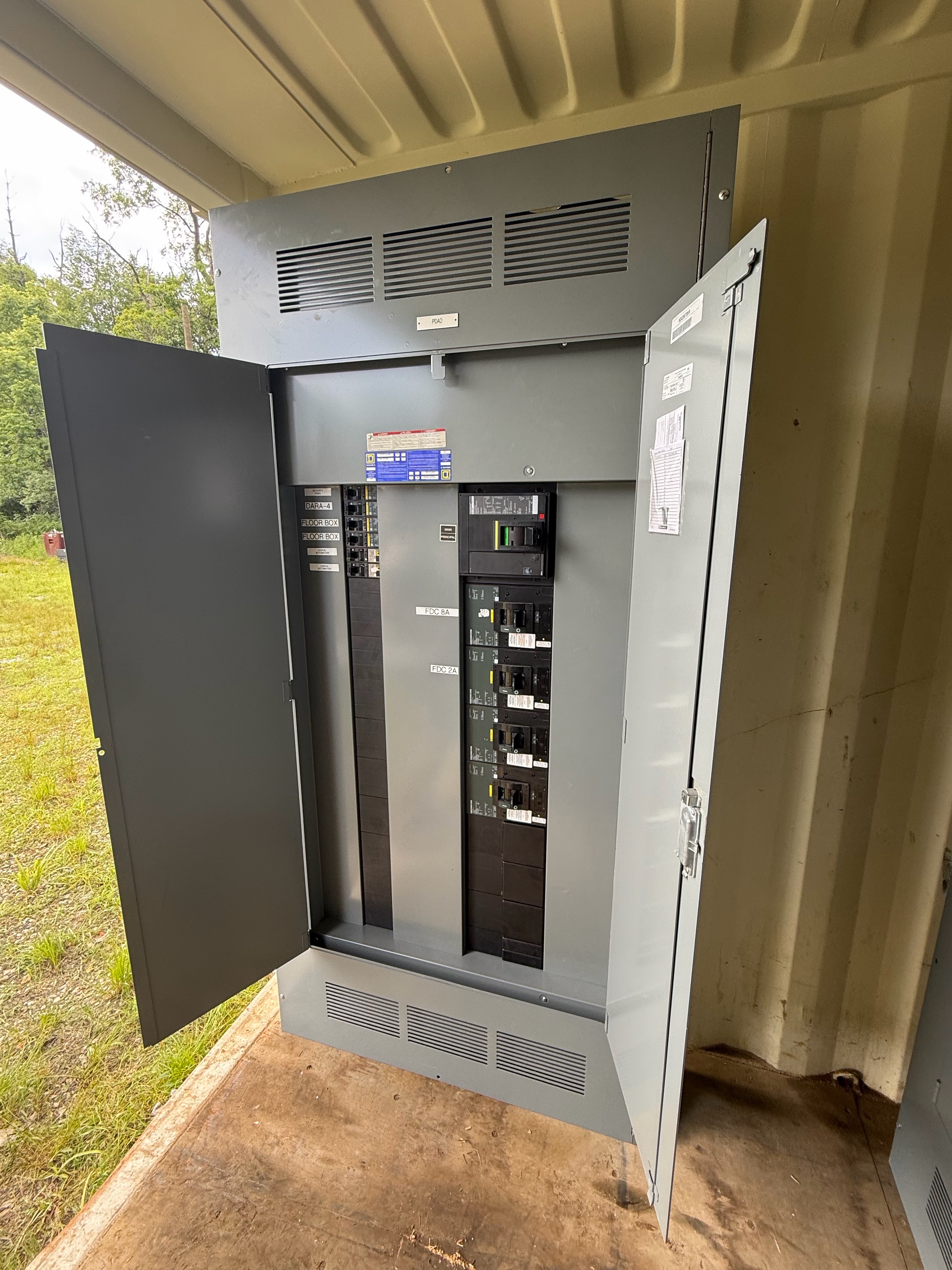
Separate stored busway from installed switchgear
Start by dividing the inventory into two groups: busway that is already safely stored, and switchgear that remains installed. The stored material may be simpler to describe, but its usefulness depends on what is present as a set; a pile of straight lengths without matching elbows or tap-off units is different from a more complete assembly. Installed switchgear has a separate constraint: qualified, authorized personnel must handle electrical work under site rules. Record each group separately rather than treating everything in a warehouse clearance as one undifferentiated lot.
Count components by type, not just by total length
For stored busway, report quantities by component type: straight lengths, elbows, tap-off units and any other identifiable pieces. A total count alone can hide an uneven inventory—for example, many straight sections but only one elbow. Note visible labels or nameplate information only from safely accessible exterior positions. Do not open enclosures or move equipment to find markings. This count lets a buyer assess the actual mix and ask focused follow-up questions, while avoiding an assumption that different components fit together or form a complete, compatible run.
Measure the longest piece and plan around handling limits
Document the longest piece’s approximate length and, where safely observable, its width and height. Dimensions matter for access, loading and freight planning; a long straight section may present a different handling issue from several compact fittings. Also note the storage arrangement and any obvious access constraints visible from an authorized safe position. Do not shift, lift or reposition material to obtain measurements. If a measurement cannot be taken safely without handling equipment, say so and leave it for an appropriately qualified party to assess under site procedures.
Describe installed gear without attempting removal
For switchgear still installed, record what can be observed safely from outside: general equipment type, visible identification and whether it appears to be a single lineup or multiple sections. Distinguish an assembly from its individual breakers; do not infer the breaker, bus, frame or trip ratings from cabinet appearance. Do not approach energized equipment, open doors, rack out breakers or disconnect anything for documentation. Any electrical identification, isolation or removal must be performed by qualified, authorized personnel following the site’s safety rules.
Keep ratings and identification precise
When available from safely accessible exterior nameplates, transcribe the stated manufacturer, model or catalog identifier, nominal voltage and relevant ratings exactly, including units and qualifiers. Do not substitute one rating for another: an assembly rating, breaker rating, frame rating and trip rating describe different things. For busway, capture its exterior identification rather than assuming a rating from nearby switchgear. If a label is missing, obscured or unreadable from a safe position, mark the information as unknown. An individual assessment is more reliable than a guessed specification or a claim of compatibility.
Choose a clearance scope that matches the site
Stored busway and installed switchgear may call for different pickup planning. Share the item counts, longest-piece dimensions and access notes so the buyer can consider crane, rigging, disconnects, loading, freight and hauling requirements. The buyer pays freight and covers these logistics when included in an agreed transaction; scope and feasibility are assessed for the particular assets and site. Do not assume unrelated demolition or hazardous-material work is included. The seller need not arrange crews or prepare equipment, and no seller testing is required.
Request an offer with clear ownership and terms
Once the inventory is documented, provide the pickup location, available identification and known access constraints, and confirm that the seller owns the equipment or has authority to sell it. A buyer may purchase surplus equipment from facilities such as decommissioned data centers or shut-down power plants, and buys across all voltage classes; that does not guarantee acceptance of a particular lot. Offers are assessed individually. Ask whether an offer is cash and paid upfront, and confirm the agreed asset and logistics scope before proceeding. Never operate, touch, disconnect or move equipment to improve an offer.