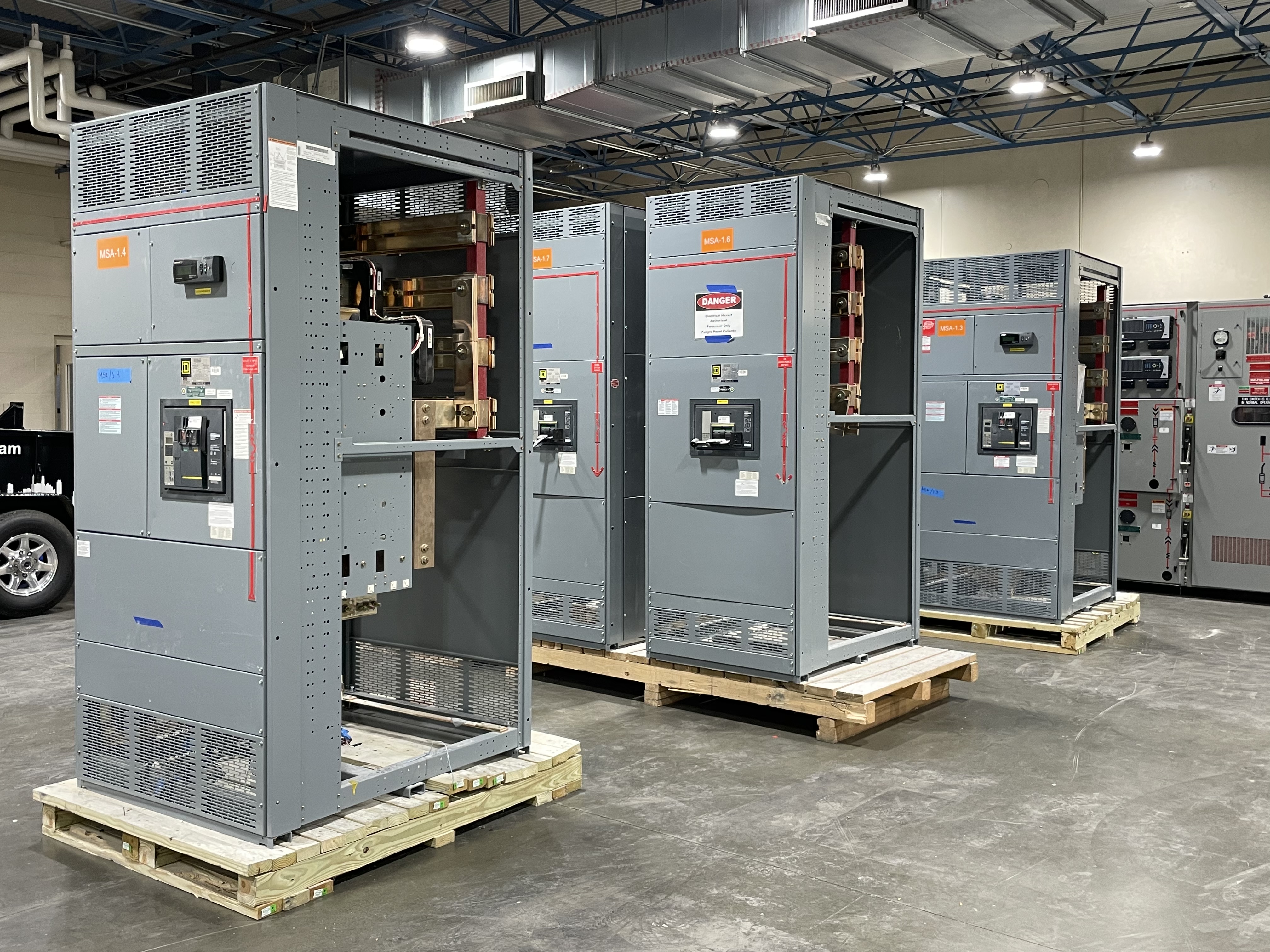
Confirm ownership before planning access
An enclosure near a utility interface can sit within a boundary where ownership, operating authority, and access rights differ. Before discussing a visit, identify the legal owner of the specific asset and confirm that the person requesting an assessment may authorize its sale. If the enclosure is on leased, shared, municipal, or utility-controlled property, obtain the necessary written approvals through the responsible parties. Do not infer ownership from a fence, location, or ABB marking. If authority remains uncertain, resolve it on paper first; a buyer review is not permission to enter or alter a site.
Describe the markings as they appear
Share the exact text visible on exterior labels or nameplates, preserving model identifiers, serial information, and rating fields as printed when safely legible. Do not translate, expand, or guess at abbreviated entries. A photograph may show only an exterior surface or exterior nameplate, captured from a site-authorized safe position. Never open a cabinet or take interior photographs. If safe access is not available, transcribe existing records instead. ABB is a marking for identification in this review, not evidence of manufacturer relationship, equipment history, a particular product family, or compatibility with other apparatus.
Use existing records and keep ratings distinct
Useful records may include purchase or asset schedules, prior inventory documents, decommissioning lists, and drawings already held by the owner. Report each rating only as supported by those records, keeping nominal system voltage separate from assembly voltage and continuous current. Device frame, trip, and interrupting ratings are different fields and should not be substituted for one another. If a record is missing, unclear, or inconsistent with an exterior label, mark the value unknown rather than estimating it. No one needs to test, measure, or open equipment to request a purchase assessment.
Scope the asset and state what is excluded
Clarify whether the proposed sale concerns an enclosure, an identified assembly within it, or other specifically documented assets. Include known exclusions, such as utility-owned components, controls retained by the owner, or equipment outside the seller’s authority. Do not assume that neighboring gear, conductors, foundations, or site infrastructure are included. The buyer considers each proposed asset individually and may decline an item after review. A purchase assessment does not include unrelated demolition, site restoration, or hazardous-material remediation; those responsibilities must be addressed separately by the property owner where applicable.
Discuss condition without creating a hazard
Share existing condition notes, service history, known damage, and whether records indicate that the equipment is decommissioned, without trying to verify its state in the field. Treat unknown status as potentially energized. Do not approach, touch, open, operate, test, disconnect, remove, or move energized or potentially energized equipment, and do not ask unqualified personnel to do so. Any electrical work or isolation must be handled only by qualified, authorized personnel under the site’s procedures. The buyer’s review does not replace the owner’s safety controls or establish that equipment is safe to access.
Agree on payment and removal responsibilities
For an agreed purchase, the independent buyer makes a cash offer and pays upfront according to the individually accepted terms; neither offer amount nor timing is guaranteed. The buyer covers necessary crane service, rigging, disconnects, loading, freight, and hauling within that agreed scope. The seller is not expected to hire or pay a removal crew. Confirm the sale boundary, access permissions, schedule, and handover responsibilities in writing before work is arranged. A request for review does not commit either party to a purchase, and no removal should begin without authorization and a confirmed plan.
Share a concise request for review
Send the asset location in Sugar Hill, ownership and sale-authority status, exact exterior label text or permitted exterior photos, existing records, known exclusions, and any site access rules. The buyer considers used, surplus, and decommissioned electrical equipment across all voltage classes, including equipment from decommissioned data centers and shut-down power plants; that scope does not guarantee acceptance of a particular enclosure. Keep the equipment in place while the assessment is pending. Access and any later handover must follow site authorization, with electrical tasks performed only by qualified personnel approved under site rules.