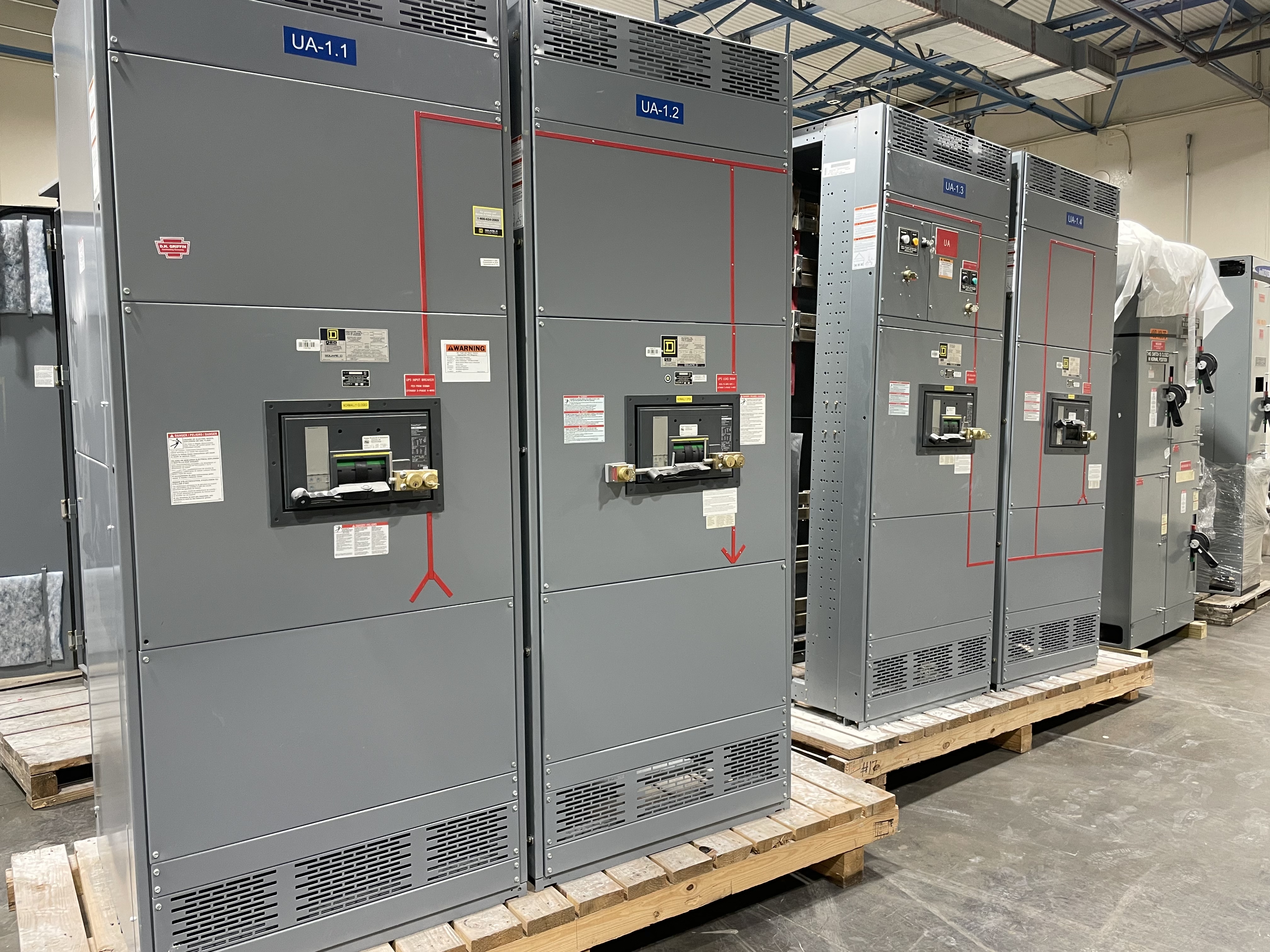
Establish authority and access first
For a switchboard recorded as transferred between related companies, retain the available transfer document, asset register entry or other ownership records and identify the entity making the offer. The offering party should establish its authority to transfer the equipment separately from permission to enter the site. Confirm who can authorize a visit, what site rules apply and whether another owner, landlord or operating company must consent. A record can support the history without resolving present title or access. Do not assume that a company relationship alone establishes either right.
Describe the markings without interpretation
Share the exact wording visible on safely accessible exterior labels or nameplates, along with any equipment identifier recorded in existing documents. “ABB-marked” describes a marking, not a verified manufacturer relationship, product lineage, model, compatibility or performance. Preserve uncertainty rather than completing missing characters or assigning an unverified model. If the board has multiple sections, note only what records already identify; do not open cabinets or seek internal photographs. A concise description tied to source records helps an independent buyer assess whether further review is worthwhile without asking a seller to inspect the equipment.
Keep ratings distinct and evidence-based
Where existing records state ratings, report each value with its recorded label and source. Nominal system voltage is not the same as assembly voltage; continuous current is distinct from a device’s frame rating and trip rating; interrupting rating is a separate value. Do not infer one from another or treat any of them as proof of compatibility. If a record is missing, unclear or potentially associated with another component, say so. A purchase assessment can proceed without seller testing or fresh measurements, but unknown ratings may limit what can be concluded or whether an offer is possible.
Share records and safe exterior images
Useful material may include available ownership or transfer records, inventories, prior decommissioning documents, and existing photographs. Optional photographs may show accessible equipment exteriors or exterior labels and nameplates only, from positions the site authorizes as safe. Keep covers and cabinets closed and never photograph inside. Leave energized or potentially energized equipment alone: do not approach, touch, open, operate, test, disconnect, remove or move it. If access or electrical status is uncertain, leave the equipment alone and ask the authorized site contact what information can be shared safely.
Define the proposed purchase and exclusions
Identify which switchboard or sections are being offered and whether the proposed scope includes associated components only where records already establish them. An assessment is specific to the asset, documentation, authority and circumstances; it does not guarantee acceptance, price or timing. The buyer considers used, surplus and decommissioned equipment across all voltage classes, including equipment from decommissioned data centers and shut-down power plants. The assessment remains specific to the switchboard offered and its documented circumstances. A purchase assessment does not include unrelated demolition or hazardous-material remediation, and no equipment should be prepared by the seller for removal.
Agree on cash terms and pickup responsibility
For an agreed purchase, the independent buyer makes a cash offer and pays upfront under the agreed transaction terms. Each offer and acceptance is individually assessed; no amount or schedule is guaranteed. Under an agreed purchase, the buyer covers the necessary crane, rigging, disconnects, loading, freight and hauling. The seller does not hire or pay a removal crew. Confirm the written scope, payment arrangement, authorized site access and handover responsibilities before any work is planned. This logistics arrangement applies to the agreed purchase only; it is not a promise to take every offered asset or to perform broader site work.
Keep electrical work within site controls
Any electrical work, including assessment-related access, isolation or disconnection, must be performed only by qualified, authorized personnel under applicable site rules. A seller should not test, operate, disconnect, remove, stage, lift or move the switchboard to support a request. If a purchase is agreed, coordinate the authorized personnel and removal plan through the site’s designated contact; leave all work to those permitted to perform it. The buyer can review existing records and safely obtained exterior information, then decide whether to make an offer. No transfer or pickup should proceed without the required authority and site permissions.