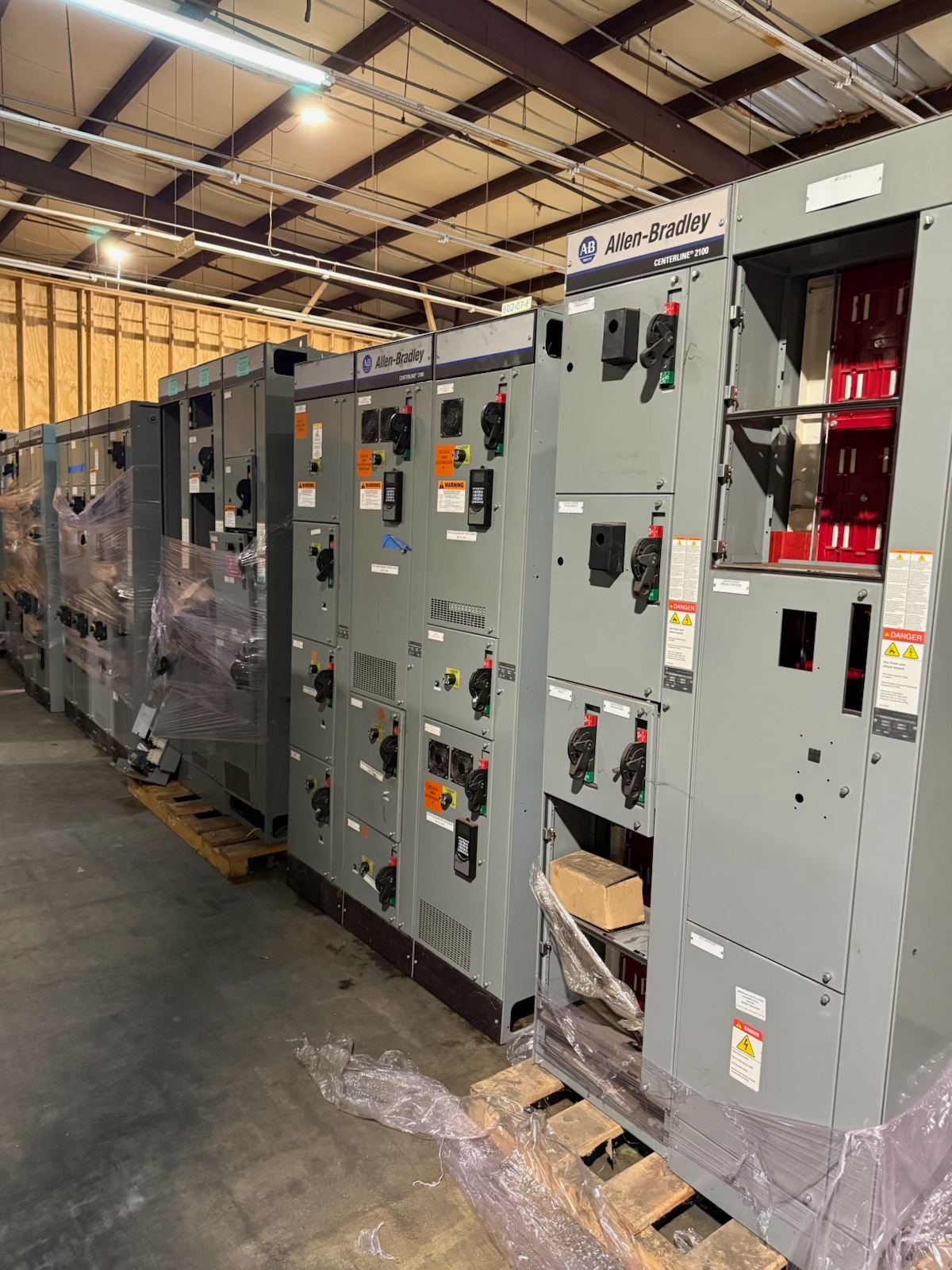
Define the feeder section’s physical boundary
Start with the equipment boundary, not an assumed circuit function. Record the lineup or section designation shown on exterior markings, the number of feeder compartments, and whether the offered asset is one section or a connected run. Note adjacent sections that are excluded, along with shared-looking covers or trim whose ownership is uncertain. If a feeder section is being separated from a larger lineup, identify the proposed boundary in a site drawing or inventory markup prepared from available records. Do not imply that a physical boundary establishes electrical isolation or makes the section safe.
Describe the breaker arrangement without overidentifying it
For each compartment, document visible breaker identification and whether the inventory includes a breaker, a blank, or an apparent space, using records and safely accessible exterior nameplates. Distinguish the breaker from its frame and trip unit where the information is known; do not infer a complete assembly from a door label or lineup schedule. Record manufacturer and catalog markings only when legible and safely accessible. If the breaker’s identity or inclusion is uncertain, mark it as unverified rather than filling gaps with a presumed model or rating. This precision helps keep the offer scope grounded in the actual inventory.
Keep bus and connection scope explicit
Feeder sections may be offered with different portions of the surrounding assembly, so state what documentation says about main or vertical bus, horizontal bus, splices, connectors, and transition sections. Avoid treating a visible connection or shared enclosure as proof that the associated parts are included. If records do not resolve whether a bus component belongs to the feeder section or an adjacent section, flag the boundary for review. A lineup drawing, bill of material, or existing asset register can clarify intended scope; do not open equipment or access internal parts to settle an inventory question.
Separate nameplate data from ratings assumptions
Capture safely accessible exterior nameplate text and identify which value refers to nominal voltage, current, interrupting or withstand rating, or another marked characteristic only when the label makes that distinction clear. Assembly ratings, breaker ratings, frame ratings, and trip settings are not interchangeable descriptions. A breaker label alone may not establish the rating of the complete switchgear assembly, and a schedule entry may not match the equipment now present. Preserve uncertain or conflicting entries as such. The buyer considers equipment across all voltage classes, but acceptance and any cash offer depend on an individual assessment, not an assumed rating.
Record known condition, not a diagnosis
Summarize condition from existing reports and authorized observations: for example, a documented maintenance notation, missing exterior cover, visible corrosion noted from a safe position, or a recorded breaker replacement. Separate dated records from current observations, and identify gaps rather than describing unverified internal condition. No seller testing or preparation is required, and sellers should not operate, open, touch, approach, test, disconnect, remove, rack out, move, or handle energized equipment, including to obtain photographs. Any electrical work must be performed by qualified, authorized personnel under site rules. Safe photographs are limited to accessible exterior nameplates and equipment from authorized safe positions.
Choose inclusions that match the records
Make separate entries for feeder sections, breakers, spare breakers, loose components, and associated documentation rather than bundling everything under “switchgear.” Include loose items only when ownership and scope are established; identify them as separate, unverified, or excluded when that is more accurate. If drawings show a breaker that is absent from the present inventory, report the discrepancy instead of promising it is included. Likewise, do not silently exclude a component the seller intends to transfer. A clear inclusion schedule lets the buyer assess the offered assets individually and reduces confusion over what an offer covers.
Plan removal and transport around the actual lineup
Share known dimensions, approximate weight if documented, access constraints, loading access, and whether the feeder section is part of a connected lineup; do not estimate specifications from appearance. For agreed purchases, the buyer covers crane, rigging, disconnects, loading, freight, and hauling; the seller is not required to hire a crew or perform testing. Electrical disconnects and other electrical work remain for qualified, authorized personnel under site rules. The company buys used, surplus, and decommissioned equipment, including from decommissioned data centers and shut-down power plants, and offers cash with payment upfront when an individual purchase is agreed.