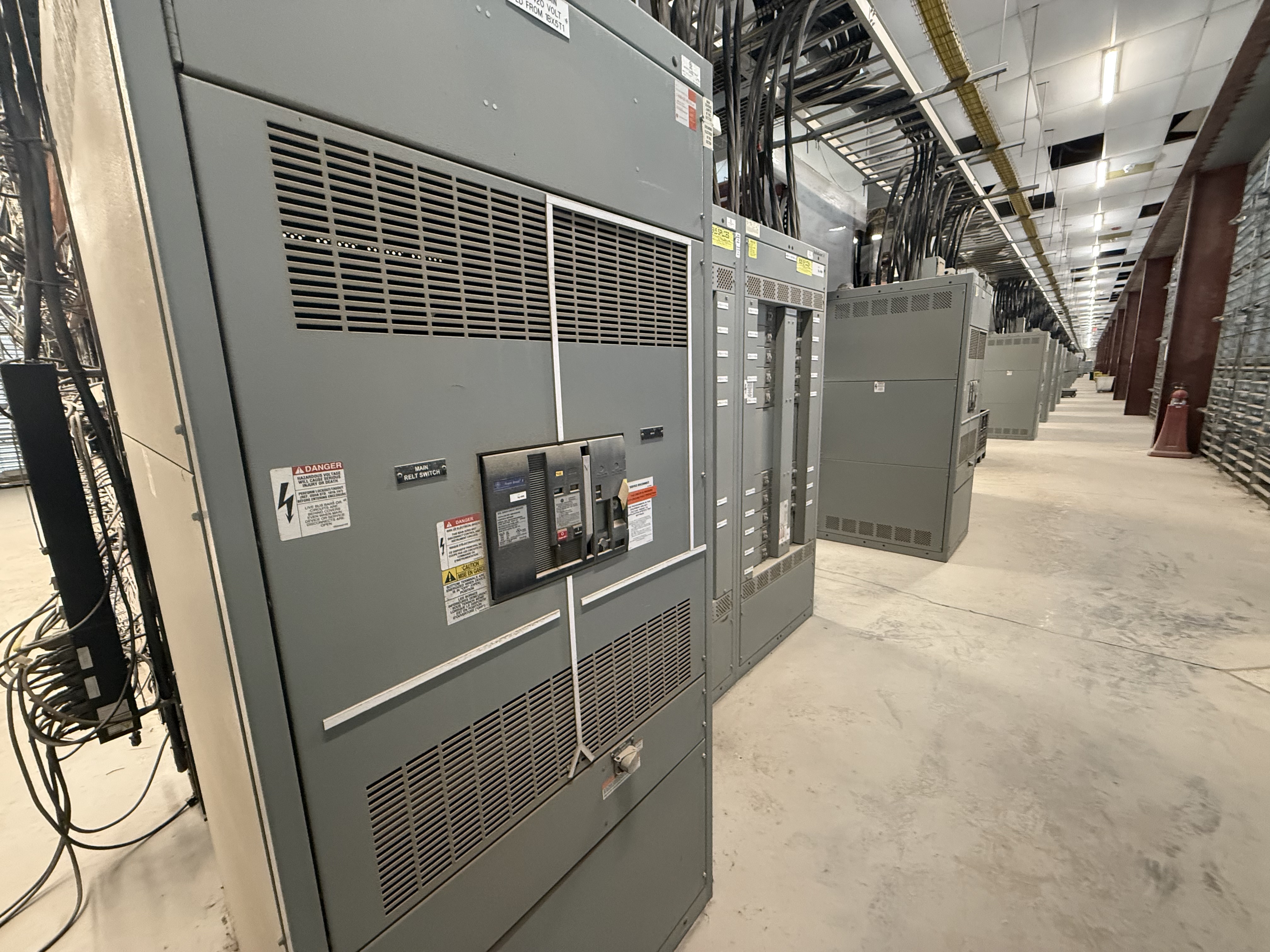
Start with the mezzanine constraint, not a removal assumption
If switchgear is positioned under a mezzanine, the height above the assembly can restrict rigging equipment, lifting points and the direction in which a load can be extracted. A low-clearance route might favor a different rigging approach than a straight vertical lift, but no method should be presumed suitable from a description alone. The mezzanine’s supports, decking and any posted capacity limits matter too: a rigging planner needs to understand whether equipment or personnel could be placed on it, not simply whether the gear fits below it. Do not stage, lift or shift the assembly to investigate. Share known restrictions and let qualified planners evaluate options before removal is considered.
Record useful dimensions from safe positions
Measure only from authorized, safe positions, without entering a restricted area or approaching exposed or energized equipment. Useful dimensions can include the lowest overhead obstruction, available aisle width, door or gate openings, turns, floor-to-ceiling height and the approximate distance from the gear to an exit. Note fixed obstructions such as pipes, cable trays and columns, plus whether a route includes a ramp or threshold. Measurements are planning inputs, not proof that a piece of rigging equipment will fit or that a route can bear a load. If a dimension is uncertain, label it as an estimate rather than inventing precision. Safe exterior photographs can supplement notes, but never take pictures by touching, opening or moving gear.
Separate floor capacity from overhead clearance
Two limits can shape the plan in different ways: the space available above the switchgear and the capacity of the surface supporting it. A mezzanine may limit lifting height even when the floor below is adequate; conversely, ample headroom does not establish that a slab, mezzanine or access route can support concentrated loads. Document any available structural drawings, posted limits or written guidance, and identify who can verify them. Do not treat a general building rating as an equipment-removal approval. The buyer’s rigging planner can use reliable information to assess whether a proposed crane, rigging configuration, loading position and route need further review by qualified personnel.
Describe the assembly without confusing its ratings
For an initial assessment, identify what is present and what documentation is available, without testing or opening the lineup. A safe exterior nameplate photograph may show manufacturer, assembly identification and ratings, if visible from an authorized position. Distinguish the switchgear assembly’s information from an individual breaker’s information: breaker frame and trip ratings describe different characteristics, and neither should be substituted for the other. Record nominal voltage and other marked ratings exactly as shown rather than inferring them from a breaker or nearby equipment. A buyer may consider equipment across all voltage classes, but acceptance and value depend on the particular inventory and condition. No seller testing or equipment preparation is required.
Coordinate removal scope while leaving the load in place
Tell the buyer that the equipment remains under the mezzanine and that the seller will not move it. Include known access restrictions, operating hours, authorization requirements and any limits on vehicle or crane access. Removal may involve disconnects, rigging, loading and hauling, but electrical work must be performed by qualified, authorized personnel under site rules. The buyer covers crane, rigging, disconnects, loading, freight and hauling when arranging the purchase and removal; the exact approach depends on the site and equipment assessment. Do not disconnect, dismantle, rack out or handle the lineup to make access easier. Confirm responsibilities and access arrangements before any work is scheduled.
Compare the offer against practical access conditions
A cash offer with upfront payment may be considered for used, surplus or decommissioned switchgear, including equipment from a shut-down power plant or decommissioned data center. The offer is assessed individually; a difficult mezzanine clearance can affect the removal plan without automatically determining whether the equipment is acceptable. Provide accurate details about the assembly, location within the site and known structural constraints so the buyer can evaluate both inventory and logistics. There is no need to test the equipment or hire a crew to move it. Before agreeing to a sale, confirm that you own the equipment or have authority to sell it, and clarify the proposed removal scope and access requirements.