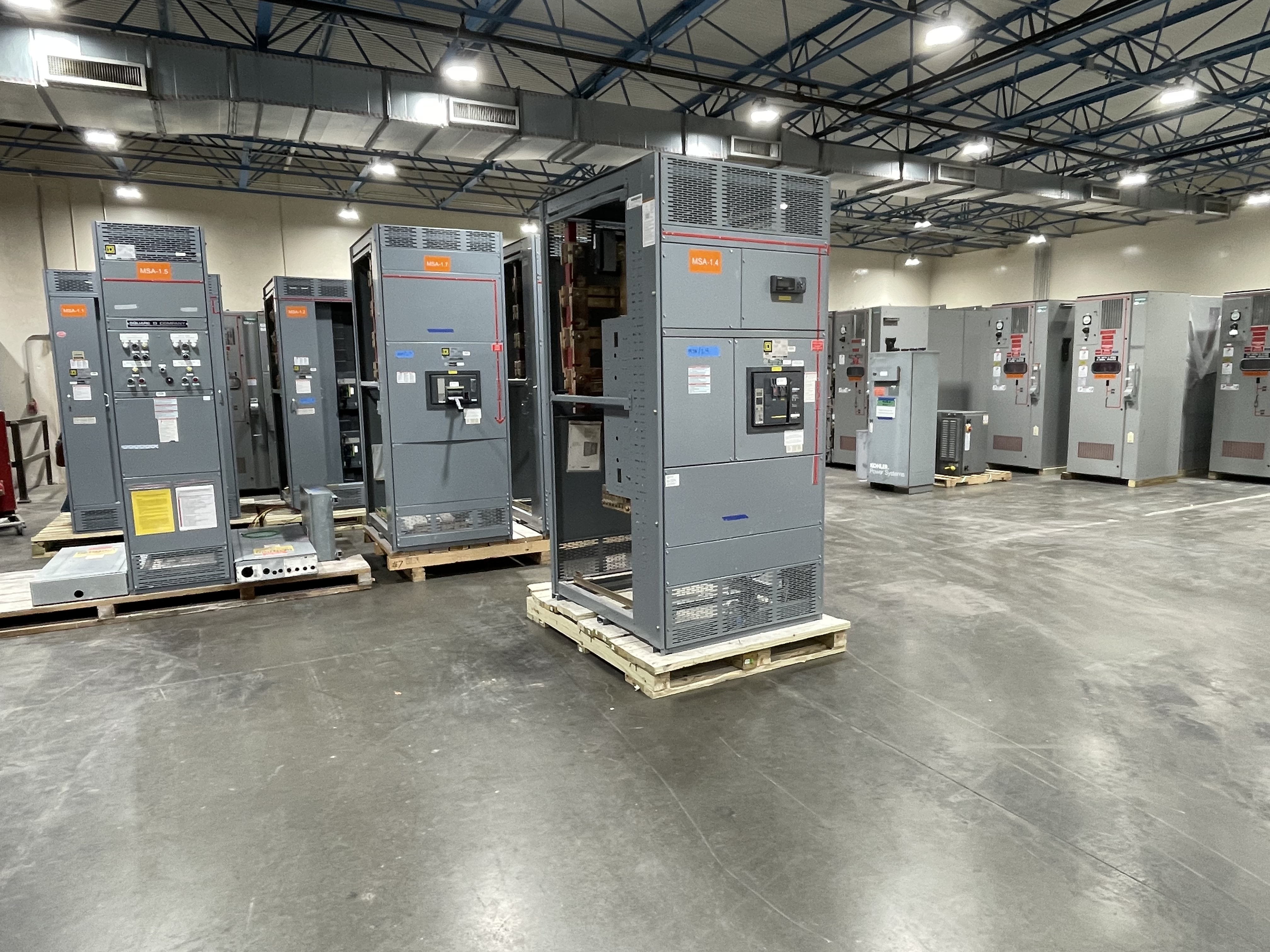
Separate covered sections from exposed sections
Describe the lineup by section rather than calling the whole assembly “stored outdoors.” For example, note that one cabinet remained beneath a roof while an adjoining section was exposed to rain or wind, if that is what you know. Record approximate dates and duration only when reliable; distinguish direct observation from information passed along by someone else. Do not infer that a cover kept moisture out, or that exposure caused damage. This separation helps an individual assessment consider the equipment as presented without promising acceptance or value. If sections were moved or uncovered during the delay, explain that history plainly rather than treating current shelter as proof of earlier protection.
Document conditions without approaching hazards
Use existing records, authorized site observations, and safely accessible exterior nameplates to describe condition. Photographs should be taken only from an authorized safe position and only where the exterior is safely accessible; never approach, touch, open, operate, or test equipment to get a better view. Note visible conditions such as a displaced weather cover or standing water nearby only if observable from that position. Avoid diagnosing internal moisture, corrosion, insulation condition, or operability from an exterior image. If the gear is energized, access is restricted, or safe viewing is uncertain, leave it alone and ask the site’s qualified authorized personnel what information can be provided under site rules.
Clarify what is included in the proposed sale
A project delay can leave a partial lineup, loose breakers, or associated components stored separately. Make an inventory that distinguishes installed sections from loose items and identifies what the seller owns or is authorized to sell. Where known, record manufacturer and nameplate details without guessing from appearance. Keep assembly, breaker, bus, frame, trip, nominal voltage, and ratings distinct: a breaker’s trip information is not the same as the lineup’s nominal voltage or interrupting rating, and one component’s label does not establish every section’s specifications. Missing labels or uncertain relationships are useful facts to disclose. The buyer assesses assets individually; do not assume separated pieces will be treated as a complete, compatible system.
Make access and removal constraints visible early
Outdoor placement may affect access even when the gear remains under cover: a temporary fence, narrow gate, soft ground, overhead obstruction, or nearby stored material can change removal planning. Describe known constraints and provide site-approved access details, not a proposed electrical or rigging method. If the delayed project has changed the pickup route or available work area, say so before arrangements are considered. The buyer covers crane, rigging, disconnects, loading, freight, and hauling when a purchase is agreed, with scope assessed for the specific assets and site. Do not move equipment or clear an obstruction yourself if doing so would involve hazardous work or violate site rules.
Coordinate electrical work and payment expectations
Any electrical disconnect or other technical electrical work must be performed by qualified, authorized personnel under site rules. The seller does not need to test the gear or prepare it for sale; if its status is unknown, report that rather than arranging an informal test. We buy equipment across all voltage classes, but that does not establish compatibility, condition, or acceptance for a particular asset. Offers are assessed individually. A purchase can include a cash offer with payment upfront, but neither price nor a specific outcome is assured before review and agreement. Confirm ownership or authority to sell and identify any site approval needed for access, disconnect work, and release of the equipment.
Choose disclosure over a value guess
When exposure history is incomplete, state exactly what is known: which sections stayed under cover, which were exposed, when the project paused if documented, and what records or safe exterior images are available. Ask what additional information can be reviewed without testing or unsafe access, and whether the buyer needs clarification about the asset list or pickup constraints. Do not conceal exposure to preserve a hoped-for value, but do not assume exposure makes the equipment unusable either. The practical tradeoff is between a more complete, credible description and unsupported conclusions that can mislead planning. An individual assessment—not a blanket promise about outdoor storage—determines whether an offer is made and on what terms.