Start with the exact 12,470 V marking
Record “12,470 V” only if that exact marking appears in the available documentation or on a safely accessible exterior nameplate. A site description, one-line drawing, or asset list may use the figure to describe a nominal system, rather than the rating of every installed device. Keep the source with the transcription: for example, note whether the number came from a switchgear schedule or a particular exterior label. Do not round, convert, or silently treat a nominal system description as the equipment’s voltage rating.
Keep system voltage and device ratings separate
Build a short inventory with distinct fields for system nominal voltage and each marked device rating. An assembly nameplate may identify the switchgear lineup, while a breaker nameplate gives ratings for that breaker; bus and frame markings may add different information. Trip-unit settings or labels are not interchangeable with breaker ratings. If one record says 12,470 V and another shows a different figure, preserve both verbatim and identify the component and source. The difference calls for review, not an assumption of compatibility, error, or acceptance.
Document what is actually identified
Useful records link each marking to an asset: lineup or equipment tag, compartment or device designation if safely available, manufacturer name as printed, and the precise rating text. Capture qualifiers, units, punctuation, and any “nominal” wording rather than rewriting a label into a cleaner summary. If an outdoor lineup contains separately identified breakers, do not assign one breaker’s marking to the entire assembly. A list that distinguishes assembly, breaker, bus, frame, trip, and nominal voltage helps an individual assessment without implying that the parts belong together or share a rating.
Check ownership before discussing removal
Outdoor equipment can sit at a boundary between privately owned assets and utility-owned facilities. Before offering equipment for sale, establish the seller’s ownership or authority to sell and ask whether any utility or other party controls the assembly, a component, or associated connections. A site inventory alone does not establish ownership. If ownership is uncertain, pause the sale discussion until the responsible parties clarify it; do not treat physical access or a decommissioning plan as proof of authority. Record any known ownership limits without making assumptions about the equipment’s electrical configuration.
Describe outdoor enclosure exposure, not condition by guess
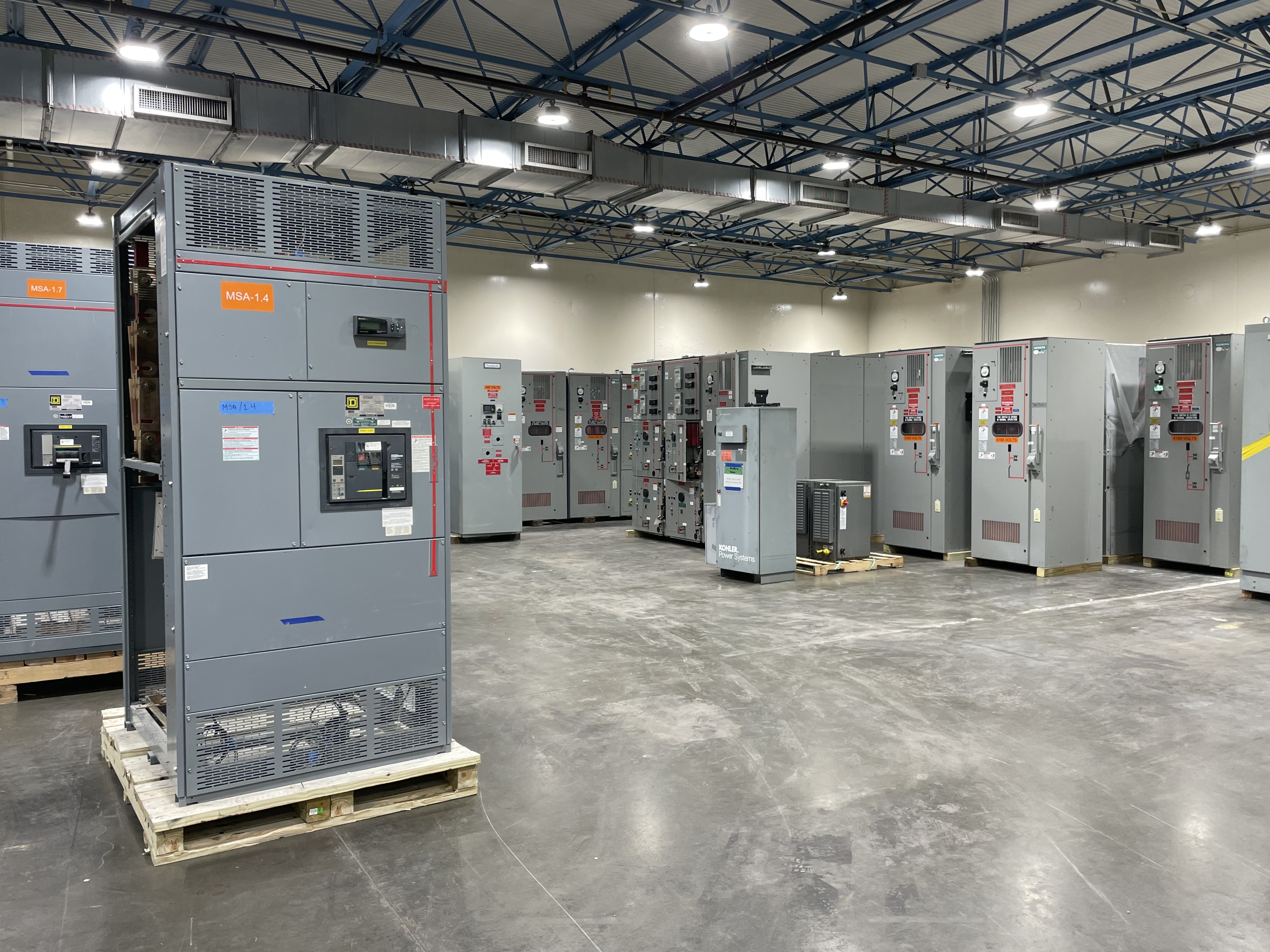
For outdoor equipment, note what is observable in safely accessible exterior views: enclosure type as labeled, visible identification, and apparent exposure such as weather, standing water nearby, corrosion, damaged doors, or missing covers. These observations are not an electrical inspection and do not establish internal condition, operability, or suitability. Do not open an enclosure or approach equipment to improve a photograph. Share only exterior nameplate images taken from an authorized safe position. If labels are obscured or unreadable, say so rather than inferring a rating from appearance or adjacent equipment.
Share records safely and leave electrical work to authorized personnel
Provide existing schedules, asset registers, and photographs of safely accessible exterior nameplates, clearly identifying which record refers to which asset. Do not operate, open, touch, test, disconnect, remove, rack out, move, or handle energized equipment, including to obtain a better image. Any electrical work must be performed by qualified, authorized personnel under site rules. Seller testing and seller preparation are not required for an assessment. If records conflict or key markings cannot be safely read, preserve that uncertainty; do not resolve it by testing or by assuming a standard configuration.
Discuss logistics and offers without presuming an outcome
We buy across all voltage classes and can make cash offers with payment upfront, but the stated 12,470 V value does not determine price or acceptance. An asset assessment considers the specific equipment and available information; no particular offer, acceptance, or timetable is assured. For equipment accepted for purchase, we cover freight, crane, rigging, disconnects, loading, and hauling. Those arrangements do not authorize anyone to perform electrical work outside site rules or qualified personnel’s authority. Share ownership and access constraints early so logistics can be considered alongside the exact markings and enclosure details.