Start with the sale boundary, not the voltage label
Define what is being offered before treating “13,800 V switchgear” as a complete description. A plant may have a lineup with several connected sections, while breakers or other components may be stored separately as spares. List each offered group distinctly: lineup sections together, identified loose devices, and accessories whose identity is known. Note what is included or excluded, such as a control cabinet or stored spare, without assuming it belongs to the lineup. A buyer assesses assets individually; grouping everything under one voltage can hide meaningful differences. The owner or authorized representative should also confirm authority to sell each item, especially when plant assets are subject to another party’s control.
Transcribe markings exactly, without interpreting them
Use photographs only of safely accessible exterior nameplates, taken from an authorized safe position; never approach equipment to obtain an image. Copy visible text exactly, preserving punctuation, units, and any uncertainty rather than silently correcting a marking. Record the equipment or section identifier alongside the transcription so a label is not mistakenly assigned to a neighboring item. If a marking is obscured or unreadable, say so; do not fill the gap from another section’s plate, a drawing, or a remembered specification. These records help an individual review, but they do not establish condition, configuration, compatibility, price, or acceptance. No seller testing or preparation is required.
Separate system nominal voltage from device ratings
“13,800 V” may describe the nominal system voltage, but it does not by itself state every device’s applicable rating. A breaker can carry its own marked voltage and other ratings; the assembly, breaker, bus, frame, and trip unit are distinct things to identify. Transcribe each available marking under its correct component rather than combining numbers into a single rating. For example, a plate on a lineup section and a label on a loose breaker should be documented as separate records, even if both relate to the same retired plant. Do not infer that either is suitable for a different system or that matching nominal voltage proves compatibility.
Describe lineups and loose spares as different assets
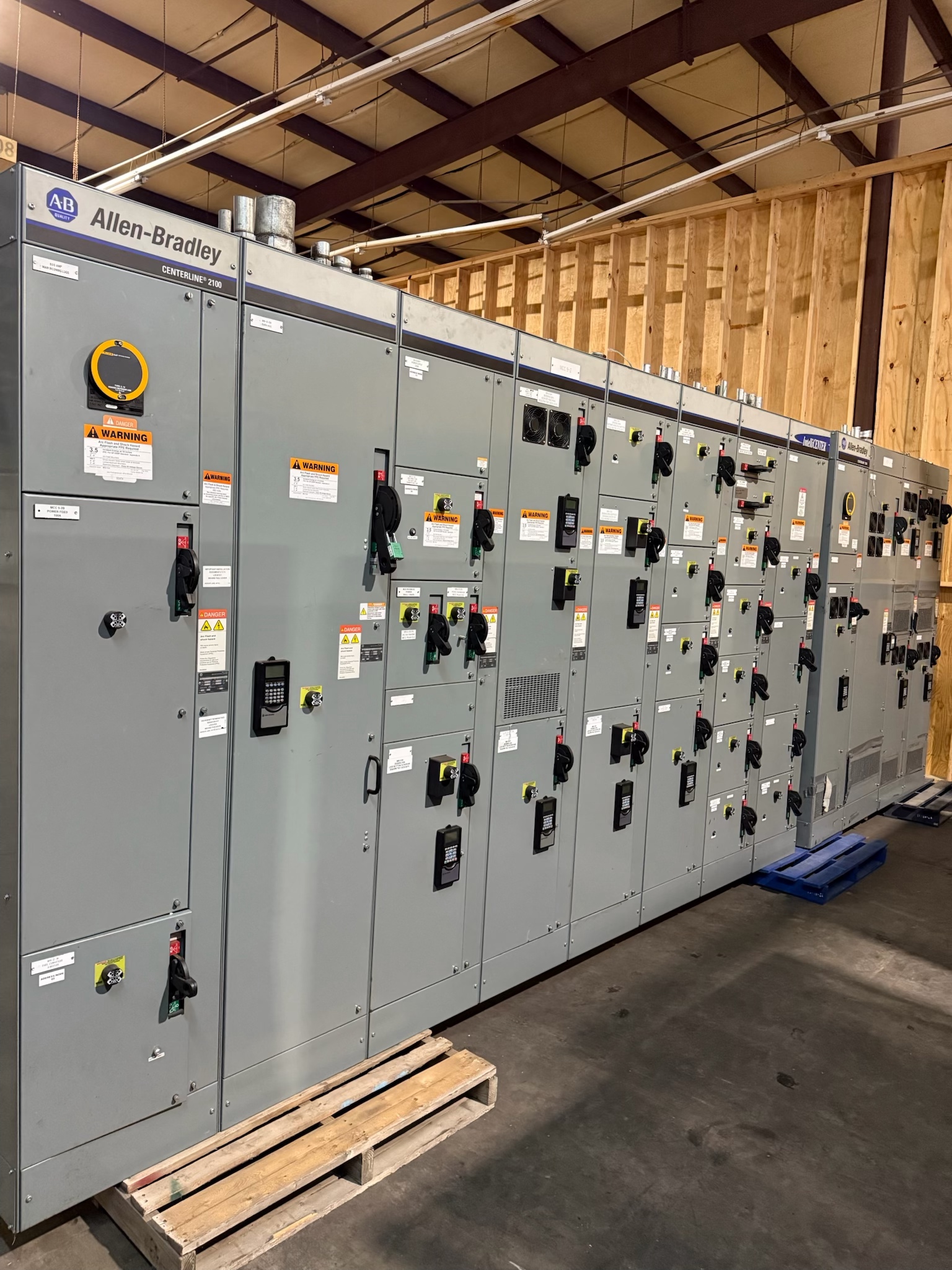
For a lineup, document the section identifiers and the order in which they are understood to belong, using existing records or safely visible exterior labels. Mark uncertain boundaries as uncertain. For loose spares, record each item separately, including any visible manufacturer, type, and nameplate text, without assuming it came from the offered lineup. A breaker’s frame, trip, and ratings should not be collapsed into one description: a replacement or spare may differ even when its voltage marking appears similar. If provenance or association is unknown, state that plainly. This distinction gives a buyer better information for an individual assessment without promising that a lineup or any spare will be accepted.
Shutdown status is not work authorization
A plant’s shutdown or decommissioned status does not itself authorize anyone to perform electrical work, nor does a seller’s decision to sell authorize access or handling. Site ownership, access permissions, and work approvals are separate matters. Any electrical identification or work requiring access beyond safely visible exterior markings must be handled by qualified, authorized personnel under site rules. Do not operate, open, touch, test, disconnect, remove, rack out, move, or handle energized equipment, or approach it for photographs. If a sale proceeds, the buyer can coordinate crane, rigging, disconnects, loading, freight, and hauling; the scope remains subject to site requirements and an individual assessment.
Request an offer with clear commercial and scope details
Send the exact transcriptions, safe exterior images, asset grouping, known inclusions, and any uncertainty for review. The buyer purchases used, surplus, and decommissioned electrical equipment across all voltage classes, including assets from shut-down power plants and decommissioned data centers; this does not imply acceptance of a particular item. If an offer is made, it is assessed individually and may include cash payment upfront, with no seller testing required. Ask what assets and removal scope an offer covers, and clarify site access constraints before any planned work. Freight and hauling, as well as crane, rigging, disconnects, and loading, are buyer-paid services when applicable, subject to the agreed scope; no price or outcome is guaranteed.