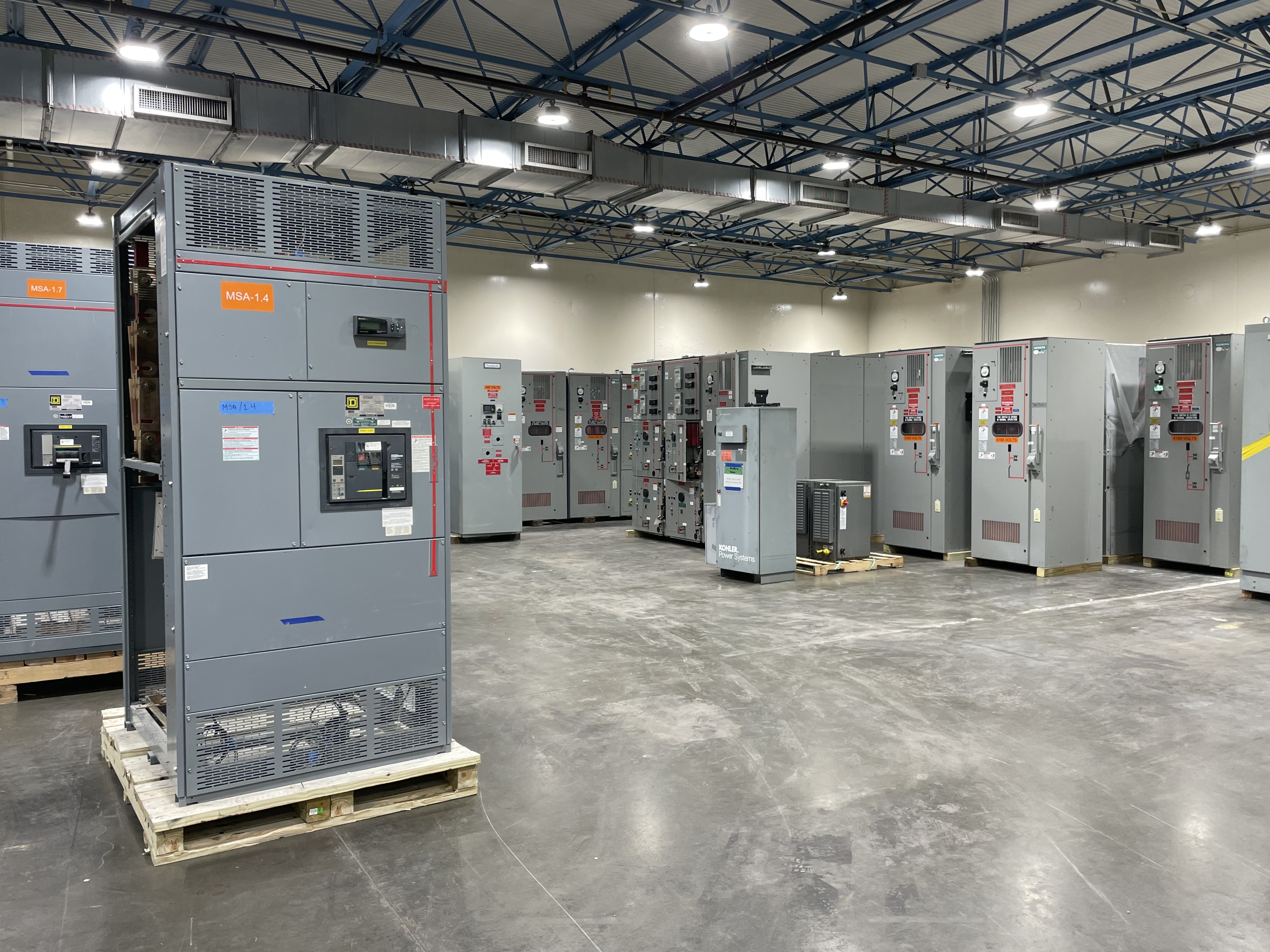
Keep each rating tied to its source
A 480 V notation may describe a nominal system voltage, an equipment nameplate voltage, or another documented designation; those meanings are not interchangeable. Likewise, a 400 A value might refer to an assembly’s continuous-current rating, a breaker frame, or a trip setting. Record where each figure appears and quote the label or document accurately rather than combining values into a single equipment description. Do not infer voltage class, intended application, or compatibility from a number alone. A buyer can review the available records and identify unresolved questions, but an assessment does not establish that separate components are compatible or that a particular asset will be accepted.
Use breaker records to explain a lot
For a breaker lot, an existing schedule, invoice, equipment list, or other site record may distinguish frame-current markings from documented trip settings. Preserve those distinctions in the lot description: a frame value is not automatically the trip value, and neither should be presented as an interrupting rating. If a trip setting is absent, mark it as undocumented rather than estimating it. The same approach applies to assembly continuous current and device ratings: report each only when supported by records or safely accessible exterior markings. This gives a buyer a clearer basis for review without asking the seller to test devices, remove covers, or make new measurements.
Assemble information already available
A useful inquiry can include a general equipment description, approximate quantity, ownership or authorization to release the assets, and existing records that identify ratings and condition. Note whether figures come from a document or an exterior nameplate; leave unknowns explicitly unknown. For optional pictures, remain in a site-authorized safe position and show only safely accessible equipment exteriors or exterior nameplates and labels. Keep cabinets closed and never photograph their interiors. Leave energized or potentially energized equipment alone: never approach, touch, open, operate, test, disconnect, remove or move it. No seller testing, measurement, staging, or special preparation is required for a purchase assessment.
Compare purchase scope, not just markings
Two lots with similar headline ratings may differ in documentation, completeness, condition information, quantity, access constraints, and removal requirements. Those differences can affect an individual assessment; a 400 A or 480 V notation alone does not set a price or ensure a purchase. The independent buyer makes cash offers and pays upfront for purchases agreed with the seller. Each offer and acceptance is assessed individually, so neither a particular price nor a transaction timeline is guaranteed. Ask which identified assets are included, what records informed the offer, and how removal scope will be handled before accepting. An offer for specified equipment should not be treated as acceptance of unlisted material or unrelated site work.
Agree on safe removal responsibilities
Once a breaker purchase is agreed, the buyer pays for necessary disconnects and rigging, crane service, loading, hauling and freight. The seller does not hire or pay the removal crew. Electrical work must be performed only by qualified, authorized personnel under site rules. The seller should not disconnect, operate, lift, stage, or move equipment. Any access plan must respect site authorization and leave control of electrical hazards with responsible site personnel. Confirm the assets, work boundaries, access conditions, and handover arrangements before scheduling removal. Purchasing identified equipment does not mean the buyer will undertake demolition, other unrelated removal, or hazardous-material remediation.
Close out the handover carefully
Before release, reconcile the agreed asset list against records already available and note any rating discrepancies or unknowns without trying to resolve them through field testing. This is especially useful where a lot contains assemblies and individual breakers with different markings. Never approach or handle energized or potentially energized equipment to verify a label, prepare it for pickup, or assist with disconnection. Follow site procedures for authorization and safe access, and let qualified personnel perform any required electrical work. A Georgia seller can submit the information and request an assessment without promising that every item will be purchased; the buyer can then confirm the proposed scope and logistics for any accepted purchase.