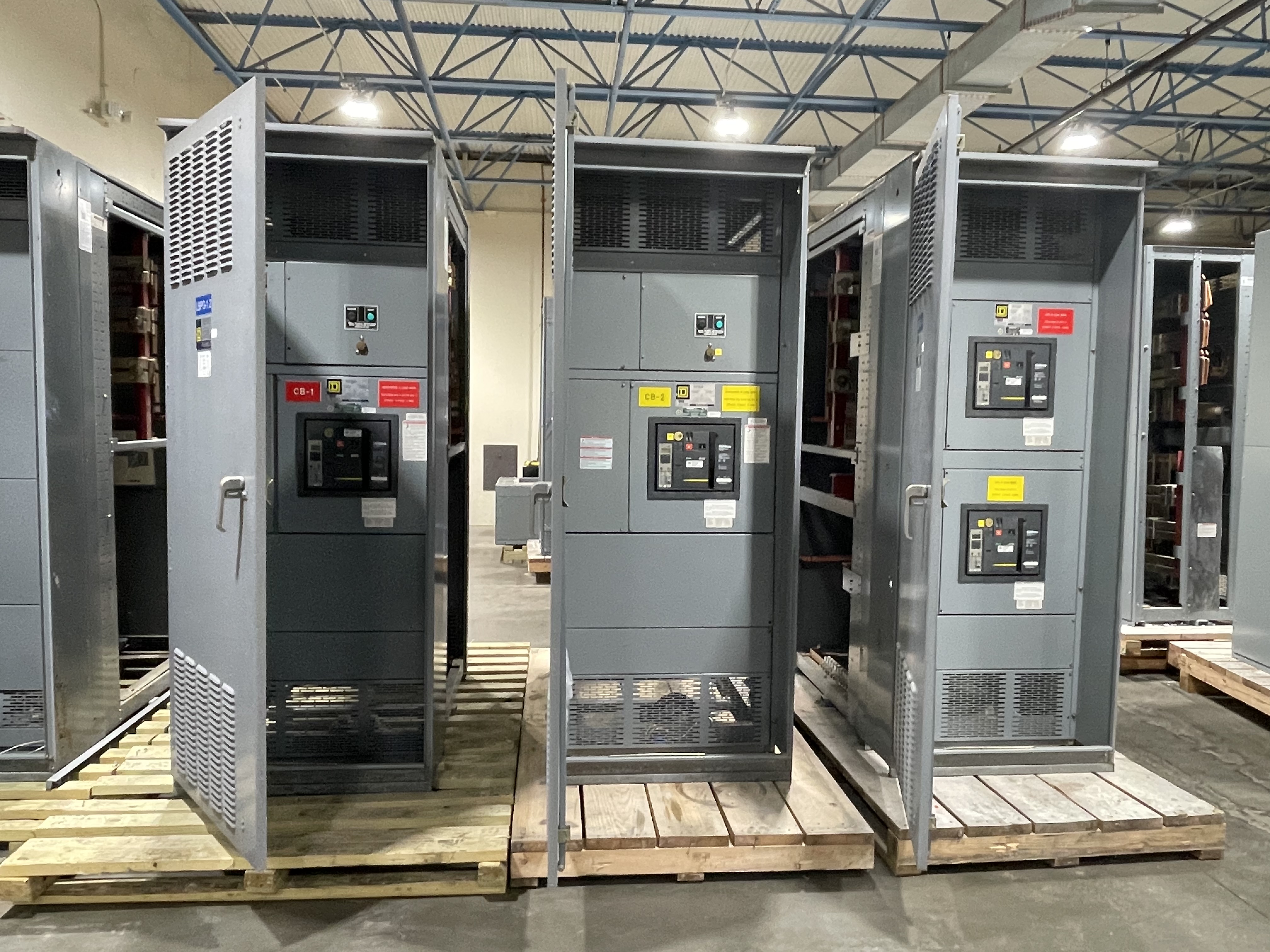
Read the ratings as separate facts
A 600-amp marking and a 240-volt marking may appear in records for a motor-control section or separately documented starters, but they should not be treated as a matched specification unless the records establish that relationship. Record nominal system voltage separately from the voltage shown for the equipment or assembly. For a breaker, distinguish assembly continuous-current information from frame rating, trip rating, and interrupting rating. These values describe different things; none alone confirms compatibility with a proposed replacement or application. The buyer assesses documented equipment as presented, rather than inferring missing ratings.
Use records already available
Useful starting material may include asset lists, invoices, prior inspection or maintenance records, drawings, and existing equipment schedules. Include manufacturer and model identifiers only when transcribed from records or safely visible exterior labels. A seller need not commission testing, take measurements, create new drawings, or fabricate a rating schedule to request review. If records disagree or omit a value, identify it as uncertain instead of resolving it by guesswork. Clear distinctions help the buyer assess what is actually being offered and identify follow-up questions before discussing a possible purchase.
Describe the equipment context
Explain whether the listed item is a motor-control section, a standalone starter, or another assembly, and whether the record describes the whole assembly or an individual device. Identify quantities and any known exclusions, such as controls, accessories, or components not included in the proposed lot, only where existing records support that description. Do not assume a starter belongs with a particular section merely because it is nearby or listed under a similar voltage. The buyer considers each item and grouping individually; documented ratings do not guarantee acceptance, compatibility, or a particular resale destination.
Request review without unsafe inspection
For optional photos, use only site-authorized safe positions and show safely accessible equipment exteriors or exterior labels and nameplates. Keep cabinets closed and never take pictures inside. Energized or potentially energized equipment must not be approached, touched, opened, operated, tested, disconnected, removed or moved. No seller testing is required for a purchase request. Any electrical work, including isolation or disconnection, must be handled only by qualified, authorized personnel under site rules. When safe access is unavailable, rely on existing records and leave the equipment undisturbed.
Account for unknowns and exclusions
Records may not establish whether a voltage is nominal system voltage or equipment nameplate voltage, or whether a current value applies to an assembly, breaker frame, or trip setting. They may also omit condition, completeness, or ownership details. Present those points as unknown rather than supplying an estimate. Flag items that are not included and any site restrictions relevant to a possible handover. An assessment is not a promise to accept every asset. Offers and acceptance are considered individually, and price or timing is not guaranteed before the parties agree on the purchase terms.
Plan removal through the agreed purchase
For an agreed purchase, the buyer pays upfront and makes a cash offer on the terms accepted by both parties. The buyer covers necessary crane, rigging, disconnects, loading, freight, and hauling under that agreement; the seller does not have to hire or pay a removal crew. Site access, authorization, and work sequencing still need to be coordinated with the facility. Qualified, authorized personnel must perform electrical work under applicable site rules. The buyer’s removal arrangements concern the purchased equipment, not unrelated demolition or hazardous-material assessment or remediation.
Equipment sources and a practical request
The buyer considers used, surplus, and decommissioned electrical equipment across all voltage classes, including equipment from decommissioned data centers and shut-down power plants. A request can state the Georgia site location, asset descriptions, available records, quantities, known exclusions, and any scheduling or access constraints. Include safely obtained exterior photographs only where permitted. There is no need to stage equipment or prepare it for removal before review. The buyer evaluates each opportunity individually, then discusses any offer and handover plan if the equipment and terms are accepted; no particular asset or completion date is assured.