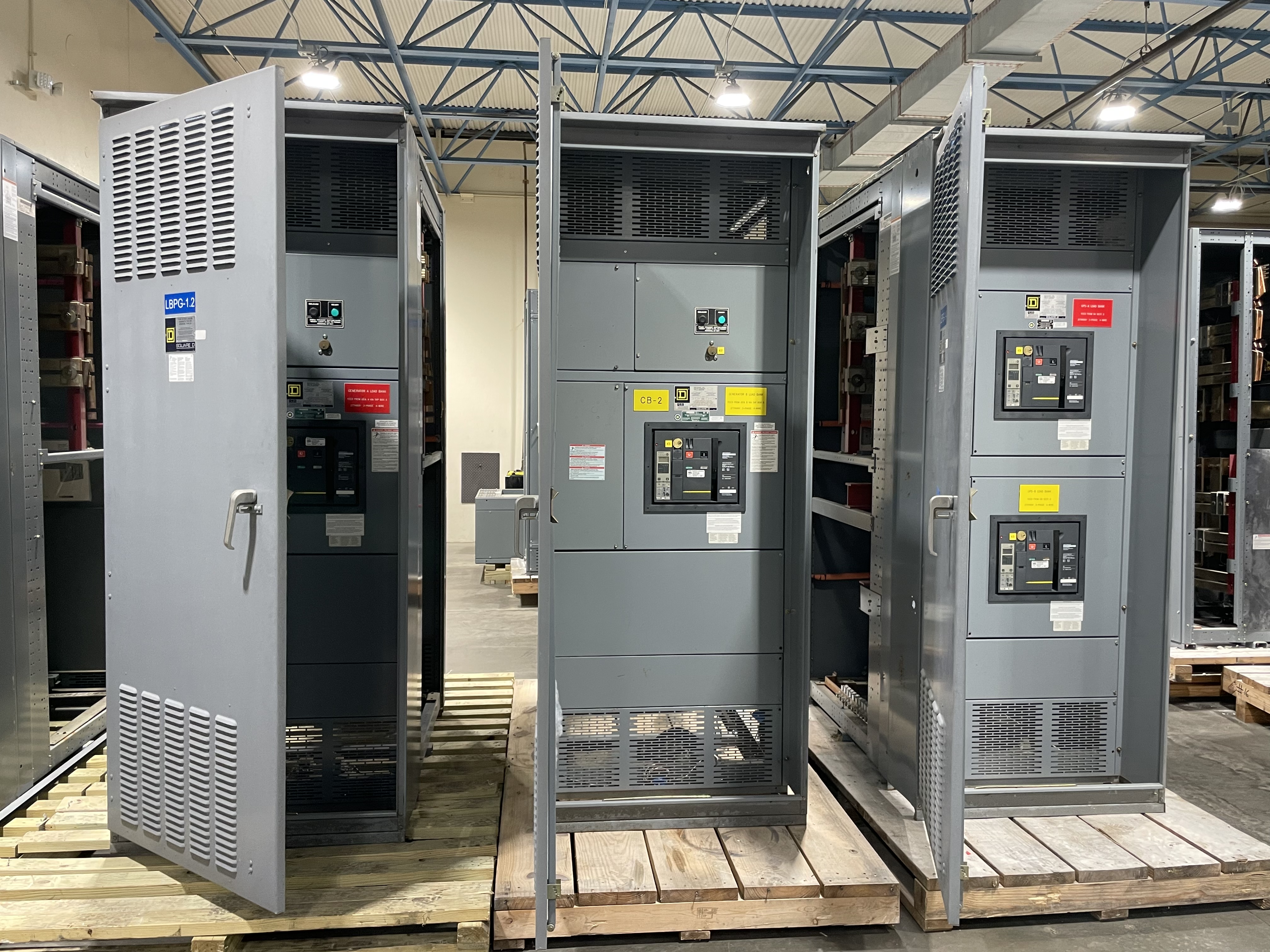
Start with the distinction between system and assembly
A known system description can identify nominal system voltage, but it does not by itself establish the voltage rating on an assembly nameplate. Likewise, an 800 A reference may describe assembly continuous current, a device frame, or another recorded value. Keep each label tied to its source rather than combining figures into a single specification. For a purchase assessment, share existing, site-authorized records where available. If the assembly nameplate is unclear, mark that uncertainty plainly; do not infer a rating or compatibility from the system description.
Read breaker values as separate fields
Breaker frame and trip markings are not interchangeable with assembly continuous-current ratings. Interrupting rating is another separate value, not a substitute for equipment voltage or system voltage. A record showing an 800 A frame, for example, does not establish an 800 A trip setting or assembly rating. Report each figure only when supported by an existing record or safely visible marking, and preserve the stated units and context. We do not treat a combination of 800 A and 2,400 V as established unless records support the particular values and what each describes.
Useful records—and what may remain unknown
Helpful existing information can include equipment schedules, asset lists, drawings, prior inspection documents, purchase records and exterior nameplate details. Note the document date and whether a value refers to the system, assembly or a device. Older records may describe a former configuration, while an unclear or missing plate can leave key fields unresolved. Do not create new measurements or conduct tests for an inquiry. An honest list of known values, unknowns and source documents is more useful than a confident but unsupported rating claim.
Assess the asset, not just the headline rating
Assessment may depend on equipment type, manufacturer and model markings when available, quantity, condition as already documented, completeness, and whether records can be associated with the asset. A retired assembly with an unclear nameplate may need a different review from separately documented breakers, even where the same system voltage appears in both records. Neither a voltage-and-current pairing nor a breaker marking guarantees acceptance, value or compatibility. Each offer and acceptance is assessed individually; we do not promise availability, a price, or a purchase decision before that review.
Send information without creating a safety task
There is no seller testing requirement, and no need to open a cabinet, operate equipment, disconnect conductors, stage an asset or prepare it for removal to request an assessment. Electrical work, if required within the site’s own process, must be performed only by qualified, authorized personnel under site rules. Photographs are limited to safely accessible equipment exteriors and exterior labels or nameplates, taken from site-authorized safe positions. Never approach, touch, open, operate, test, disconnect, remove or move equipment that is energized or potentially energized; never photograph inside a cabinet.
Agree on payment and removal responsibilities
For an agreed purchase, the buyer makes a cash offer and pays upfront under the agreed purchase terms. The buyer covers necessary crane, rigging, disconnects, loading, freight and hauling for the agreed purchase; the seller does not hire or pay a removal crew. Scope, access and scheduling must be confirmed between the parties and coordinated with site requirements. These arrangements concern purchased equipment only: they are not a promise of unrelated demolition or hazardous-material remediation, and they do not override site authorization or safety controls.
Make a focused inquiry from Georgia
A concise inquiry can identify the Georgia site, equipment type, approximate quantity, what is known about retirement status, available records, and which rating fields remain unclear. Include safely obtained exterior information only; do not approach equipment to improve an inquiry. We consider used, surplus and decommissioned electrical equipment across all voltage classes, including equipment from decommissioned data centers and shut-down power plants. An inquiry is not an acceptance, and timing depends on individual review and agreed logistics. Share only information you are authorized to provide, with uncertainty stated rather than resolved by guesswork.