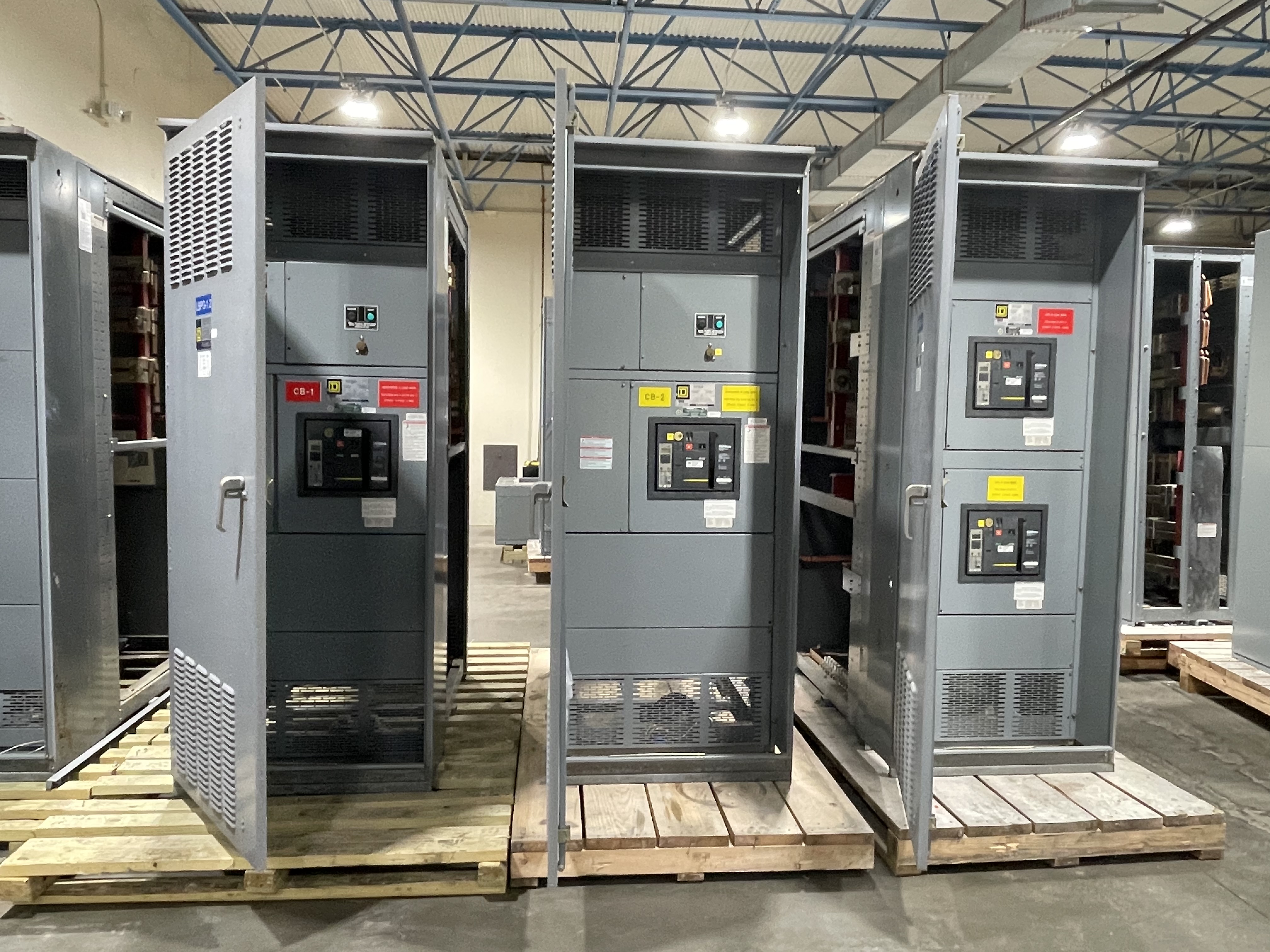
Start with what each rating describes
Report ratings as they appear in existing records rather than combining them into a presumed specification. A 240 V marking might refer to nominal system voltage or to an equipment nameplate voltage; these are distinct facts. Likewise, an assembly’s continuous-current rating is not the same as a breaker’s frame rating or trip rating. An interrupting rating is another separate value. A 400 A figure alone does not identify which rating it represents, and a 240 V figure does not establish suitability for a particular system. Share the source for each figure—such as an existing schedule, drawing, inventory, or exterior nameplate—so the buyer can assess what is documented and what remains unknown.
Describe a breaker and assembly separately
If a standalone breaker is offered alongside a distribution assembly, list each as a separate asset and explain whether the offer is for one item or both. Existing records may identify the breaker’s frame, trip, and interrupting ratings, while assembly records may state assembly voltage and continuous current. Do not assume a breaker was installed in, is compatible with, or is included with the assembly merely because they are presented together. The buyer can review the proposed scope using the records provided; any relationship not supported by documentation remains unverified. No specific combination is required for consideration, and an assessment does not promise acceptance of either item.
Send available records, not new test results
Useful material can include existing equipment schedules, one-line diagrams, invoices, asset lists, nameplate transcriptions, and decommissioning inventories. Send only records you are authorized to share, and identify whether a stated voltage is system nominal voltage or equipment nameplate voltage when the document makes that clear. If it does not, flag the distinction as unknown rather than guessing. There is no seller testing requirement, and sellers need not measure, fabricate, stage, or prepare equipment to request review. If photographs would help, provide images only of safely accessible equipment exteriors and exterior labels or nameplates, taken from site-authorized safe positions. Never open a cabinet or take internal photographs.
Make unknowns and exclusions visible
Tell the buyer what is included in the proposed purchase and what is excluded: for example, a breaker offered alone, an assembly offered separately, or documented associated items. Note any records that are missing or inconsistent, and do not infer a rating from appearance, a neighboring device, or an assumed application. Equipment condition and status may also be unknown; do not operate or test equipment to resolve that uncertainty. The buyer assesses each offer and acceptance individually, so neither a rating label nor a record set guarantees a purchase, price, or schedule. A review can identify questions for follow-up without asking the seller to establish technical compatibility or perform electrical work.
Plan a safe, agreed handover
Never approach, touch, open, operate, test, disconnect, remove, or move equipment that is energized or potentially energized. Any electrical work must be performed only by qualified, authorized personnel under the site’s rules. For an agreed purchase, the buyer covers necessary crane, rigging, disconnects, loading, freight, and hauling under the agreed arrangement; the seller does not hire or pay a removal crew. These logistics do not include unrelated demolition or hazardous-material remediation. Confirm access, site authorization, and handover scope between the parties before scheduling. Do not stage equipment or arrange a lift independently while an assessment is pending.
Request an assessment in Georgia
Send the equipment description, available rating records, proposed purchase scope, and the site location in Georgia. A concise note separating documented nominal system voltage, equipment nameplate voltage, assembly continuous current, and breaker frame, trip, and interrupting ratings can prevent avoidable ambiguity. The buyer purchases used, surplus, and decommissioned equipment across all voltage classes, including equipment from decommissioned data centers and shut-down power plants; that does not mean any particular asset will be accepted. For agreed purchases, the buyer makes a cash offer and pays upfront under the agreed terms. Each offer is individually assessed, with no guaranteed price or timing.